

Venture through the gates of ages, dare to time-travel and choose one journey to one of the 18 cities where history still breathes. Pick a historical fiction novel from the list below and walk the streets of ancient Rome or Athens; jump into the middle ages in Copenhagen, Jerusalem, Madrid; explore Renaissance in London, Florence, Prague; enjoy early modern life in Amsterdam or Geneva, Victorian Edinburgh or fin-de-siècle Vienna and Venice; read yourself into post-WW1 Moscow, or WW2 Lisbon and Paris, or deep-dive into the historical fiction of Dubrovnik and Budapest as if you belonged there. And if you are ready for more, there’s also a bonus read.
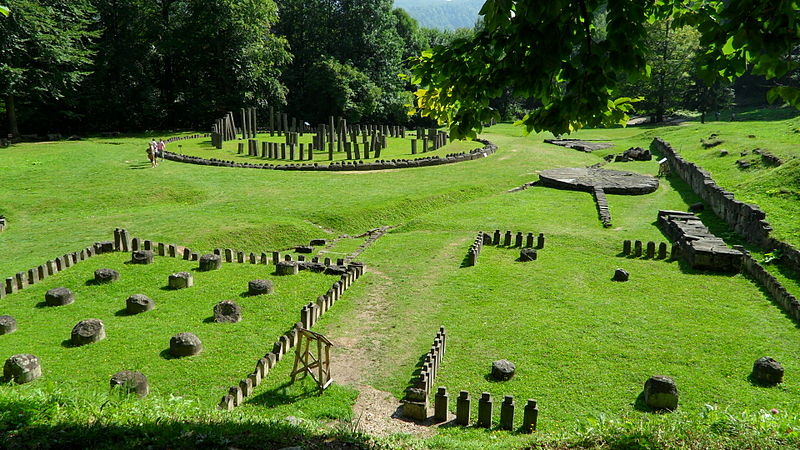
ROME’s story stretches across 28 centuries, one of the world’s oldest continuously lived-in cities. Born from Latins, Sabines, and Etruscans, it shed its kings in 509 BC for a republic but by the 3rd and 4th centuries BC Rome’s legions carved an empire across the Mediterranean, from Hispania to Dacia, Macedonia to Africa. The 1st century BC saw civil war, Spartacus’ rebellion, and the rise of Caesar whose conquest of Gaul propelled him to dictator for life, until his assassination plunged Rome into imperial rule. Emperors expanded Rome’s might and wealth, but by AD 476, the Empire fell. The “barbarians” who followed embraced Christianity, ushering centuries of papal dominion until 1871, when Rome finally returned to secular rule, its ancient pulse still beating beneath modern streets.
To travel back in time to the Roman Empire READ Mistress of Rome (Empress of Rome) by Kate Quinn.
First-century Rome: One young woman will hold the fate of an empire in her hands. Thea, a captive from Judaea, is a clever and determined survivor hiding behind a slave’s docile mask. But when Thea wins the love of Rome’s newest and most savage gladiator and dares to dream of a better life, the jealous Lepida tears the lovers apart and casts Thea out.
ATHENS, legend insists, was born from a quarrel of gods: Poseidon splitting the earth, Athena offering the enduring gift of an olive tree. It was her name the city claimed. Yet the true wonder lies in its unbroken breath across 3,400 years, a place where scribes, philosophers and myth-makers wove its memory into stories that still echo. Fueled by the wealth of Mycenaean warriors its ancient kings raised the temples whose pale columns still crown its heights though Romans, Byzantines, and Ottomans etched their own ambitions into its stones.
To travel to 4th century Athens: READ: Kassandra: A Tale of Love, War, and One Woman’s Destiny: A Novel of Ancient Greece by Alison Blasdell.
This is the tale of Kassandra, born in Athens, Greece, in the 4th century BC, and her transition from a frightened but determined girl into a formidable warrior—a path of trust and betrayal, love and loss, joy and heartbreak—the story of a woman who challenges the very gods of Greece to find happiness.
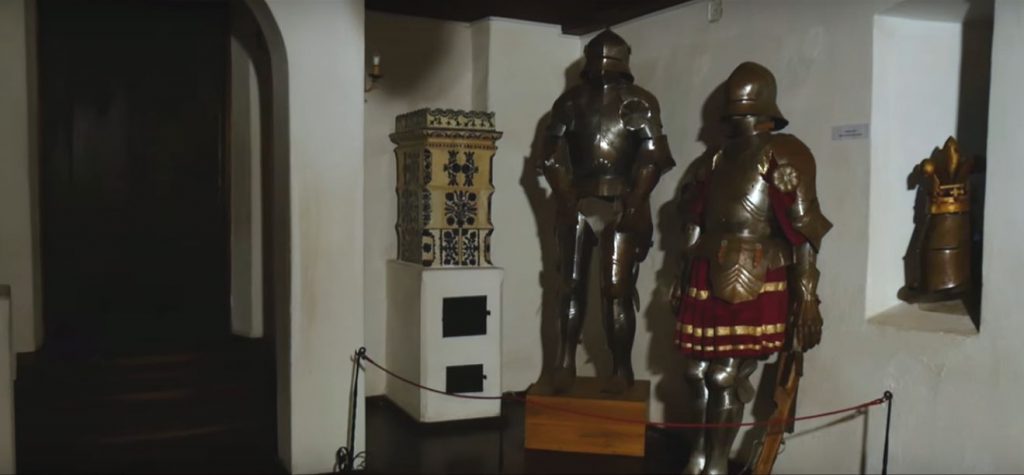
COPENHAGEN, the “merchant harbor”, rose from a Viking fishing village scattered across low islands, the sea lapping at every edge. By fifteenth century it had become Denmark’s capital and later, during the uneasy union with Sweden and Norway, the kingdom’s seat of power. The city weathered the tempests of the Reformation, the grim march of plague and fire, yet each time it rebuilt itself drawing wealth first from fish, then from its East India Company ventures, and later from the darker currents of the slave trade.
To travel to 9th cent. Copenhagen READ Sidroc the Dane: A Circle of Ceridwen Saga Story by Octavia Randolph
How the boy became a Viking. How the man became a legend. A discarded child Fated to become a powerful Jarl. Fate guides the path of his father, Hrald, to his meeting with the woman whose son would help change the face of 9th century Angle-land. Ahead of them is the perilous crossing of the North Sea, which stands between them and the plunder they seek.
JERUSALEM’s story is carved deep into history—whether told by scripture or stone. From its origins as the City of David in the 4th century BC through Canaanite and Israelite rule, it rose as Judah’s heart by the 9th century BC. In 638 CE, Muslim forces took the city, only for Crusaders to storm in centuries later, before Saladin reclaimed it. Suleiman the Magnificent’s Ottoman walls, built in 1538, still guard the Old City’s labyrinthine streets. After World War I, British rule gave way in 1948 to the birth of Israel. Over millennia, Jerusalem has been captured more than forty times, a city forged in fire, faith, and relentless struggle.
To safely travel back in time to 12th cent. Jerusalem READ The Land Beyond the Sea by Sharon Kay Penman.
The Kingdom of Jerusalem, also known as Outremer, is the land far beyond the sea. Baptized in blood when the men of the First Crusade captured Jerusalem from the Saracens in the early 12th century, the kingdom defined an utterly new world, a land of blazing heat and a medley of cultures, a place where enemies were neighbors and neighbors became enemies.
MADRID began not as a Christian city but a Muslim fortress in the late 9th century, guarding against León and Castile. In 1083, Alfonso VI captured it, ushering in Christian rule and pushing Muslims and Jews beyond the city’s core. By 1309, Madrid hosted the Courts of Castile, marking its rise. In 1561, Philip II made it the royal seat, planting the monarchy’s heart in the old alcázar. Successive rulers shaped the city transforming Madrid into a true capital.
To travel to 15th century Madrid READ The Queen’s Vow: A Novel of Isabella of Castile by C. W. Gortner.
Isabella is barely a teenager when she becomes an unwitting pawn in a plot to dethrone her half brother, King Enrique. Suspected of treason and held captive, she treads a perilous path, torn between loyalties, until at age seventeen she suddenly finds herself heiress of Castile, the largest kingdom in Spain. But when the Moors of the southern domain of Granada declare war, a treacherous battle erupts, one that will test all of Isabella’s resolve.
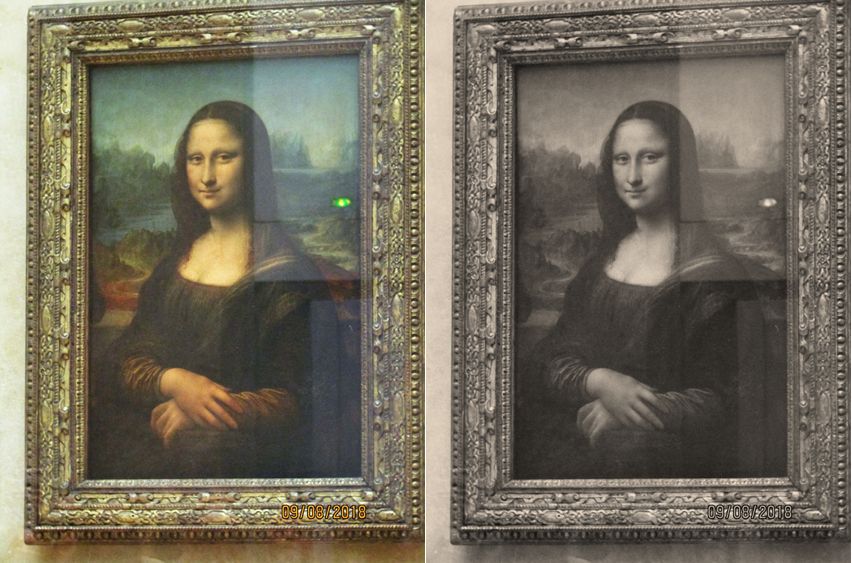
LONDON was born as a Roman outpost in 47 AD, meant to tame the wild Celtic lands and seize their riches. Its flames were kindled anew by Queen Boudica who razed the settlement to ash. Reborn under the Anglo-Saxons in the late 600s, London braced against relentless Viking raids then grew to England’s largest town, crowned by the majestic Westminster Abbey. When William the Conqueror claimed the city after Hastings in 1066, he planted the Tower of London as a grim reminder of power. As kings and queens made London their seat, wealth flowed into stately riverside homes and grand squares yet beneath its regal face the city’s shadowed streets whispered tales of a seedier, darker past.
To time-travel to 16th cent. London READ Wolf Hall by Hilary Mantel .
In Wolf Hall, one of our very best writers brings the opulent, brutal world of the Tudors to bloody, glittering life. It is the backdrop to the rise and rise of Thomas Cromwell: lowborn boy, charmer, bully, master of deadly intrigue, and , finally, most powerful of Henry VIII’s courtiers.
FLORENCE, where the Medici’s, as iron-willed rulers and patrons of the Renaissance, left their mark everywhere, their golden shield, crowned with lilies, etched on palaces and churches alike. From Cosimo, who seized power in 1434, to Lorenzo “The Magnificent,” they bankrolled geniuses like Michelangelo, Leonardo, and Botticelli, weaving art and power into one dazzling legacy.
To travel back in time to Michelangelo’s Firenze READ The Agony and the Ecstasy: A Biographical Novel of Michelangelo by Irving Stone.
His time, the turbulent Renaissance, the years of poisoning princes, warring Popes, and the all-powerful de’Medici family… His loves, the frail and lovely daughter of Lorenzo de’Medici, the ardent mistress of Marco Aldovrandi, and his last love, his greatest love, the beautiful, unhappy Vittoria Colonna… His genius, a God-driven fury from which he wrested brilliant work that made a grasp for heaven unmatched in half a millennium…
PRAGUE’s mystique lies in its foundation, shaped by astrologers and alchemists under Emperor Rudolph II, a seeker of knowledge beyond orthodox bounds. His castle became a sanctuary for pioneers who forged the path from alchemy to modern science. Rudolph amassed Christendom’s finest library and designed the city along powerful ley-lines, believing earth’s hidden energies would grant Prague strength. Upon these sacred points rose the Castle, the Old Town Square, and the royal residences of Prague. This fusion of magic and reason shaped not just its skyline, but the very soul of a capital destined to be a beacon of knowledge, power, and mystery in the heart of Europe.
To travel to 16th century Prague READ Alchemy (Giordano Bruno) by S. J. Parris.
1588 at the court of Rudolf II, a restless Holy Roman Emperor obsessed with the philosopher’s stone and immortality, science and sorcery collide amid growing fear of heresy and political turmoil. Giordano Bruno arrives, sent by Elizabeth I’s spymaster to contact John Dee, but finds Dee missing and a rival alchemist brutally murdered. Tasked with solving the crime, Bruno confronts enemies old and new—ancient Church powers and the Inquisition—realizing that with each step closer to truth, his own life hangs in the balance.
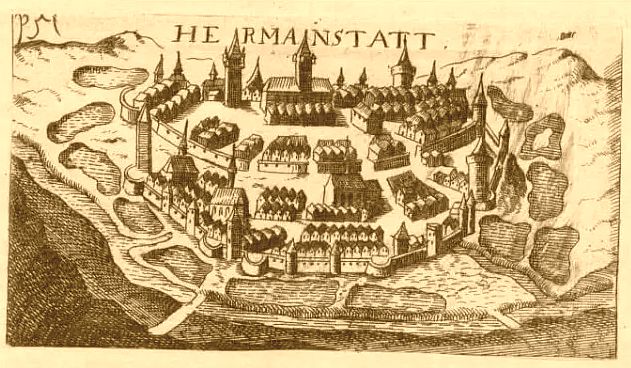
AMSTERDAM did not rise at the command of kings but from the un-glamorous toil of fishermen and merchants who shaped its fortunes with their own hands. What began as a humble settlement on the Amstel swelled once the great dam held the river’s temper, inviting looms, dye vats, and the bustling cloth market to take root along its widening streets. Herring boats brought early prosperity; the Hanseatic League carried its name farther still, until the Dutch East India Company cast its shadow across oceans. By the seventeenth century, the city’s Golden Age unfurled like a richly woven bolt of silk, its new canals threading the marshy ground while merchant houses rose beside them.
To travel to Amsterdam’s 17th century glory READ The Coffee Trader: A Novel by Davis Liss.
Amsterdam, 1659: Miguel Lienzo, once a celebrated trader among the city’s Portuguese Jews, has lost everything and now lodges in his brother’s damp canal-side cellar. Desperate to reclaim his standing, he joins forces with a beguiling Dutchwoman on a risky scheme to corner the market in a strange new commodity—coffee.
GENEVA emerged from medieval shadows as a count’s stronghold under the Holy Roman Empire, gaining self-rule by the late 14th century under the House of Savoy. An oligarchic republic took shape only to be shaken by John Calvin’s Protestant Reformation which transformed the grand Saint Pierre Cathedral into a beacon of the Reformed faith in 1535. After the turmoil of Napoleonic Wars Geneva found its place within the Swiss Confederation, forged by faith and freedom.
To easy travel to 17th century Geneva READ Voyage of Malice (The Huguenot Chronicles) by Paul C. R. Monk.
Persecuted for their beliefs, one family must travel the globe for a place to call home. Geneva, 1688. Jeanne is barely scraping by on meager earnings from weaving. She dreams of her previous life as a wealthy merchant’s wife before Louis XIV’s soldiers ran her family out of France for refusing to renounce their faith. But even in Geneva, Jeanne and her son aren’t anywhere close to free from persecution.
EDINBURGH’s roots trace back to the Votadini, a Britonnic Celtic tribe, before passing into Anglo-Saxon hands under Northumbria in 638. The shire was formalized in the 12th century by King David I, yet for centuries Scotland wrestled to break free from English rule. The city’s soul was shaped by John Knox’s fierce Reformation, forging the Church of Scotland amid Catholic resistance. But Edinburgh’s heart beats loudest with the turbulent tale of Mary, Queen of Scots, young widow of France, resident of Holyrood Palace, trapped in a web of ill-fated marriages, murder, spies, and a deadly rivalry with Elizabeth I. Her execution sealed a bitter chapter but peace flickered when her son James united the Scottish and English crowns, though true submission came only after the crushing defeat at Culloden in 1746.
To time-travel to Victorian Edinburgh READ Edinburgh Twilight by Carole Lawrence.
As a new century approaches, Victorian Edinburgh is a city divided. The wealthy residents of New Town live in comfort, while Old Town’s cobblestone streets are clotted with criminals, prostitution, and poverty. With each victim, the murderer is getting closer to Hamilton, the one man who dares to stop him.

VIENNA: For over six centuries, the Habsburgs shaped European destiny ruling Austria from 1282 to 1918, Hungary and Bohemia from 1526, and Spain’s vast empire for nearly two centuries. Empress Maria Theresa, master strategist, wove alliances through her sixteen children marrying Marie-Antoinette to France’s Dauphin and Maria Carolina to Naples’ king, securing power with royal bloodlines that still pulse through the English crown. Vienna, their enduring seat, bears their mark in grand palaces and monuments, many crafted or transformed under Maria Theresa and her grandson Franz Joseph I.
To travel back in time to Vienna’s 19th century glory READ The Accidental Empress: A Novel by Allison Pataki.
The year is 1853 and the Habsburgs are Europe’s most powerful ruling family. With his empire stretching from Austria to Russia, from Germany to Italy, Emperor Franz Joseph is young, rich, and ready to marry. Fifteen-year-old Elisabeth “Sisi,” Duchess of Bavaria, travels to the Habsburg Court with her older sister, betrothed to the young emperor. But shortly after her arrival at court Sisi finds herself in an unexpected dilemma: she has inadvertently fallen for and won the heart of her sister’s groom.
VENICE rose from over one hundred islands woven together by hundreds of canals and bridges, its name echoing the ancient Veneti who settled here in the 10th century BC. For nearly a millennium it thrived as the Republic of Venice, a maritime titan and gateway for Crusaders bound for the Holy Land. Jealous rivals circled but Venice carved an empire along the Dalmatian coast and even held sway over Constantinople, seizing its famed bronze horses now perched above St. Mark’s Basilica. Governed by noble assemblies and a powerful Doge, the city’s politics were tightly held by elite families until the republic’s fall in 1797 when the last Doge stepped down, ending an era of unrivaled Venetian glory.
To travel to a misty early 20s century Venice READ Death in Venice by Thomas Mann.
Published on the eve of World War I, Death in Venice tells the story of Gustav von Aschenbach, a successful but aging writer who follows his wanderlust to Venice in search of spiritual fulfillment that instead leads to his erotic doom. In the decaying city, besieged by an unnamed epidemic, he becomes obsessed with an exquisite Polish boy, Tadzio. “It is a story of the voluptuousness of doom,” Mann wrote. “But the problem I had especially in mind was that of the artist’s dignity.”
MOSCOW’s story begins in 1147 when it first flickered into the chronicles as a small wooden settlement on the banks of the Moskva River, little more than a fortified outpost. Yet its position soon drew merchants, soldiers, and princes who understood the power of crossroads. By the 14th century it had risen from obscurity to become the heart of a principality, rallying surrounding lands under its banner as the Mongol shadow began to recede. The Kremlin grew stone by stone, a symbol of authority that endured through fire, invasion, and the shifting ambitions of rulers. Over centuries Moscow expanded outward like a great tide, from medieval citadel to imperial capital, from the upheavals of revolution to the vast modern metropolis that now sprawls across the plain. Throughout its long history Moscow remained exactly what it was at the beginning: a place where power concentrates, cultures meet, and the pulse of a nation beats.
To freely travel to post-WW1 Moscow READ A Gentleman in Moscos by Amor Towles.
On 21 June 1922, Count Alexander Rostov is escorted out of the Kremlin, across Red Square and through the elegant revolving doors of the Hotel Metropol. Deemed an unrepentant aristocrat by a Bolshevik tribunal, the Count has been sentenced to house arrest indefinitely, in an attic room while Russia undergoes decades of tumultuous upheaval. Can a life without luxury be the richest of all?

LISBON’s sheltered harbor on the Tagus River drew waves of conquerors, each leaving their mark: Celts, Phoenicians, Romans, Vandals, Visigoths, Muslims, Norwegians, and finally Moors. In 1147, Alfonso I of Portugal, backed by Crusaders, seized the city ushering in Christian rule that sparked economic and expansionist ambitions. But Portugal’s true rise came from the sea, fueled by Prince Henry the Navigator who transformed exploration with the agile caravel, enabling long voyages against the wind. He orchestrated voyages that opened trade routes to Madeira, the Azores, and West Africa, enriching Lisbon and Portugal. The Age of Discovery crowned its glory with Bartholomeu Dias rounding the Cape of Good Hope and Vasco da Gama reaching India by sea in 1498. Portugal’s claim to Brazil sealed its place on the world map, a small kingdom turned global power through sails and stars.
To travel to XX century Lisbon READ A Small Death in Lisbon by Robert Wilson.
While the narrative switches back and forth between 1941 and 1999, Wilson’s wide knowledge of history and keen sense of place make the eras equally vibrant. In 1941 Germany, Klaus Felsen, an industrialist, is approached by the SS high command in a none-too-friendly manner to go to Lisbon and oversee the sale of wolfram (also known as tungsten, used in the manufacture of tanks and airplanes).
PARIS began as a modest trading post for the Parisii Celts on the Île de la Cité in the 3rd century BC. The Romans arrived then Christianity took root in the 3rd century AD through St. Denis. Clovis, first Merovingian king, made Paris his capital in 508 uniting the Franks under one language and rule. Though Vikings sacked the city’s island stronghold. With Hugh Capet, Count of Paris, crowned king, the city’s rise was assured. By the 12th century, Paris blossomed into France’s political and cultural heart, crowned by the royal palace on the Île de la Cité and the soaring beginnings of Notre Dame.
For a whirl-wind travel throughout France and WW2 Paris READ The Nightingale by Kristin Hannah.
This story is about what it was like to be a woman during World War II, when women’s stories were all too often forgotten or overlooked . . . Vianne and Isabelle Mauriac are two sisters, separated by years and experience, by ideals and passion and circumstance, each embarking on her own dangerous path towards survival, love and freedom in war-torn France.
DUBROVNIK’s Old City rises like a dream from the Dalmatian coast, its stone walls and sea-worn towers so perfectly preserved that wandering its passages feels like stepping into another century; no wonder its battlements became the backdrop for Game of Thrones. Once known as Ragusa, the city took shape in the 7th century and quickly grew into a formidable maritime hub prized by Byzantines, claimed by Venice, before ruling itself for centuries as the proud capital of the Republic of Ragusa only to weather Napoleon’s conquest, absorb the weight of the Austrian Empire, and later find its fate bound to Yugoslavia. Yet still Dubrovnik endures, gleaming and stubborn, a walled jewel suspended between mountain, sea, and the long memory of its own resilience.
To travel to Dubrovnik ‘s iconic ’80s… READ The People We Were Before by Annabelle Thorpe.
Yugoslavia, summer 1979: a new village, a new life. But eight-year-old Miro knows the real reason why his family moved from the inland city of Knin to the sun-kissed village of Ljeta on the Dalmatian Coast, a tragedy he tries desperately to forget.
BUDAPEST’s story begins in the mists of a Celtic village claimed by Rome, whose old Aquincum stones still whisper along the Danube’s edge. Centuries rolled forward with new arrivals, Bulgarians first, then Magyar tribes who forged the Kingdom of Hungary and raised Buda, crowned with castle and court. Across the river, Pest thrived on its own terms. Yet Buda’s proud walls knew siege after siege, falling to the Ottoman Turks in 1541 before a coalition of European armies reclaimed it. Folded into the Habsburg realm, the graceful Chain Bridge linked their banks and by 1873 Buda and Pest were officially bound into Budapest.
For a centuries-long trip into Budapest and Eastern Europe READ: The Historian by Elizabeth Kostova.
The Historian is the story of a young woman plunged into a labyrinth where the secrets of her family’s past connect to an inconceivable evil: the dark fifteenth-century reign of Vlad the Impaler and a time-defying pact that may have kept his awful work alive through the ages. The search for truth becomes an adventure of monumental proportions, taking us from monasteries and dusty libraries to the capitals of Eastern Europe.
Bonus…
BRAŞOV, a city first mentioned in 1235 as Corona, in Transylvania, was officially founded after King Andrew II of Hungary granted the land to the Teutonic Knights around 1211. After Tatar destruction in 1241, it became political center and grew into a thriving trade hub as Kronstadt, by the late 14th century connecting Wallachia, Moldavia, the Balkans and the Baltics. Its diverse population (Romanians in Șcheii, Hungarians in Blumăna, and Saxons in the Old Town) made it Transylvania’s largest city. Key in anti-Ottoman alliances and shifting rule between Ottomans and Habsburgs, Joseph II’s 1781 religious reforms spurred Romanian cultural growth, leading to Brașov’s role in the 1848 revolution. By the late 19th century, the city expanded beyond medieval walls and after World War I it joined Greater Romania under its first Romanian mayor.
To time-travel to 15th century Brașov READ When Secrets Bloom by Patricia Furstenberg.
Transylvania, 1463. A land of fortress cities, heresies, and shadows cast by Vlad Dracula, the man. Kate Webber, a Saxon healer, has always lived between reverence and suspicion. Her gift with herbs and midwifery makes her indispensable – and dangerous – in Kronstadt, a city where fear rules and women are silenced. Will she survive that winter night when secrets kill?