
When it comes to superstitions, especially Transylvanian superstitions, even the most rational among us have whispered “touch wood” or avoided walking under a ladder. I know I have. Such old magic and weird beliefs have long offered humans a sense of control over a world that often feels cruelly unpredictable.
Superstitions are more than quirky cultural relics; they are the soul’s attempt to impose meaning on chaos. This is evident in Romania, particularly Transylvania, where the supernatural and the sacred have long shared the same threshold. While the Western world flinches at black cats and the number 13, in Transylvania we count our MANY fears differently.
From Ancient Dacia to Haunted Transylvania: The Long Life of Superstitions
Long before the first churches rose in the valleys of Transylvania, before towers bore crosses or bells tolled across the Carpathian wind, there were other protections: humbler, but no less sacred. The Dacians, who lived on these same hills and along the same rivers two thousand years ago, spoke to the unseen through amulets, dances, and carved signs. To them, the world was alive with spirits, in water, in fire, in the curved line of a snake or the turn of the sun across the sky.
Dacians wore amulets of clay, bronze, or amber, shaped like horses, rams, or serpents, to shield themselves from misfortune. They carved solar wheels and swirling arms, invoking the light of heaven against the shadows of disease or the evil eye. To ward off thunder, they hung bells and double axes, while whispered incantations (half prayer, half spell) were uttered over the sick, the newborn, or the dying.
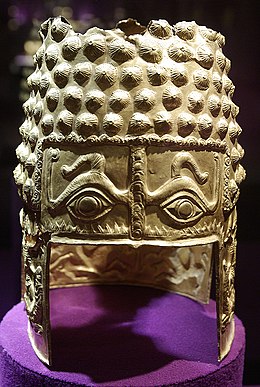
Theirs was a faith both focused on family and respect but also fearing their gods: looking up to the blazing sun for life, yet fearing the dark beneath the earth. From these roots grew a tradition that would not die even as Rome fell, Byzantium rose, and kingdoms changed their banners.
By the Middle Ages the faith left behind by the Dacians had intertwined with that of other Christians, Saxons, and Székelys. Crosses replaced swastikas, but the intention remained: to guard, to bless, to hold back the unknown.
For example, when homes were built a silver coin or a snake’s head was placed beneath the foundation, the ancient echo of sacrifice transformed into superstition.
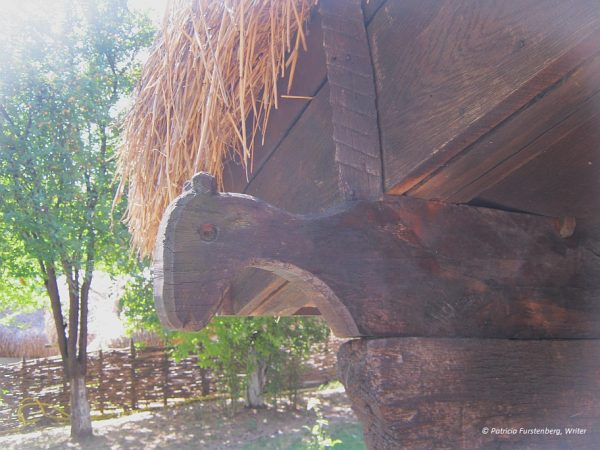
Carvings of the sun, horse, or rosette adorned wooden gates and beams as protective signs that blended pagan geometry with Christian faith.
The German Saxon settlers painted their monumental gates with bright flowers and stylized birds, symbols of abundance and divine favor such as the sun, the cross and the rope – the twisted rope symbolizes the binding of life and death, of good and evil.
The Székelys painted flowers into their doors, especially the tulip, presented in bright colors to keep misfortune away, but also spirals. Each pattern, each brushstroke, was a silent prayer.
And when villagers gathered at harvest, they danced not merely in joy, but in ritual gratitude. The circle of dancers, their hands joined, mirrored the ancient solar wheel: life, death, and rebirth.
The carved wooden gates of Maramureș or the Székely Land are living amulets: suns, horses, vines, and spirals chiseled into oak, carrying forward the same belief that beauty and faith, carved by human hands, can hold chaos at bay.
Even today, the thread remains unbroken.
In spring, Romanians tie a red and white thread, the Mărțișor, around their wrists, a Dacian charm reborn as symbol of renewal and protection. When collecting healing herbs, women still whisper to the earth, asking permission, and offer bread and salt before plucking its gifts.
In every village, you’ll still find the evil eye feared and countered with a red ribbon, a whispered blessing, or a drop of melted wax.
The garlic hung at the door, so often reduced to a vampire’s tale, is in truth a remnant of a much older magic, one meant to repel disease and envy alike especially on certain nights of the year. One such night is Noaptea Sfântului Andrei, Saint Andrew’s Eve, November 29th, when, according to Romanian lore, the dead are said to rise and the strigoi (restless spirits) roam freely. Villagers once smeared garlic on window frames and keyholes to keep the undead away, a practice still remembered in remote hamlets. Even today, many Romanians will braid garlic ropes and hang them above their doors, not as decoration, but as protection. Garlic, salt, red thread—these are not culinary or sartorial choices, but spiritual armor.
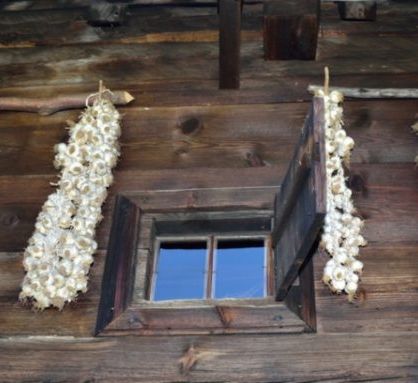
The superstition circle remained unbroken from the serpent-eyes of Dacia to the thread of Mărțișor, from bronze amulets to painted Saxon gates. Transylvania has never ceased to believe that the visible and the invisible walk side by side. Its people still live in quiet conversation with the unseen, a faith that hums beneath prayer, beneath art, beneath gesture, and one as old as the mountains themselves.
The Romanian Thread of Superstition: Where the Veil Is Thinnest
In When Secrets Bloom, my latest historical novel set in the shadowy folds of 15th-century Kronstadt (today Brasov), superstition is not only old magic, it’s survival.
My protagonists, a young healer who saw more than most her age and a too-innocent-for-his-own-good Jewish young man, must navigate a world where a woman’s knowledge can be both revered and feared, and where certain superstitions can save OR sentence an innocent life.
The Thread of Superstition in When Secrets Bloom
At the heart of When Secrets Bloom lies a quiet, relentless current: superstition, that fragile bridge between faith and fear, knowledge and the unknown. Both Kate, the Saxon healer, and Moise, the Jewish apprentice, live in a world ruled as much by unseen forces as by men. Their fates are spun from the same ancient thread that once bound the Dacians to their gods and charms.
Kate, a Healer in a World of Fear
Kate’s art is born from old knowledge and older suspicion. She practices medicine as her ancestors did: part science, part sacred ritual. In Kronstadt’s narrow streets her healing herbs and whispered incantations carry the scent of Dacian magic, those ancient rites once meant to calm spirits or bless the harvest.
Her enemies call it witchcraft; her patients call it hope.
Every act of healing becomes a test of faith: when she mixes herbs by moonlight or presses her palms over a dying body she steps into that perilous space where the Christian cross and the pagan charm intertwine.
The villagers’ minds are still ruled by superstition. A birth gone wrong, a sudden frost, a failed crop, all must have a cause and that cause must wear a human face. For them, the healer who knows too much becomes the vessel of their fear.
Kate’s story echoes the old belief that a woman’s knowledge is dangerous, her hands both sacred and cursed. Just as the Dacians once carved serpents and solar wheels into their amulets, Kate wields symbols of protection: she guards her healing shed filled with herbs, perhaps wears a red thread about her wrist, and murmurs blessings older than the Church’s.
Yet none of it will save her when the crowd, and especially those in power, whispers one word: witch.
When she is taken to the Witches’ Lake, the superstition turns upon itself… Her jailers falter. Whether by chance, divine intervention, or the quiet work of a sisterhood, the line between miracle and magic blurs again, as it has for centuries.
Moise, a Seeker Between Worlds
Moise, the young Jewish printer who believes the book hold all the life-knowledge he needs in When Secrets Bloom, lives at the opposite pole. He is the son of a people for whom knowledge is sacred and yet he, too, is ensnared by the age’s fears. At the printing press he handles ink and paper, tools of enlightenment, but outside he cannot help but feel the pulse of older superstitions.
When he sees the Shaman enter Kronstadt, wrapped in shadow and rumor, he feels the weight of every folktale whispered at night. His friends laugh; he listens. His friends live life, he watches it. Yet he, alone, knows that words and names have power, that oaths and pacts carry consequences.
The legends he has read — of Dacian gold, of maps and curses — tangle with his own choices. Even he, the rational scholar, will find himself drawn into a pact that smells of blood and fire, echoing the same fear that condemned Kate.
Moise’s world teeters between enlightenment and enchantment. The printing press spreads words meant to banish ignorance, but superstition seeps between its letters — proving that reason alone cannot silence the ghosts of the past.

The Old and the New, Linked by the Thread of Superstition
In both their stories, Kate’s and Moise’s, superstition is no mere ornament; it is the axis of fate.
Kate’s healing springs from inherited ritual, offerings to the earth, whispered charms, protective threads, the herbs cut only after a prayer.
Moise’s fear springs from inherited caution — the belief that certain names, symbols, and promises can twist a man’s destiny.
Both move through a land where garlic at the door wards off evil, where symbols of sun and horse still mark the wooden beams of houses, and where the villagers’ faith in Christ hides the echo of Dacian amulets buried beneath the threshold. A land where walking under a ladder invites misfortune, where a black cat crossing one’s path darkens the day, and where shadows gathering on the roof are said to turn into watchful eyes by night.
Here, buildings inherit the strength or sorrow of those who dwell within and people believe that each soul has its appointed place in the world: the lowly must not cross the path of the powerful. And in this same land, old books are thought to know every truth, their words a prophecy that must come to pass, taken not as warning or wisdom, but as fate itself.
From the Dacian serpent to the Saxon sun-carving, from the healer’s herb bundle to the printer’s book, superstition in When Secrets Bloom becomes what it has always been in Transylvania: the means to navigate the unseen, a fragile defense against the terror of not knowing.

The Science of Superstition and the Fear of the Unseen
From a psychological standpoint, superstition is about pattern recognition: our minds link unrelated events in an effort to predict outcomes. We seek reason in randomness. If you wore red on the day of good news, you might wear red again, just in case. Charms, rituals, prayers, and talismans all serve to soothe our fear of uncertainty.
Why Do We Believe the Unbelievable?
I still throw salt over my shoulder if I bump the shaker.
I hold on to a button when I see a priest on the street.
I try to step out of the house with my right foot first and, before a long journey, I always sit on my luggage – just for a moment.
And though I know none of this should make a difference, I still do it. Perhaps you do too.
Psychologists say this strange mix of reason and ritual is simply human. We think in two ways: fast and slow. The fast mind is intuitive, emotional, the one that jumps at shadows or clutches the button when a black cat crosses the road. The slow mind is rational, the voice that says, “This makes no sense.” But, sometimes, even when we know a superstition is illogical, we follow it anyway. It’s called acquiescence: the quiet decision not to correct what we know is false.
Psychologists who spent decades studying superstition suggests that we acquire these habits in three simple ways.
First, we are taught them. As children, we learn from the adults and peers around us: “Don’t open an umbrella indoors,” “Don’t step on a crack.” These tiny warnings pass down generations like heirlooms.
Second, we imitate what we see. Someone knocks on wood, and without being told, we start doing the same. Rituals spread quietly, through mimicry and belonging.
And third, perhaps most powerfully, we create our own superstitions by accident. We wear a certain pair of shoes on a day when everything goes right, or listen to the same song before a big event, and suddenly that act becomes our “lucky charm.” Psychologists call it accidental conditioning, connecting cause and effect where none exists, but where comfort is found.
Some people are more prone to superstition than others. It can rise from anxiety, uncertainty, or low self-esteem, emotions that crave control when life feels unpredictable. Historically, women have often been more superstitious, perhaps because they have had less control over their circumstances. Superstitions, then, become a quiet rebellion, a whispered way to shape fate when the world won’t listen.
Superstitions comfort us. They give us a fragile illusion of control when the world feels unpredictable. Our ancestors feared storms, disease, and hunger; we fear loss, uncertainty, and chance. The rituals have changed shape, but the need is the same: to whisper to the universe: I’m ready. Be kind.
And perhaps, on some level, they do help. Studies have shown that “lucky” gestures (crossing fingers, wishing good luck) can actually improve performance by easing anxiety and boosting confidence. When we believe we have a bit of luck on our side, we stand a little taller, breathe a little slower, and face the unknown with steadier hands.
Maybe that’s the real magic. Not that superstition changes the world, but that it changes us.
This is why superstitions spike in times of stress, whether during war, political upheaval, or personal crises.
It’s no coincidence that in When Secrets Bloom, the birth of a child during a storm is interpreted as an omen, or that a woman’s dreams are treated as prophecy. In periods of instability, we grasp at the invisible threads.

Regional Superstitions: A Romanian Sampler
- Whistling indoors is said to bring poverty. In rural Wallachia, it’s even believed to summon snakes.
- Spilling salt is bad luck, unless you throw a pinch over your left shoulder, a habit echoed across cultures.
- Meeting a priest early in the morning is bad luck. If you must, you’re advised to turn back home.
- Seeing a spider in the morning? Cancel your plans. But if you spot one at night, expect good news.
- Dreaming of white flowers means death. Of red ones? Passion OR betrayal.
- A Superstitious architecture. Just as some Western buildings skip the 13th floor, Romanian homes, especially in the countryside, often feature protective symbols in their architecture. The evil eye motif is carved above doorways. Iron horseshoes are nailed upside-down on gates to trap bad spirits. Crosses etched on baking trays, on barns, on combs, silent prayers written into everyday life. In some Saxon villages, one still finds Hausmarken, intricate protective symbols etched into the plaster walls of centuries-old homes. These weren’t aesthetic flourishes, they were shields against envy, lightning, and ill fortune.
- And always – never begin a journey on a Tuesday, the day ruled by Mars, god of war and misfortune. The Ottoman chroniclers even noted that Wallachian soldiers preferred to march on Wednesdays or Fridays, fearing Tuesday-born battles were cursed.
Today, superstition thrives not just in folklore, but in locker rooms. Four out of five professional athletes admit to some kind of ritual: lucky socks, special chants, a need to step onto the field with a particular foot first. Rafael Nadal’s water bottles, precisely aligned, are modern relics of this age-old desire to master fate.
Writers, too, are not immune. Many of us have writing talismans: quotes, candles, well-worn mugs. Perhaps because, like our characters, we are always courting the impossible: summoning a world from silence.
Truth, Fiction, and the Power of Belief
In historical fiction, superstition is more than color. It’s character. It reveals the fears and hopes of an era. And when readers ask, Did they really believe this? the answer, more often than not, is yes. Because sometimes the truth is in the folklore.
And sometimes, as in When Secrets Bloom, superstition is the invisible hand that guides the plot. A midwife trusts her knowledge. To the less educated, she trusts the stars. A child is born despite all odds. A traveler avoids the eastern pass not for strategy, but because a bat flew across his path.
What does this tell us?
That we believe in superstition not because it is rational, but because it is human. It is our echo into the unknown, our cry for mercy, our hope for luck. And in that, be it black cat or red thread, we are not alone.
So the next time you spill salt or meet a priest on a quiet morning road, pause. The past is not so far behind us. And in fiction, as in life, belief may be the most powerful truth of all.

Sources:
Cultul lui Zalmoxis by Alex Nour
The psychology of superstition, interview with UNI Professor of Psychology Carolyn Hildebrandt, https://insideuni.uni.edu/campus-community/psychology-superstition
The evolution of superstitious and superstition-like behavior, Kevin R Foster, Hanna Kokko https://pmc.ncbi.nlm.nih.gov/articles/PMC2615824/
Superstitions: A Culturally Transmitted Human Behavior by Fatik Baran Mandal, International Journal of Psychology and Behavioral Sciences, http://article.sapub.org/10.5923.j.ijpbs.20180804.02.html
The everyday magic of superstition, The British Psychological Society, https://www.bps.org.uk/psychologist/everyday-magic-superstition
It’s often the case that the superstitions and traditions of the times before more modern belief systems took over become intertwined with those of the newcomer. I remember being told, for example, that the Christian festival of Christmas was set, in England, at the time of the old Pagan winter festival, when people would be celebrating anyway; so the new ideas could be subtly imposed. Here you’ve given a fascinating look at how old ideas in a particular society continued, Patricia, which will be a useful extra when I begin reading your ‘When Secrets Bloom’, which awaits me near the top of my TBR pile. Many thanks for this. 🙂
So true, Lynda. I look back at the stories I was told as a child… Yet I wouldn’t have been the same without them 🙂
Thank for stopping by and for your wonderful feedback.
Thank you for the very interesting history. I knew about the Dacians but not much. I knew they fought the Romans fiercely. I mistakenly thought garlic hung at the door was just for vampires but now I know that practice have much more ancient and complex roots. Your book seems to be very fascinating.
Thank you for your visit, Thomas. Yes, the Dacian-Roman wars were something fierce. I can still remember learning about them in school.
The unassuming garlic is a fascinating item in the Romanian household, from the kitchen to the cattle barn. Maybe where it has countless medicine properties and let’s not forget its persistent scent. 🙂