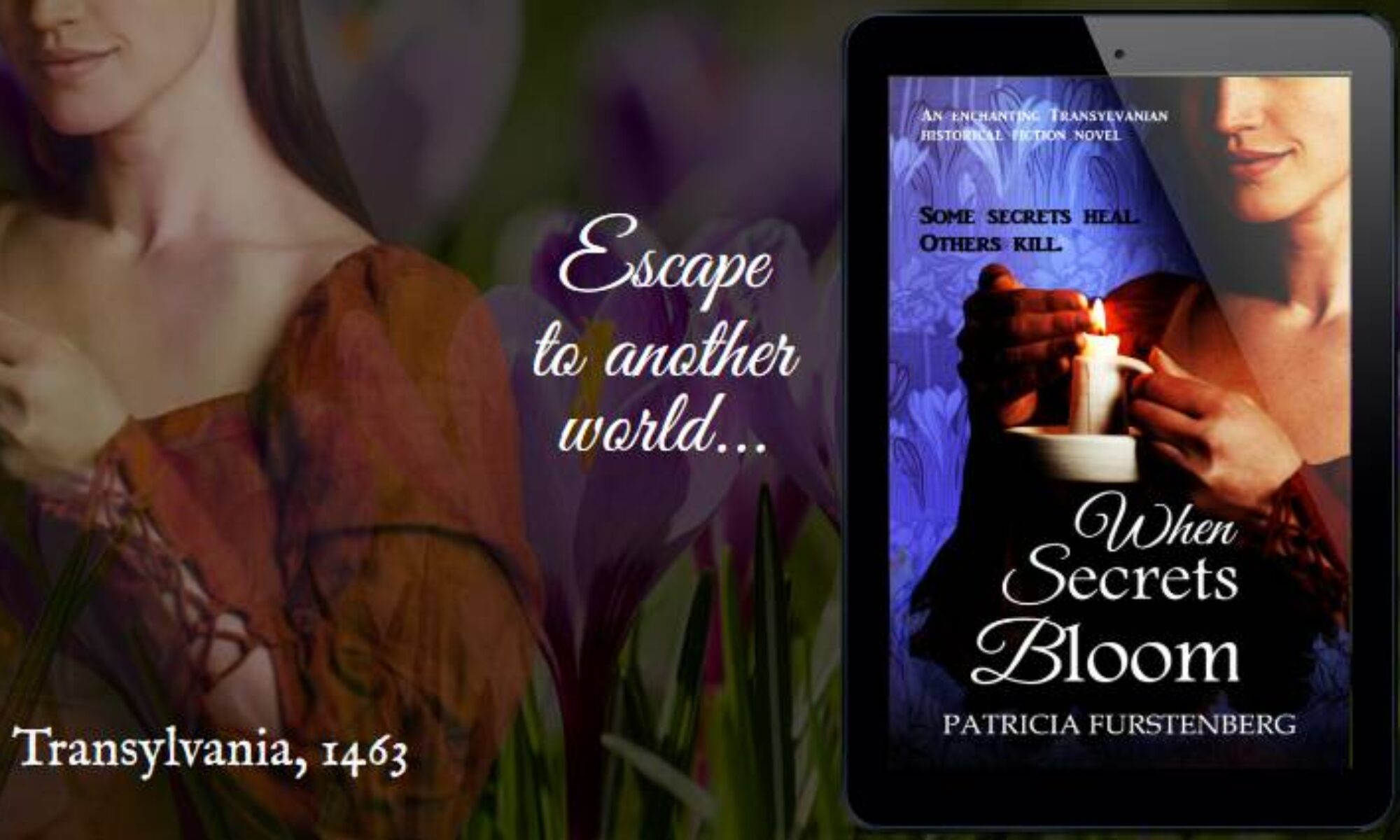
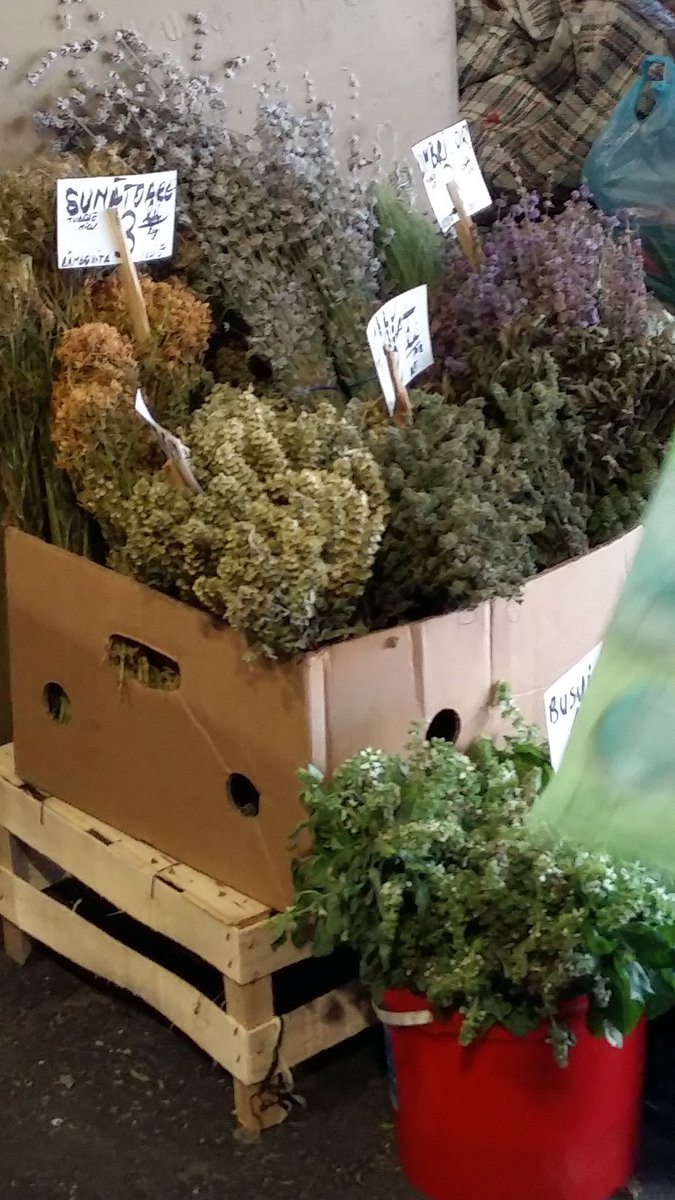
Summer in Transylvania is more than slopes awash with wildflowers and forests deep in green. Long before books recorded their stories, flowers and herbs carried legends from one generation to the next. They healed the sick, protected homes, foretold love, and reminded people that nature was alive with mysteries.
Ancient Greeks did not draw a sharp line between medicine and poison. They used the word pharmakon to mean both a healing remedy and a harmful poison for the body, because they believed a substance’s effects depended largely on how it was prepared, administered, and for what purpose. Even deadly plants such as hemlock or hellebore could be considered beneficial in skilled hands, while a remedy given carelessly (or with malicious intent) could become a poison. By extension, a pharmakis was a woman who works with drugs.
In contrast, the Greek word toxikon, originally referring to poison smeared on arrows, eventually gave us the modern word toxin.
The distinction between cure and poison remained blurred for centuries. Medieval healers inherited the belief that nature offered no truly good or evil plants, only substances whose power depended on the hands that gathered them and the wisdom with which they were used. A healer’s remedy and a murderer’s weapon might come from the very same root.
For the people of medieval Transylvania, every plant growing along a woodland path or meadow had a purpose. Some belonged to healers. Others to priests. A few were best left untouched.
It is these forgotten beliefs that continue to inspire my historical fiction.
The Golden Flowers of Sânziene (Lady’s Bedstraw)
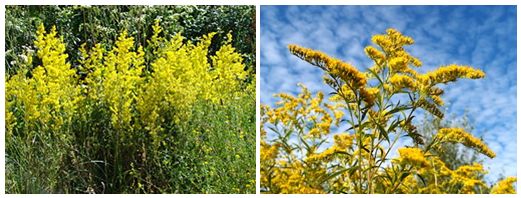
No flower captures the spirit of a Romanian summer more than the golden sânziene.
Gathered on Midsummer’s Day, 24 June, these delicate blossoms were woven into wreaths and hung over doors, gates, barns, and even graves. They were believed to protect households from misfortune and bless the coming harvest.
Young women slipped the flowers beneath their pillows, hoping their dreams would reveal the man they would one day marry.
Even today, Sânziene remains one of Romania’s most enchanting folk celebrations, where Christianity and ancient beliefs intertwine beneath the midsummer sun.
The Fern That Flowers Only Once, They Say
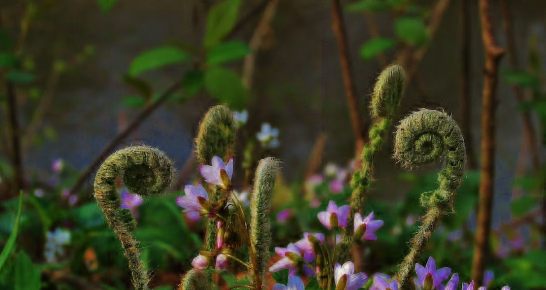
Every child knew that ferns never bloomed. Yet folklore insisted there was one exception.
On Midsummer Night, hidden somewhere deep within the forest, a single fern was said to flower for only an instant. Whoever found this impossible blossom would discover hidden treasure, understand the language of animals, or gain knowledge forbidden to ordinary people.
It is exactly the kind of story shared around medieval hearths after sunset.
Unlocking Cynanchum vincetoxicum or “Iarba fiarelor”
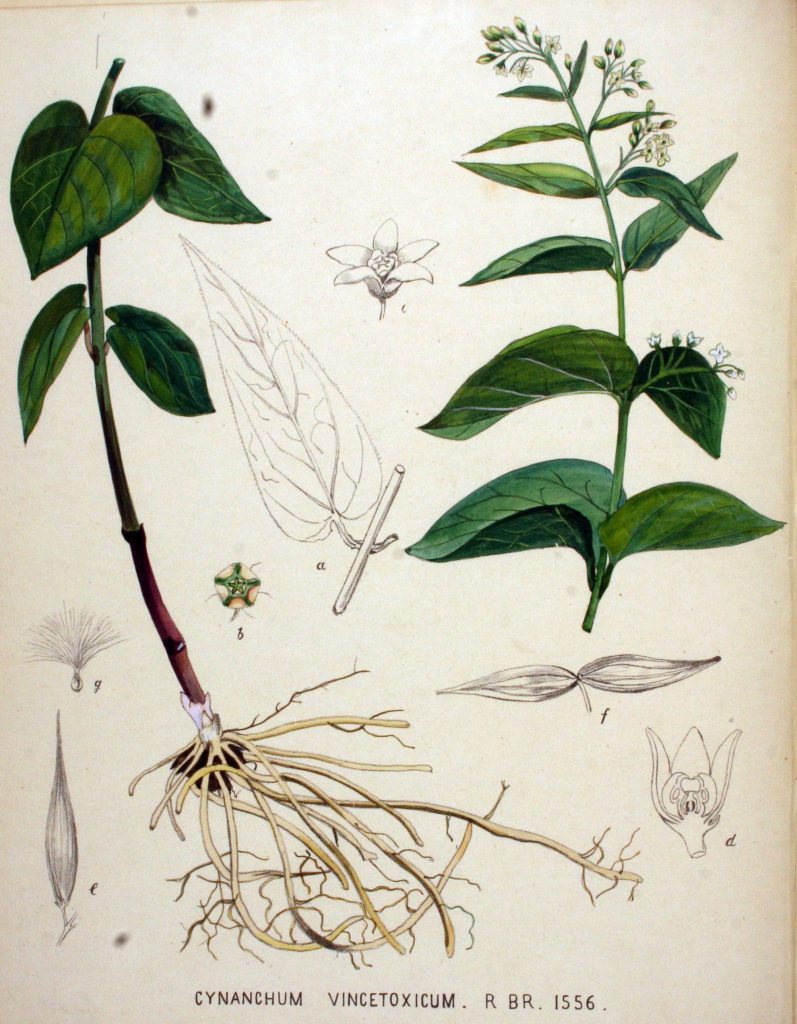
Finding the elusive Cynanchum vincetoxicum or “Iarba fiarelor” (beasts’ herb) was believed to grand the power of opening any locks. Not even handcuffs could resist its magical powers.
It is the key to unlock the doors to unimaginable treasures.
The Fragrance of the Linden Blossoms (Flori de Tei)
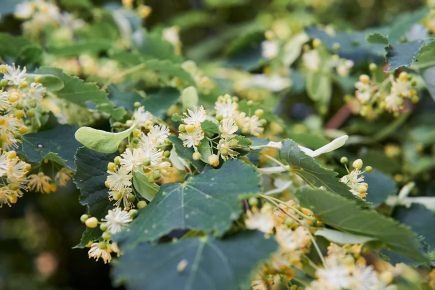
When the linden trees burst into bloom, villages filled with their sweet perfume.
I grew up on a street with linden trees…
The blossoms were gathered for healing teas, but the tree itself was sacred. People believed it brought peace, offered protection, and sometimes granted prophetic dreams to those who slept beneath its branches.
Few scents evoke a Romanian summer more vividly than flowering linden.
St John’s Wort (Sunătoare): Captured Sunlight
Its bright yellow flowers seemed to hold the very light of the sun.
Harvested around St John’s Day, St John’s Wort was treasured for both its medicinal qualities and its power to drive away evil spirits. Every blossom represented hope, warmth, and protection against darkness.
Basil (Busuioc): Far More Than a Kitchen Herb
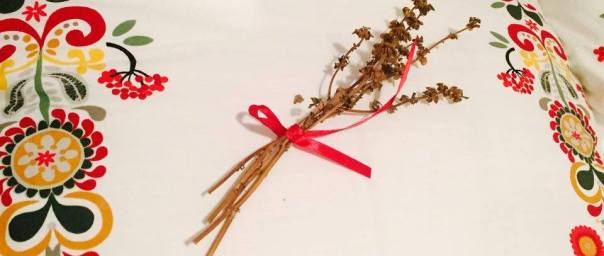
In Romania, basil has long been one of the most cherished herbs.
Blessed by priests and used during religious ceremonies, it also belonged to young women hoping for love. A sprig placed beneath a pillow might reveal a future husband in a dream. Carried close to the heart, basil symbolised good fortune and divine blessing.
There i even a beautiful legend of Young Basil and Lady Crocus (Busuioc si Brândușa).
Meadows Filled with Wildflowers
A summer meadow was never simply beautiful.
Every flower had meaning so gathering them carelessly risked offending the unseen spirits believed to dwell among them. The first blossoms were sometimes left untouched, an offering to nature itself.
The same custom applies to the last fruits in an orchard, or the last grapes in the vine – left as an offering to the birds.
These colourful hills formed the backdrop to everyday life in medieval Transylvania.
Mugwort (Pelin): A Traveller’s Guardian
Known as pelin in Romanian, mugwort accompanied many midsummer celebrations.
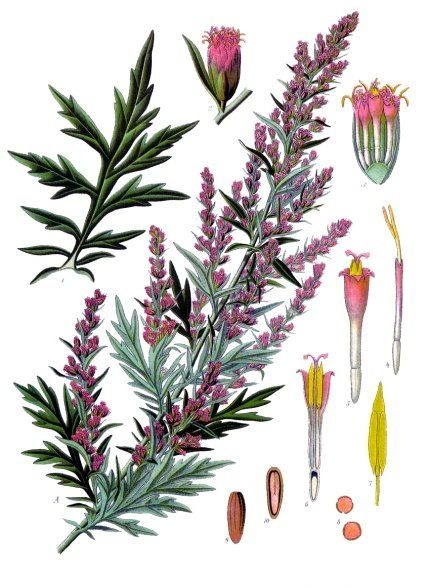
People tucked sprigs into belts or wreaths to guard against illness, enchantment, and wandering spirits. It was a humble plant, yet one believed to possess extraordinary protective power.
The Vine Leaves and the Promise of Plenty
Across Transylvania, vineyards climbed sunny hillsides long before the grapes ripened.
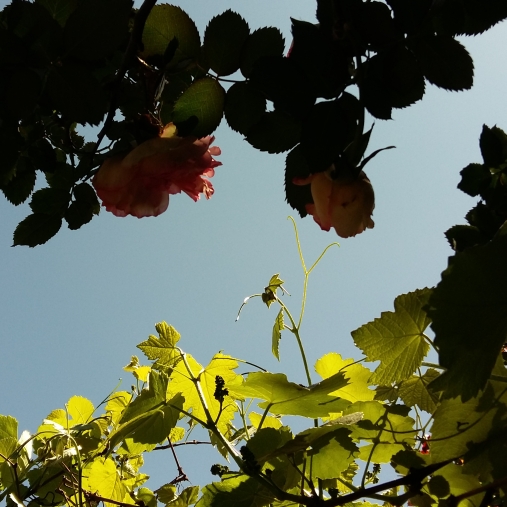
The vine represented abundance, family, and hope. Every twisting branch promised another season, another harvest, another generation. It remains one of the enduring images of the Romanian countryside.
The Darker Side of the Meadow
Not every flower that bloomed beneath the summer sun was a friend.
The people of medieval Transylvania understood that nature offered healing and harm in equal measure. A wise herbalist learned not only which plants eased fever or soothed pain, but also which were best left untouched.
Monkshood, hemlock and nightshade (left to right):


Monkshood, also called wolf’s bane, was among the most feared. Its striking violet flowers concealed a poison so powerful that it had been used since antiquity to taint wells and coat weapons.
Hemlock, despite its delicate white flower clusters resembling those of a wild carrot, carried a deadly reputation and had long been associated with execution and betrayal as to an experienced herbalist the differences were obvious, but to the untrained eye such mistakes could have deadly consequences.
Even the beautiful deadly nightshade or belladonna, with its inviting glossy black berries almost like cherries, found its way into folklore as both a sleeping draught and the herb of witches, was perhaps the most deceptive of all and one of Europe’s most dangerous poisons. It served as a reminder that in the medieval meadow, beauty could be fatally misleading.
These plants became woven into folklore as much as medicine. Wise women and healers respected their power, while others feared them, believing they belonged as much to spirits and witches as to the natural world. In truth, many possessed genuine medicinal properties when used with great skill, but the difference between a remedy and a poison often lay in the dose.
Perhaps that is why so many Romanian folk traditions treat the natural world with reverence. Every meadow held blessings, but also warnings. Beauty and danger often grew side by side.
Bringing Romanian Folklore to Life
When I write historical fiction, I don’t simply recreate castles and battles. I want readers to step into the everyday lives of people who believed the natural world was alive with meaning.
A healer knew which herbs could ease a fever. A child understood which flowers should never be picked. A traveller recognised the protection offered by basil tucked into a pocket or mugwort woven into a belt. While in Romania, plants are deeply rooted in Christianity.
These traditions shaped the rhythms of medieval life just as surely as kings and wars.
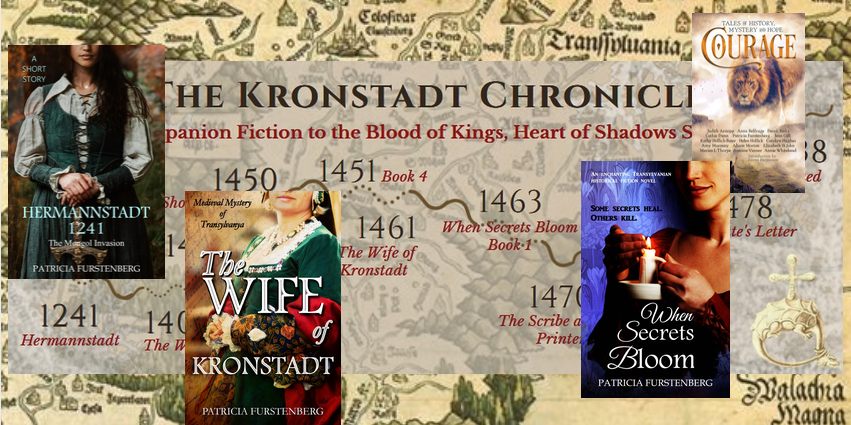
That is why flowers, herbs, and forests are woven throughout my Blood of Kings, Heart of Shadows series. They are not decoration. They are part of the story, embedded in the plot, carrying the hopes, fears, and beliefs of fifteenth-century Transylvania.
Plants and flowers are embedded in the plot of my books – book quotes:
Hemlock:
“I wouldn’t touch hemlock.’ I looked from face to face, bewildered.
‘Do you know what it looks like?’ asked the Sheriff, his voice low, unsure.
‘Of course I do. How else would I protect myself?’
‘She knows,’ Margit declared, as if that sealed it.” (When Secrets Bloom – BOOK 1)
Honey (competing with bears to collect it):
“Thread spun from sheep’s gut. Needle carved from fish bone. The last clean strip of cloth. And honey. My final drop saved since autumn. Many nights I had imagined its sweetness on my tongue—summer preserved against winter. But such treasure belonged to bears and bees, not hunger or indulgence. I had saved it for necessity. Tonight, necessity bled before me.”(Beneath the Snow – BOOK 2, OUT 2026)
Strange plants:
“Ana reached for the leather pouch hanging from her belt. She untied its cord and drew out a small square of linen, unfolding it with the care of someone handling a relic—or a warning.
Resting upon the cloth was a fine scraping of green. Neither the bright green of spring leaves nor the softer hue of newly gathered herbs, but something darker, almost bruised. The
edges had already begun to blacken, as though the colour itself were retreating from life.” (The Wife of Kronstadt, a companion read to Blood of Kings, Heart of Shadows book series).
Just the forest:
“This forest never seems truly still. It listens. Watches. Once, forests meant safety, Mother said. Once, trees like these had stood between us and the world. I pause beside a fallen pine and rest, my hand pressed upon its bark. It’s rough. It’s still. How strange that I feared these woods when I first saw them. But I am not alone for long.” (Hermannstadt, 1241: The Mongol Invasion, a companion read to Blood of Kings, Heart of Shadows book series)
Transylvanian Valerian blooms:
“He tucked the blooms into his cloak without another word. The river smell did not vanish at once. Slowly, the dampness lost its grip, replaced by the plant’s thin, persistent bite. Vlad huffed once, testing it without admitting he was doing so.” (The Book That Should Not Exist, OUT JULY 2026)
Sometimes history is found in royal chronicles. Sometimes it grows quietly beside the path.
It is a balance that fascinated me while researching the herbal traditions of medieval Transylvania. A healer needed more than compassion; she needed knowledge, experience, and the wisdom to recognise that the most beautiful flowers could also be the most dangerous. That tension runs throughout When Secrets Bloom, where herbs and folklore are as much a part of the story as the people who rely on them.
Hi Patricia, this in an interesting post. I know the poisonous plants from various books I’ve read and I know about the use of honey. Basil was completely new to me. Medicine women were certainly very knowledgeable.
Hi Roberta, I am so glad you do because herbs and their use throughout history is something I enjoy including in my historical fiction books 🙂 Basil is important to orthodoxy .
Yes, I noticed the role herbalism played in your latest book. It’s an interesting addition to the storyline.