
Readers and writers can dispute the amount of room left to wonder in a short story – and say there simply isn’t enough space.
In a short narrative every sentence must carry weight: be it wound, memory, betrayal, or simply longing. Sometimes an entire lifetime must survives inside a single gesture. This could be something as mundane as a hand reaching for a letter that arrived too late. Like in my short story Kate’s Letter included in the anthology Courage: Tales of History, Mystery and Hope.
Readers and writers may think of novels as immersive and short stories as fleeting.
Yet some of the stories that stay with us are brief enough to be read in one sitting.
Short Stories Hold the Power of Compression
short fiction has the power to distill emotion. A novel may unfold gradually; a short story arrives already burning. There is no space for excess. Every object, sentence, and silence must matter. Suggestion becomes more powerful than explanation.
Why Emotional Intensity Feels Stronger in Short Fiction
A short story thrusts you into the narrative. You’re at the front of the roller-coaster carriage (if you’re a fan). Feeling the whoosh of the words. The experience is almost physical.
The reader will feel the story’s emotional intensity sooner and with sharper acuity in short fiction. This happens because the reader will be faced with the wound at the heart of the story much sooner than in a novel.
A short story bursts with ache and unanswered question. Unresolved emotions will flourish here precisely because they are not over-explained. While those parts that are intentionally omitted also become part of the narrative.
Restraint turns to echo and echo, of course, it resonates making the space appear larger.
I found this to be especially true when it comes to writing historical fiction. Even in a novel, the historical information should be, ideally, distilled. Therefore only so much of the past can survive and, when it does, it is only through fragments.
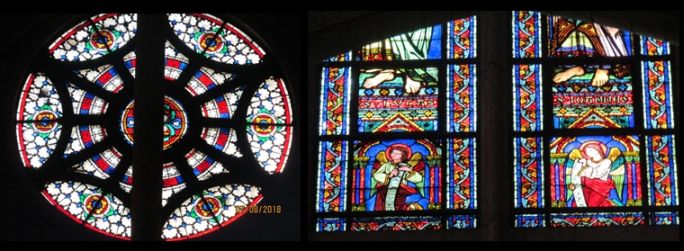
Like a stained glass window. Here, coloured glass may be crafted into a window in which small pieces of glass are arranged to form patterns or pictures, held together by strips of lead.
In historical fiction these fragments can be lost letters, interrupted moments, exiled lives, unfinished love, or unknown acts of endurance. As entire histories can disappear between recorded moments, short fiction can mirror this truth.
In historical fiction, what is omitted from the records becomes as important and as powerful as what was revealed.
The Particular Challenge of Writing Historical Short Fiction
Indeed, historical short fiction does demand a certain kind of discipline.
While in a novel the writer may spend tens of pages building a world word by word, brick by brick, exposing politics, revealing customs and landscapes, allowing relationships to unfold gradually, a short story has no such luxury. The writer must conjure an entire era in an instant. And, yes, do so without drowning the reader in details.
In short fiction every sentence must work twice: once as story, and again as atmosphere.
But this is also what makes this form of writing so rewarding.
Short fiction, especially historical tales, do not recreate the past through lectures or sinuous timelines. Short historical tales paint the past through brush strokes and pressure points. It is the details that carry the weight of the vanished worlds.
For example a single object can evoke an era.
In “Kate’s Letter” you won’t be faced with a history lesson that carries fifteenth-century Transylvania onto the page.
The detail is a worn winter coat. It smells faintly of smoke, thyme, pine resin, and old remedies.
The second detail is a letter… Can’t reveal more without giving away the plot! But this letter tells us much about those times. It reveals secrecy and danger as much as any formal description of medieval politics could.
But it also reveals the intimate power of memories. Why an how – you will have to read the story.
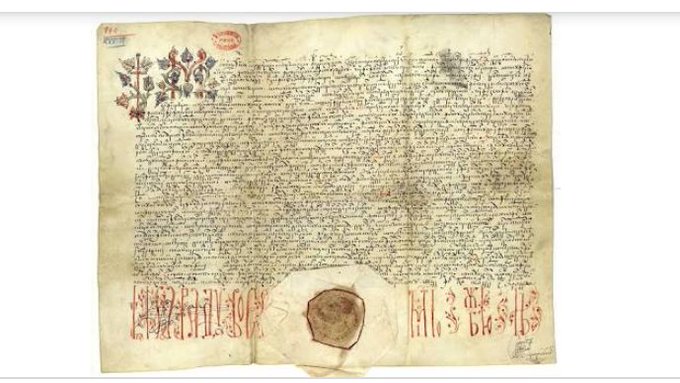
Of course, I couldn’t leave garlic out. This is medieval Transylvania, after all. As I couldn’t leave out a wax seals stamped with … (oh, won’t day!).
Like the shards of glass creating a stained window, these are all details that will root the reader in a world where folklore and survival lived (and still do!) side by side.
Historical fiction also depends upon suggestion.
As such, the reader must feel that larger world that exists beyond the edges of the short story. Even if only glimpsed briefly.
While in a short story wars cannot be fully chronicled and kingdoms cannot be exhaustively mapped, they must still press upon the characters’ lives.
In “Kate’s Letter” the political fractures of Wallachia, the Ottoman pressure, the shifting loyalties of the various guilds in Kronstadt (today Brasov) as well as the uneasy relationship with Hungary remain in the background. Still, they influence every choice the characters make.
We cannot live outside our times.
As a short story “Kates Letter” will not pause to explain the historical Vlad Dracula in academic terms. Instead in this historical yarn history arrives through memory, through gossip, and – oh! – through longing.
In this short story history bursts onto the page through the eyes of someone who knew Vlad, the man, before legend consumed him.
Language is also a part of this reconstruction.
Rhythm, imagery, and cadence can carry historical atmosphere as surely as factual detail. Certain stories require prose that moves like winter wind or like firelight flickering through pine forests.
The goal is not to imitate medieval speech. This, I think, would sound artificial to modern readers and will slow the narrative, will block the immersion into the tale. The intention is to create the emotional illusion of those times. To envelop the reader in a sense of that world – be it harsher, quieter, more bound to faith, superstition, weather, or survival than ours.
Perhaps that is why historical short fiction remains with us after we read it.
It asks the reader not merely to observe the past, but to briefly step inside its breath and feel how love, fear, grief, and courage survived. There and then. And no less fiercely than they do now.
Why Anthologies Matter
I think that anthologies possess a unique kind of magic.
A collection will gather many voices under a single theme and cover allowing readers to step from one world into another, from one century into the next while experiencing different writing styles.
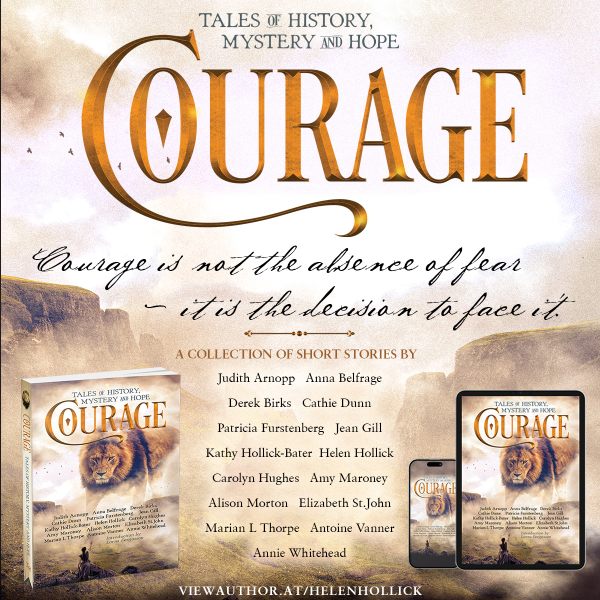
In Courage: Tales of History, Mystery and Hope, bravery emerges in many forms: defiance, sacrifice, endurance, hope, survival, or resilience. One story may unfold on a battlefield, another in the silence of grief or in the private act of choosing compassion when fear would be easier.
Anthologies also offer readers the joy of discovery — new authors, unfamiliar settings, unexpected emotional landscapes — all within one volume. In many ways, they resemble history itself. The past rarely reaches us whole. It survives in fragments: letters, testimonies, rumours, songs, prayers, whispers carried across generations. Anthologies mirror that inheritance beautifully, each story becoming its own preserved voice against the silence of time.
Why I Chose to Tell Kate’s Story as a Short Story in Courage
Kate’s story was never about recounting every year of her life. It was about one winter night when the past returned asking to be remembered. That is why it belonged to short fiction rather than a longer novel. The story did not need breadth so much as intensity — the sharp emotional weight of memory resurfacing all at once through a coat, a hidden letter, a name spoken aloud after years of silence. Memory itself behaves much like short fiction: fragmented, vivid, selective. We do not remember life evenly. We remember moments that altered us. A touch. A loss. A choice never undone.
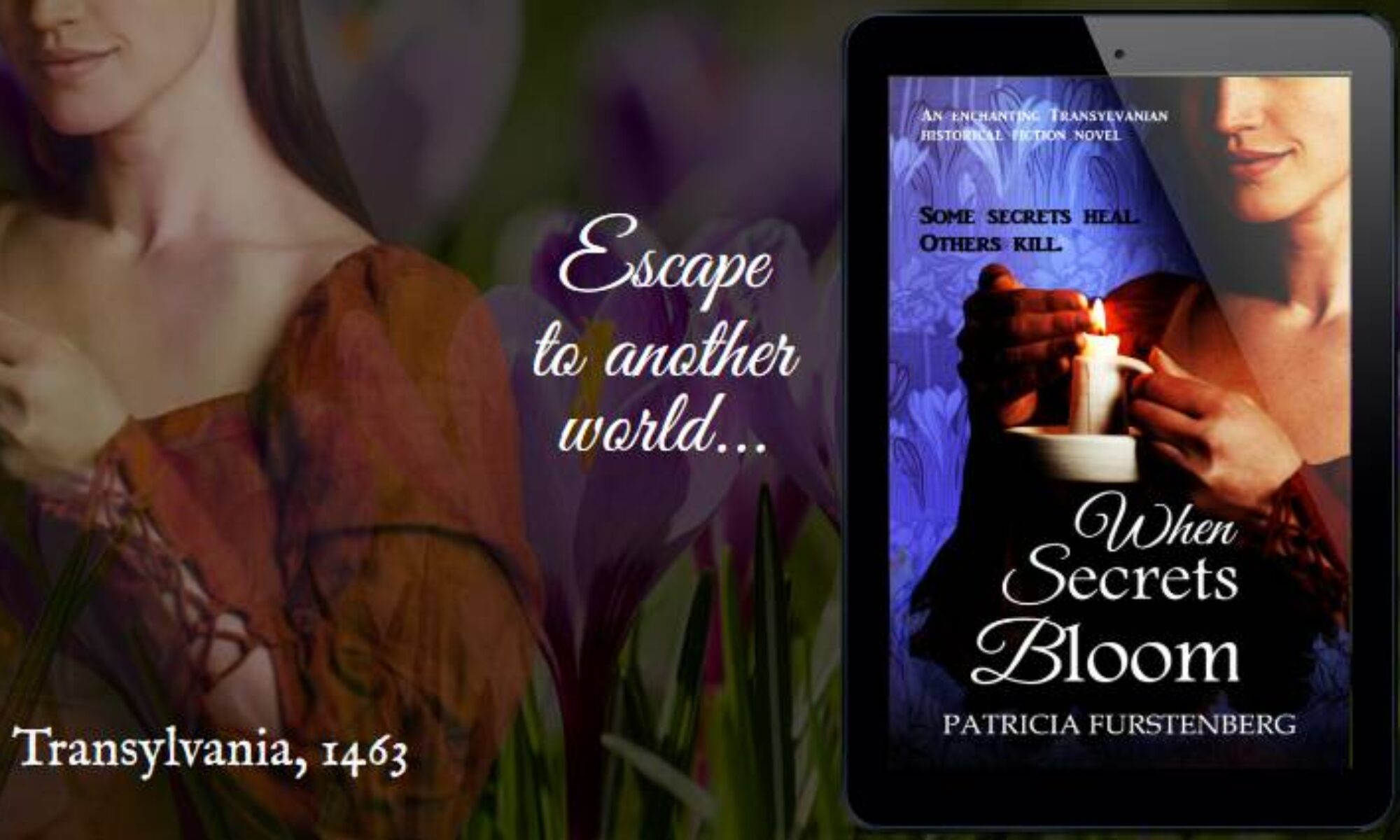
In many ways “Kate’s Letter” is a return to the world of my novel “When Secrets Bloom” where Kate’s journey first began for the readers.
But in this short story, taking place years later, history is settled into grief, into longing, and an unfinished memory. This story allowed me to explore the human aftermath left behind by the sweep of political events.
Perhaps that is what short fiction does best: it captures the single heartbeat in which an entire life changes — or begins again.
Perhaps that is what short stories do best. They remind us that a life is not measured only in years, but in moments that alter everything: a name spoken aloud after silence, a coat almost touched, a letter finally opened too late. Or-.
History often only survives this way.
Not as complete chronicles; as scattered fragments: a stain of wax on folded parchment, the scent of smoke caught in old wool, a memory preserved long after the people themselves have vanished into earth.
We inherit the past not whole, but in pieces. And somewhere, between those shards, imagination and remembrance meet.
So short fiction lingers. It leaves room for echoes. For unanswered longing. For the sense that beyond the final sentence the story still breathes quietly in the dark, waiting — like an unopened letter through winter — for someone willing to remember.
I think that’s about right. Also, I think the reader experience is different. In a novel a reader is expecting to read a tale, a short story, they are expecting to join th dots. I think that “dot joining” is a part of the buzz for the reader.
Yes, I like that image of joining the dots. Brilliant thought. 🙂
I love, personally, that everybody will take something slightly different from my stort stories.
What a wonderful article – definitely a keeper to refer to in future – thanks for sharing Patricia!
Thank you, Helen. You’re a Star for supporting me. I am so excited to hear you liked it. 🙂
Brilliant article and so interesting to read the story behind Kate’s story – which I truly loved! I can’t wait till Publication Day and more readers discover ‘Courage’!
Thank you, Jean. I do appreciate your kind words. I thought your short story, Legacy, was fierce tale.
Yes! So looking forward to COURAGE coming out on 17 June!
Well said!
Onwards with Courage! 🙂
Very well put, Patricia, and helpful to those considering jumping into the world of short-story writing. Thanks for sharing. 🙂
You’re the best, Laura. Thank you. I’m looking forward to your next installment in storytelling 🙂
You’re very kind, Patricia, and you won’t have long to wait as my next Storytelling post is up tomorrow. I hope you enjoy it. 🙂
A great reflection on the structural and creative challenges of writing short stories. I think they are just as complex as novels, and really sharpen my skills! Thanks for articulating so clearly the art … a keeper, for sure (and reassurance that we all face this, first time and experienced!)
Thank you, Elizabeth, for your insightful comment. Yes, short stories are great at improving our writing skills. They’re like a power workout! 😉