
Following young Vlad Dracula through 15th century Transylvania and Wallachia to: Sighișoara, Târgoviște, Gallipoli and Eğrigöz.
When we picture Vlad the Impaler, or Vlad Dracula, we tend to picture him in a castle: dark stone, narrow windows, a throne, perhaps the mountains rising behind him. Vlad did not spend his life in one castle, one principality, or even one political world. Not even on one continent.
To follow Vlad’s life is to follow a landscape of shifting power: Târgoviște, the princely capital; Transylvania and its fortified towns; the roads crossing the Carpathians; the Ottoman world where he was held hostage; the Hungarian royal court; and, eventually, the battlefields and forests through which he fought his way, always back to Wallachia.
Each left something behind: a language, an allegiance, a military lesson, a memory of captivity, or an enemy who would later become an ally.
1430 – 1431, Sighișoara, Schäßburg: A Prince Is Born
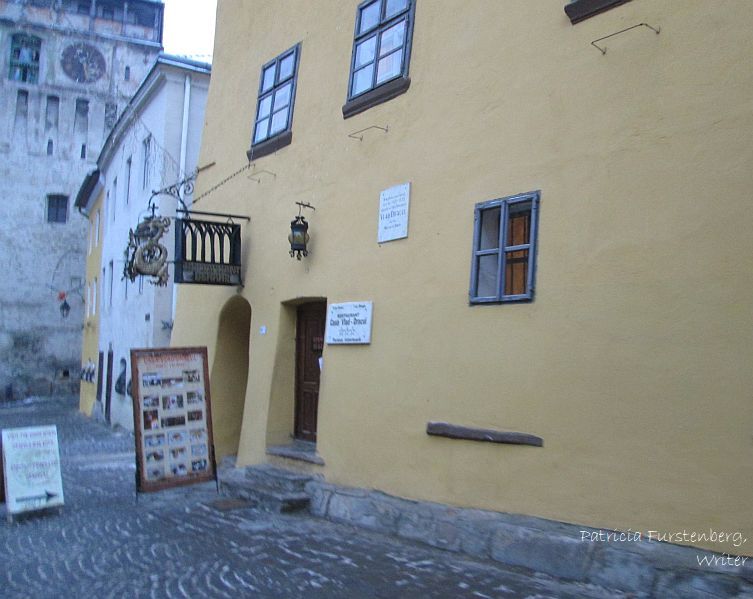
Vlad III was born in Sighisoara in December 1430/1431, the second son of Vlad II Dracul, ruler of Wallachia, founder of the House of Drăculești.
The first written evidence of Vlad’s existence appears only a year later, in 1432, when his father referred to his sons Mircea II (1428–1447) and Vlad III in a document concerning Făgăraș. The wording is brief, but it places the infant prince within the turbulent world of Wallachian politics.
When Vlad III was born Wallachia (founded 1290 by Radu the Black)) was caught between two powerful neighbours: the Kingdom of Hungary (founded around year 1000 by King Stephen I) to the north-west, and the expanding Ottoman Empire (founded 1298 by Osman I) to the south. Wallachian rulers had to navigate between these two powers, sometimes supporting one, sometimes the other, and sometimes changing allegiance simply to survive.
A prince who chose the wrong ally could lose his throne—or his life, as it was proven many times during the times of Vlad III. But for the child who would become Vlad the Impaler, this was the world into which he was born. Through his birth and education, he had no other chance but to adapt, to fight and to survive.
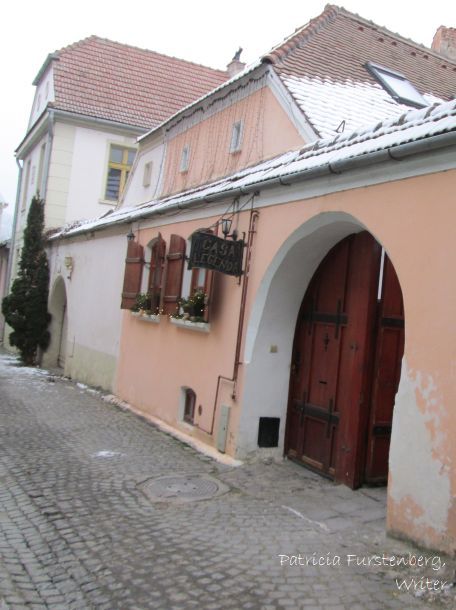
Was Vlad Dracula really born in Sighișoara?
Sighișoara is one of the places most often associated with the birth of Vlad Țepeș. Nuremberg has also been proposed, and the exact birthplace remains uncertain.
In the early 1430s, his father, Vlad Dracul, was struggling to regain and hold the throne of Wallachia. During one period of exile, he found little support among the Saxons of Brașov, who were unwilling to risk conflict with Alexandru Aldea, the voivode then occupying the Wallachian throne.0
Vlad Dracul therefore looked elsewhere.
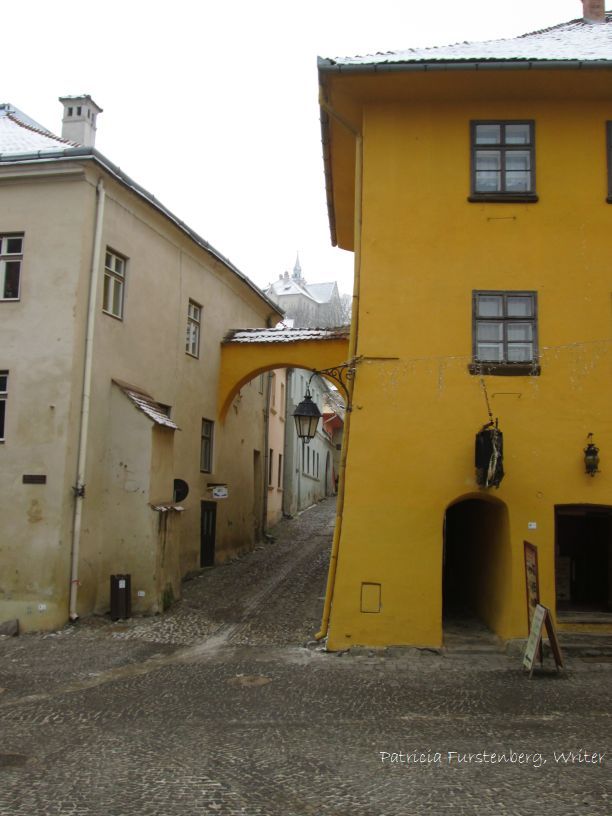
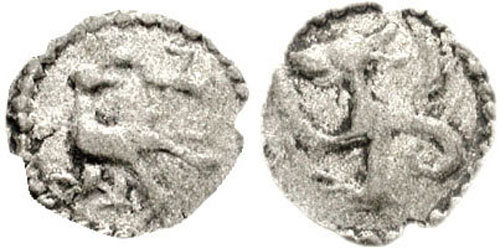
He established an alliance with the Saxon council of Schässburg—present-day Sighișoara—and moved his mint there. He had received from the Hungarian king the privilege of striking coins, giving him both an important source of income and a more secure base while he waited for an opportunity to return to Wallachia.
It is possible that his family was with him. If so, Sighișoara may have been one of the first places Vlad III knew as a child.
The distinction between the fortress and the town below it matters, however. The Saxons did not generally allow foreigners to settle freely intra muros, within the fortified town. Vlad Dracul and his family may therefore have lived in the lower town, outside the walls, rather than inside the citadel itself.
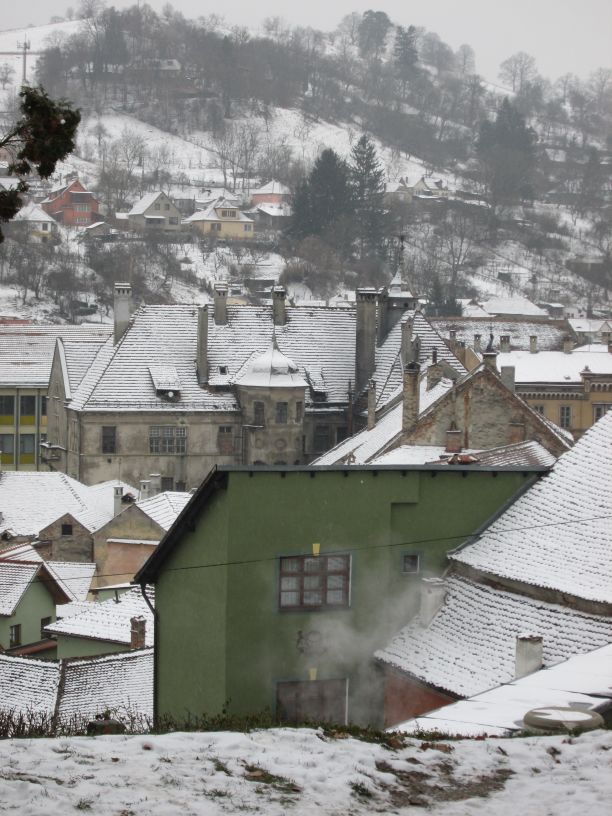
When we imagine the young Vlad here, then, it is better not to picture him wandering through the famous citadel as though it were his family home. Instead, imagine a princely household living on the edge of a fortified Saxon town, close to its markets, craftsmen and political life, yet outside the privileged world behind its walls.
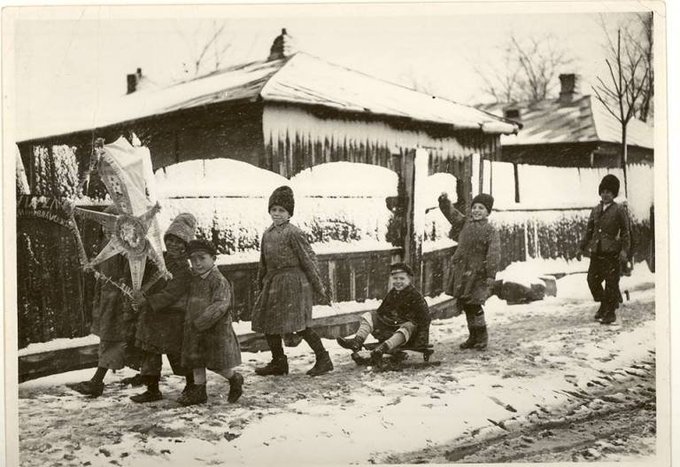
For a child who would one day spend much of his life travelling between courts, fortresses and battlefields, Sighișoara may have been his first experience of such a world.
But it was never likely to be permanent.
The World Around Young Vlad III
As Vlad III grew up, the expanding Ottoman Empire transformed Wallachia into a crucial frontier between the Ottoman and Christian worlds. For Hungary, which controlled Transylvania, Wallachia was more than a neighbouring principality: it was a strategic gateway to the Balkans, providing routes, soldiers and supplies for the struggle against the Ottomans.
Wallachian warriors were accustomed to the harsh realities of frontier warfare—harassment, ambushes and sudden attacks rather than the slow, direct charges favoured by much of Western Europe’s heavily armoured cavalry. János Hunyadi emerged as one of the most formidable commanders of this frontier, and he would become one of the most important figures in Vlad’s life, drawing him into the Hungarian sphere even as Hunyadi’s conflict with Vlad’s father helped shape the young prince’s fate.
On March 30th, 1432, another child was born far to the south: Mehmed, son of Sultan Murad II, the boy who would one day become Mehmed the Conqueror. Vlad and Mehmed’s worlds were already connected by the frontier between them, though neither child could have known how profoundly their lives would eventually intersect.
1436, Târgoviște, Vlad Dracul’s first reign begins
In medieval Wallachia, a capital was not quite what we mean by the word today. There was no fixed seat of government from which laws were issued and the affairs of the principality administered. The princely court travelled with the voivode; wherever the ruler established his court, for a time, that place became the centre of power while smaller residences were temporary seats of the court.
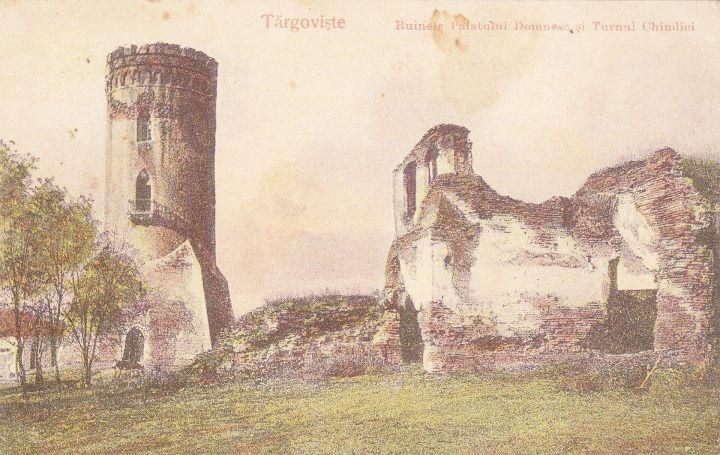
Târgoviște, however, as a princely residence was first mentioned at the end of the reign of Mircea cel Bătrân, in 1418 (the paternal grandfather of Vlad III, although dead 12 years before Vlad was born). What began as a relatively modest princely complex was gradually expanded into a fortified court, providing the voivode not only with a place from which to rule, but with refuge in times of danger. Târgoviște remained an official princely residence until 1660, making it one of the most enduring centres of Wallachian power—and an important place in the childhood and early life of Vlad III.
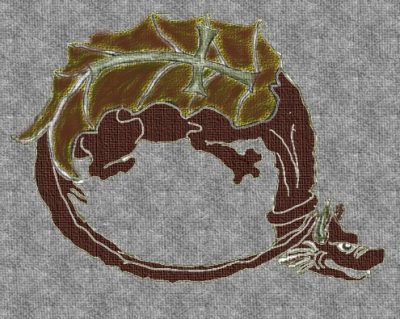
By 1436, when he was about five years old, young Vlad was already being shaped by the world into which he had been born. His father, Vlad II Dracul, had been a member of the Order of the Dragon since 1431, and Vlad’s elder brother, Mircea, was also associated with the order. The young prince grew up at the princely court, accompanying his father to Târgoviște, then the capital of Wallachia, during Vlad Dracul’s first reign.
There, Vlad would have received the education expected of a ruling prince.
The Byzantine chancellor Mikhail Doukas recorded that at Târgoviște the sons of boyars and ruling princes were taught by Romanian and Greek scholars, some of whom came from Constantinople. Vlad’s education would have encompassed languages, combat and horsemanship, geography, mathematics and the sciences, as well as the classical arts and philosophy. He is traditionally described as having mastered German and Latin, while also learning Romanian and Bulgarian, the latter through the Church Slavonic tradition used in the religious and administrative life of the region. His education was therefore not confined to books. At Târgoviște, the future voivode was learning both the language of courts and the skills of warfare.
The documentary trail begins early. By January 1437, the future Vlad III appears in surviving records at Târgoviște, firmly within his father’s princely world. He was still a child, surrounded by scholars, soldiers and the rituals of a ruling court.
He could not yet know how quickly that world would disappear. How soon the road would lead him away from Wallachia—and into Ottoman captivity.
I particularly like the wording in the document signed by Vlad II, especially the curse – often encountered in Romanian official papers:
“Vlad Dracul lord of Wallachia certifies Vlădești village to the boyar Bodin, and exempts him and his sons Mircea and Vlad for as long as they live of services and tributes: “ In the name of the God Almighty, the all faithful and all honourable and Christ Loving, I Vlad and lord by the mercy of God and through the Benevolence of God ruler of all Hungro-Wallachian Country, and duke of Amlaş and Făgăraş. My lordship has deign to offer this hereby true gift of property to my servant boyar Bodin and his sons, so that Vlădești village may be his land not to alienate, and to leave as inheritance and manage without tribute as long as I shall live and as long as my first-born sons, Mircea and Vladul shall live, and to keep the earnings from growing sheep, pigs, beehives on these lands and from trading dairy, wines, or hay or woods from their forests and from other tributes, peasant duties, and other works big and small that are done on his lands. Also, no tax-collectors, and none of my other boyars or high officials shall trouble him, because if anybody would harm even a hair on them, that person shall receive from me great harm and wrath as they will prove unfaithful and disobedient to this, my charter. Even after my death, whomever God chooses to rule over Wallachia, either from my bloodline or the bloodline of my lordship’ relatives, or as payment for our sins from the bloodline of other families, if he will choose to respect and certify this charter may God Almighty solidify his reign, but if he chooses to mock or ruin him may God Almighty mock and ruin his body in this world, and may his soul join Judas and Arie and all others who said, his blood upon them and their children, that which it is and will be forever and ever, Amin. … in Târgoviște, in the 23rd day of August, of the year 6945. † I Vlad Lord, with the mercy of God, ruler.”
These early references are brief, but they mark the beginning of a life that would soon carry Vlad far beyond the walls of his father’s court.

Another document, dated 2 August 1439 at Argeș and concerning Vlad Dracul’s donations to Tismana Monastery, mentions “the sons of mine, Mirea and Vlad” and also names Radu. Vlad Dracul’s third son, Radu, had therefore been born by this time.
But their father, Vlad Dracul, occupied an increasingly dangerous position.
By oath, he was a vassal of the Hungarian Emperor Sigismund of Luxemburg but as voivode of Wallachia, he was also tributary to the Ottomans. After the Ottomans launched a major attack on Transylvania during the middle of 1430s, the pressure between the two powers – one situated at the north, the other in the south of Wallachia, intensified.
Dr Adrian Gheorghe, historian and ottomanist affiliated with the project Corpus Draculianum, discovered ottoman documents stating that Vlad’s first captivity at the sultan’s court started in April 1437.
1437 to 1440: young Vlad, age 6, begins his first captivity at the sultans court in Edirne (Adrianople)
Ottoman peace came at a high price for Vlad II: he had to guarantee his loyalty towards the Ottoman Empire by sending his oldest sons, Mircea and young Vlad III, to the sultan’s court in Edirne (Adrianople). Soon enough, Mircea was allowed to return to Wallachia but Vlad III had to remain as proof of his father’s loyalty to the sultan.
In 1440/41 young Vlad is allowed to return home, to Targoviste, Wallachia.
In 1441, János Hunyadi began preparing a new campaign against the Ottomans in Serbia and Bulgaria. He called upon Vlad Dracul to honour his oath and join the crusade, but the Wallachian ruler refused and attempted to remain neutral. His attempt to satisfy both powers satisfied neither. Both Murad II and Hunyadi had reason to distrust him.
Vlad Dracul was even forced to accompany the Ottoman campaigns in Transylvania, placing him in an impossible position between his Hungarian obligations and Ottoman demands.
In 1442, Ottoman forces invaded Transylvania twice. Vlad Dracul was blamed for failing to defend the southern frontier adequately and was driven from the Wallachian throne.
1442, Gallipoli and Eğrigöz, young Vlad’s second Ottoman captivity
According to the Ottoman chronicler Aşıkpaşazade (c. 1400–1481), Vlad Dracul was accompanied by “his two sons,” Vlad III (age 11 by now) and Radu (age 4).
The Byzantine chronicler Doukas gives a glimpse of the moment when Vlad Dracul’s fortunes turned sharply. When Vlad came to the Ottoman court to pay homage, Sultan Murad II had him arrested and sent in chains to the fortress of Gallipoli, where he was chained and confined in a tower. Doukas gives the official pretext for the arrest: Vlad was accused of having intended to betray the sultan while serving as his guide in Hungary, along with other charges apparently fabricated by Fadullah, one of Murad II’s viziers.

Vlad Dracul was not alone in losing his freedom. His two sons, young Vlad and Radu, described by Doukas, were taken as hostages and sent to the fortress of Eğrigöz. The ruins traditionally identified with Eğrigöz castle lie in the Koçiodag Mountains, Kütahya region of Anatolia.
Aşıkpaşazade, too, writes that the father, Vlad II, was seized and imprisoned in the fortress of Gallipoli while Vlad III (10-11 years) and his little brother Radu were also captured and sent to the fortress of Eğrigöz, province of Anatolia.
Other historians say that Vlad Dracul was forced by the sultan to summon his sons to the Ottoman court and that he only requested his younger sons, giving his eldest, Mircea, a chance to survive and hopefully regain the throne of Wallachia.
In the absence of Vlad II from Wallachia, Hunyadi installed a rival from the Dănești faction, Basarab, son of Dan II, who was already at the court of Argeș and issued charters there in January 1443.
For young Vlad III, again, the road suddenly ended in Anatolia.
The surviving sources do not give us a day-by-day account of his life there, so we should resist the temptation to fill the silence with invented details.

1443, Vlad Dracul Returns to Wallachia
With Ottoman backing, Vlad Dracul recovered the throne of Wallachia in 1443. His freedom, however, came at a price: young Vlad and Radu remained in Ottoman custody as hostages, binding their father’s loyalty to the sultan and carrying the two young princes into a world far removed from Wallachia.
The anguish behind that bargain can perhaps be glimpsed in a letter Vlad Dracul sent to the Senate of Brașov in 1444:
“I left my little children to be slaughtered for the peace of Christians.”
Whether literal fear or the anguished language of a ruler defending his political choices, the words offer a rare glimpse of the father behind the prince.
And while young Vlad III remained in Ottoman hands, another future rival was growing up in Transylvania.
23 February 1443: Matthias Corvinus was born in Kolozsvár, present-day Cluj-Napoca. He was the son of János Hunyadi—the man whose struggle with Vlad Dracul had helped drive the young Vlad into Ottoman captivity.
Neither boy could have known it yet, but their lives were already moving towards one another.
How far Vlad Dracula would have traveled by age 11 by horse, but by today’s shorter routes:
Sighisoara – Targoviste: 225 km
Targoviste – Edirne: 463 km (and return)
Târgoviște – Gallipoli: 650 km
Gallipoli – Eğrigöz: 365 km
Eğrigöz – Targoviste: 883 km
Map: the road from Sighisoara to Targoviste: which mountain pass to take?
In a letter from 1476 sent by Vlad the Impaler to the people of Brașov the famous Voivode lists the four routes taken by the inhabitants of Brașov entering Wallachia: via Rucăr, Prahova, Teleajen, and Buzău.
But Prahova Road and Teleaen Road were favoured by the Saxon merchants of Kronstadt (Corona, Brasov); they were the first to use Prahova trail.
So, 40 years earlier, in 1436, which road would have Vlad II followed, when he traveled with his sons and wife to Targoviste?
Maybe Sighisoara (SCHESBURG – north of map below)– Biertan – Hermannstadt (HAERMANSTAT Sibiu) – then south to the Red Tower Pass (ROTHE THURN) – over the Carpathian Mountains – along Olt River to Targoviste (TERGOVI).
OR, most probably:
via CRONSTAT (Kronstadt) – Bran Castle (TURTZBURG – actually Tortzburg)- cross Carpathins there – via Bran – Rucar (RUKUR) trail – along Dambovita – to Targoviste.

And here is another map of Transylvania – Siebenbürgen:

Map: Vlad III travels Wallachia – Edirne (Adrianople) – Constantinople (Istanbul)
There were countless commercial and military routes crisscrossing the Ottoman Empire, the Silk Road being one of the best known. On the map below it’s easy to spot, in brown, the roads descending from Transylvania and leading all the way to Edirne (Turkish name for Adrianople, the city of Hadrian) and further to Constantinople (Istanbul):

Transylvania had the Salt Road leading all the way into Bucharest and still existing today, Drumul Sarii.
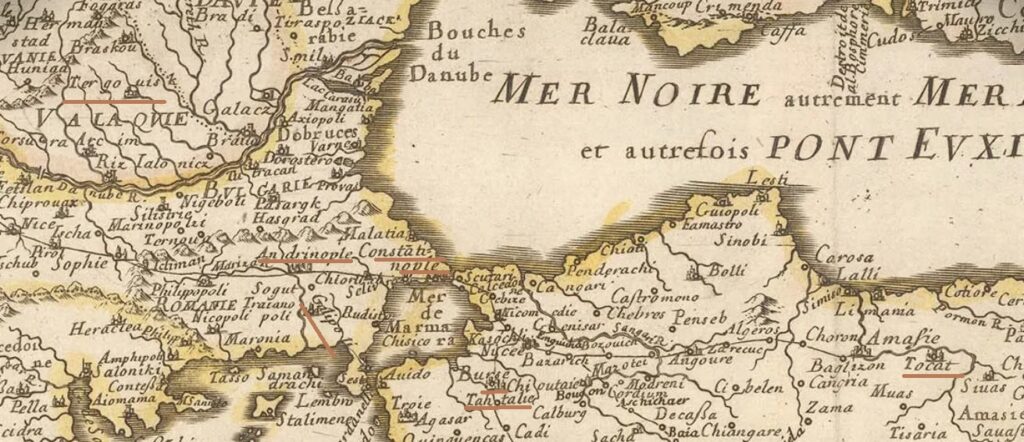
Map: Vlad III travels between Targoviste (TERGOUIS) – Gallipoli (GALIPOLI)- Eğrigöz (TAHTALIE near CHIOUTAIE, or Choutaye the historical French spelling for today’s Kütahya, the major city nearby) – Tokat (TOCAT) as an Ottoman Hostage:
Vlad III, Young Vlad, Vlad the Impaler (Țepeș), Vlad Dracula, or Kazıklı Voyvoda (Impaler Prince)? Do you know?
We know from letters that his father, Vlad II, called him Vladul (Vlad-ul meaning The Vlad).
Vlad did not originally call himself Dracula. The name came from his father, Vlad Dracul, whose title was associated with the Order of the Dragon. Vlad later adopted the patronymic Drăculea—“son of Dracul”—and by 1475 was signing documents as Wladislaus Dragwlya.
Impaler, Țepeș, was a name given to him later, because of his supposed preference for impaling. In contemporary sources, both foreign and domestic, he is never called by this name. It was not until 1508 that we find him referred to as Țepeș in an external document and again in 1550 as “Vlad voevod Țepeș.”
The Ottoman form Kazıklı Voyvoda (Impaling Voivode / Impaler Prince) appears in Ottoman sources at the beginning of the 16th century.
Thank you for traveling with me today. Next time we will follow young Vlad in captivity at the Ottoman court and understand how any decision made by his father or older brother could endanger his life.
About the research:
Patricia Furstenberg is a Romanian-born historical fiction author whose Blood of Kings, Heart of Shadows series explores medieval Transylvania, Wallachia and Moldavia. Her research takes her into the history, folklore, landscapes and forgotten stories behind the fiction.
Oamenii s-au deplasat uluitor totdeauna. Toți oamenii. Am avut o mătușă (care m-a crescut, de fapt) care locuia cu soțul ei la Balcic (B-dul Regina Maria 1). Soțul a făcut un cancer. L-a dus de la Balcic la Cluj, la doctor. Nu știu dacă l-a operat sau nu, a murit la Cluj. L-a dus la Balcic, acolo este înmormântat (acum ceva ani, mormântul exista. A urmat refugiul, a izbutit să ajungă la Constanța cu niște valori.
Vă întrebați dacă am beneficiat de ceva. Mătușa s-a prăpădit când eram student. Am găsit mult prea târziu actele din Bulgaria – vila din Balcic, vreo sută și ceva de ha. Am găsit și testamentul unchiului, poate îl voi publica odată. Mătușa este înmormântată în mormintele familiei. Era sora bunichii materne.
Mereu m-am gândit cum o fi călătorit la vremea aia.
Ce poveste extraordinară și cât de interesantă și tulburătoare este în același timp! Mă impresionează gândul la drumurile pe care oamenii le făceau în acele vremuri, mai ales în împrejurări atât de grele. Iar faptul că ați descoperit atât de târziu actele din Bulgaria și testamentul unchiului parcă deschide o ușă către o lume întreagă care așteaptă să fie redescoperită. Ar fi minunat să publicați cândva testamentul. Asemenea documente păstrează nu doar istorie, ci și glasul oamenilor care au trăit-o. Mi se pare o poveste care inspira.
Vlad had a childhood filled with uncertainty and, I’m sure, fear. It’s not surprising he became a ruthless leader. There can’t much choice if he wanted to survive.
I agree, Robbie. His childhood must have taught him very early that vulnerability could be dangerous. It makes his later ruthlessness all the more understandable, even if never excusable, at least by today’s moral amd cultural standards.
That was very interesting history. We visited Romania, Bucharest and Transylvania in 2008 and we visited and stayed in Sighisoara. We stayed at a hotel called Casa Cu Cerb and ate a restaurant called Casa Vlad-Dracul. They told us that Casa Cu Cerb was part of the building where Vlad Tepes allegedly was born. we also visited Brasov, Sibiu, the Pienari Castle, the Bran Castle and other places. Anyway, it was fun to read this post and I recognized some of the buildings and other things in your photos.
I do remember how wonderful that you got to experience so many of these places in person! Sighișoara, Brașov, and the old castles must have made the history feel wonderfully tangible. I’m delighted that the photos brought back some memories of your 2008 journey. We are lucky for any trip we can take, but what a fascinating trip to have taken!
I have always found the history of Dracula so fascinating!
Yes! Me too. Especially since Vlad was a man of flesh and bones 🙂
It’s like you’re deconstructing the legend. How much of it was real? Very fascinating!
Fascinating. I never really took him seriously as an actual person; more a legend. Thanks for your impeccable research, Patricia. 🙂
Vlad’s legend is immense, I won’t attempt to wresle it.
But the man behind it, this is exactly the premise behind my stories. 🙂
Thank you, Laura.
Another fantastic and wonderfully researched post Pat… ♥
Hugs, Sally, the maps were my favorite discovery 🙂 Thank you so much!