
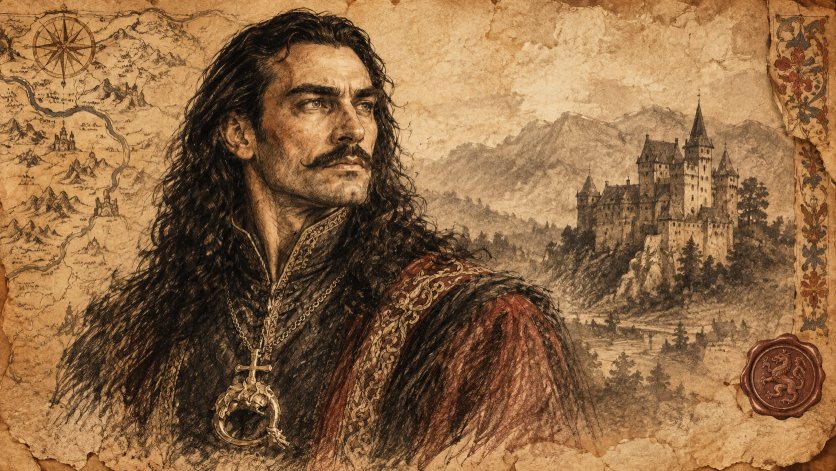
Was Dracula a bloodthirsty medieval prince who returned from the dead, or did history give us two very different men sharing one unforgettable name?
Traditionally, Halloween is not a Romanian tradition, we have the Night of Saint Andrew, but each year I tried to understand another aspect of this this autumn-inspired celebration, from Vampire History You Never Knew of to Romanian Mythical Monsters, from Romanian, end-of-autumn traditions to 13 Scary Places from Transylvania… and more seasonal lore and spooky stories.
Mention Dracula and most people picture a pale aristocrat with pointed teeth, a black cloak, and an appetite for human blood. Mention Vlad the Impaler and the picture changes only slightly: a medieval prince surrounded by impaled bodies, dipping his bred in their blood, a ruthless ruler whose cruelty seems almost beyond belief.
It is an easy connection to make. Both are called Dracula. Both belong, in the popular imagination, to the shadowy world of Transylvania. Both have inspired fear, fascination, and countless stories.
But how much of what we believe about Vlad III, Prince of Wallachia, is actually true? And did Bram Stoker really base his immortal vampire on this fifteenth-century ruler?
As a Romanian-born writer of historical fiction, I find this question… well… annoying . History is full of extraordinary people, but it is also full of stories that grow in the telling. Sometimes, the legend becomes so powerful that the real person almost disappears beneath it. And that’s a shame, because people have a heart and courage. And that’s worth celebrating. Always.
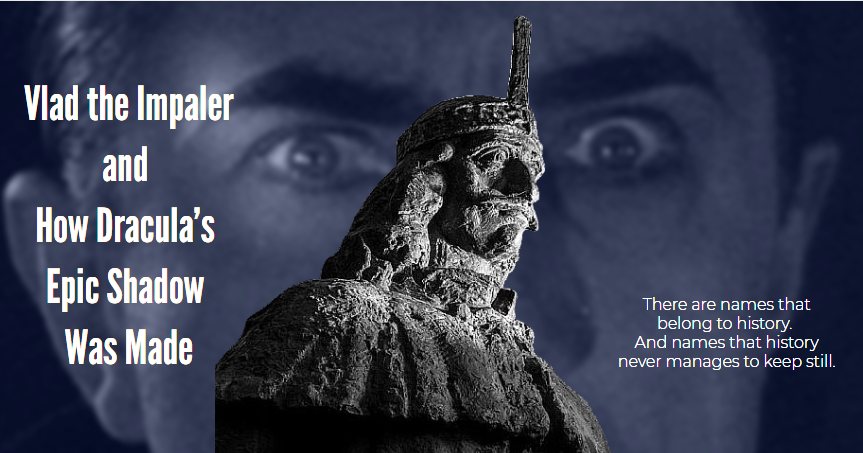
Yes, Vlad Dracula deserves better than that.
I’ve already addressed Vlad the Impaler and How Dracula’s Epic Shadow Was Made. Here I will examine five persistent myths about Vlad the Impaler and Bram Stoker’s Dracula, separating documented history from literary invention, popular belief, and the unanswered questions that continue to intrigue historians.
Because the truth, as so often happens, is more interesting than the myth.
Myth No. 1: Vlad the Impaler Was Dracula, the Vampire
The truth: Vlad III was a real prince. Count Dracula was a fictional vampire. Yet the relationship between the two is more complicated than most people realise.
Let us begin with the name.
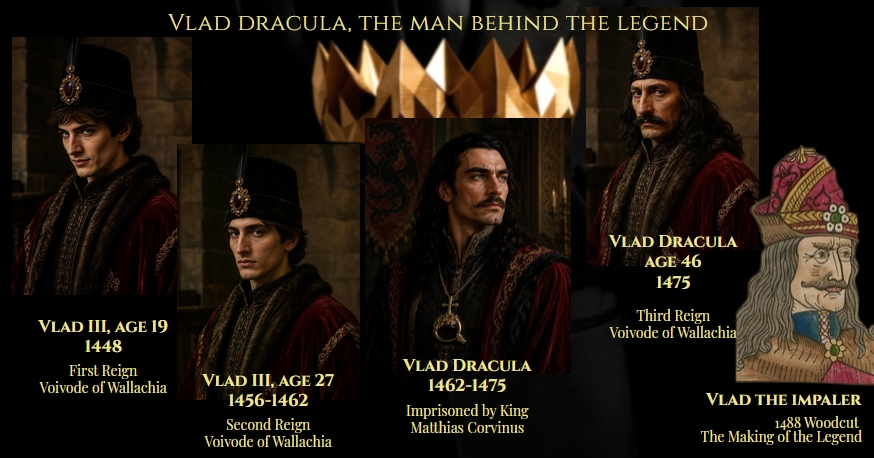
Vlad III, known today as Vlad the Impaler, was born around 1431 into the ruling Drăculești (House of Basarab) family of Wallachia, a principality south of the Carpathian Mountains, in what is now Romania.
His father was Vlad II, known as Vlad Dracul. In 1431, Vlad II was a member of the Order of the Dragon, a chivalric order established by Sigismund of Luxembourg in 1408. The order was associated with the defence of Christianity, particularly against the ever encroaching Ottoman Empire.
The name Dracul became associated with Vlad II, while Drăculea, the name adopted by his son, meant something akin to son of Dracul. Vlad did not originally call himself Dracula. The name came from his father, Vlad Dracul, whose title was associated with the Order of the Dragon. Vlad later adopted the patronymic Drăculea—“son of Dracul”—and by 1475 was signing documents as Wladislaus Dragwlya.

There is a linguistic complication here. In modern Romanian, drac means devil, which helped the name acquire darker associations (especially during the modern 20th century). But its history is tied to the Order of the Dragon, and we should not automatically interpret every medieval occurrence of the name as a reference to evil.
Vlad III was therefore known as Dracula long before Bram Stoker introduced his vampire to the world.
But the name is where the easy identification ends.
Vlad III was a mortal ruler who fought wars, negotiated alliances, lost his throne three times, endured imprisonment, and struggled to regain power. He was a man of his time, living in a region where political loyalties could change overnight and the Ottoman Empire presented a formidable military threat.
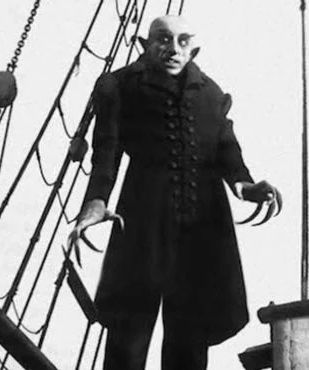
Count Dracula, on the other hand, belongs to Gothic fiction. Bram Stoker’s novel Dracula, published in 1897, transformed the vampire into one of literature’s most enduring figures.
The two share a name and a connection to Eastern Europe. That does not make them the same person, nor does it establish that Stoker intended his character to be a mythologized & romanticized biography of Vlad III.
One man belongs to the historical record; the other belongs to the imagination and yet their names became so thoroughly intertwined that the fictional vampire eventually overshadowed the historical prince.
Myth No. 2: Bram Stoker Based His Dracula Entirely on Vlad the Impaler
The truth: Stoker encountered the name Dracula in a historical source, but the evidence does not establish that Vlad III was the model for his vampire.
This is where the story becomes particularly interesting.
Bram Stoker researched his novel over several years, consulting books and making extensive notes. In 1890, while researching Transylvania and Eastern Europe, he encountered information about a historical ruler named Dracula in William Wilkinson’s An Account of the Principalities of Wallachia and Moldavia. Wilkinson’s book included references to a voivode named Dracula and a short explanation of the name. Stoker took notes from the work, and the name eventually became the title of his novel.
That is an important connection. It is not, however, proof that Stoker built his vampire’s personality, appearance, and life story around Vlad III.
In fact, Stoker had begun developing his novel before discovering this material. His early notes referred to his principal character simply as the Count, and the working name Wampyr appeared during the novel’s development. The historical name entered the creative process, but the extent of its influence remains disputed.
Consider the differences between the two men.
Vlad III ruled Wallachia during the fifteenth century. His life revolved around dynastic politics, military campaigns, contested authority, and the struggle to maintain his position between powerful neighbours.
Stoker’s Count Dracula is an aristocratic vampire who survives by drinking human blood. He possesses supernatural abilities, fears certain objects and symbols, and threatens the living through his unnatural existence. One man fought to retain a throne. The other sought to extend his unnatural life.
Could Stoker have drawn inspiration from the reputation of Vlad III? It is a possibility worth investigating but the surviving evidence does not allow us to declare that Vlad was definitively the vampire’s model. We should be cautious about claiming a direct equivalence.
The name is documented. The extent of the inspiration is not. And that uncertainty is precisely what makes the subject worth exploring.
Myth No. 3: Vlad the Impaler Was an Inhuman Monster Who Invented Impalement
The truth: Vlad’s reputation for extreme cruelty is rooted in historical accounts, but impalement existed long before his reign, and his actions must be understood within the brutal politics and warfare of his time.
Few images associated with Vlad III are as disturbing as the so-called forest of the impaled.
According to historical accounts, Ottoman forces advancing into Wallachia encountered large numbers of bodies (i.e. dead soldiers, casualties of war) displayed on stakes near Târgoviște. The spectacle was intended to shock the invading army and undermine its willingness to continue.
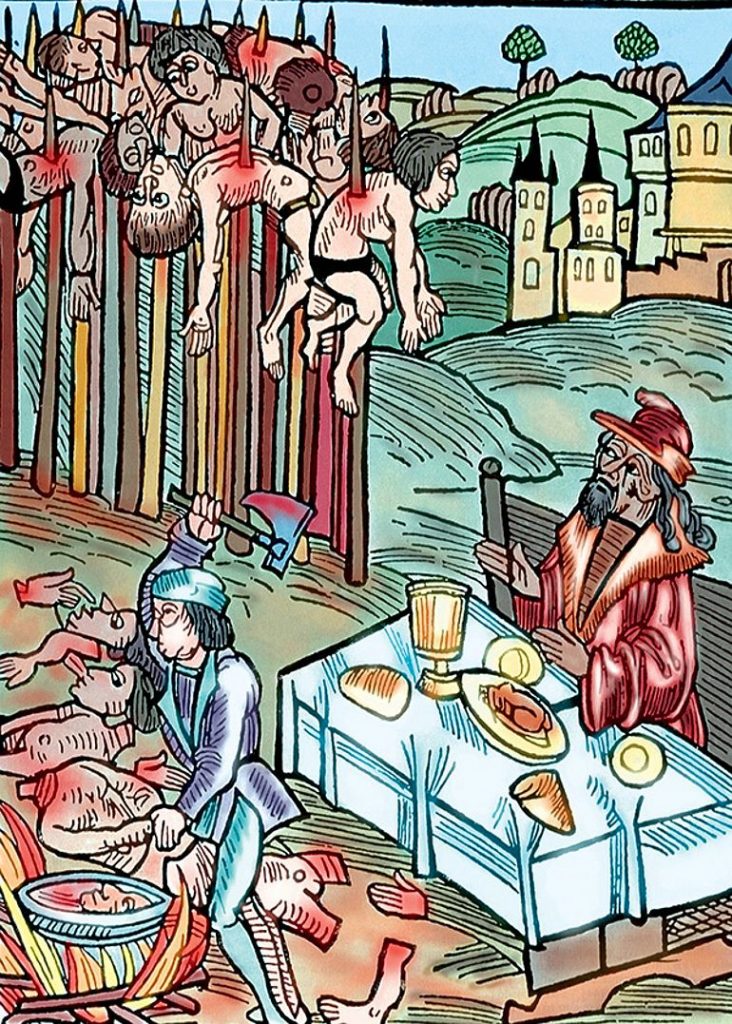
Vlad’s use of terror as a weapon was real. His punishments could be exceptionally cruel, and the scale attributed to some of his actions (albeit part of it grossly exaggerated by the “social media” of the 15th century, printed pamphlets and stories sung at the court of King Corvinus court… all helped establish his fearsome reputation across Europe.
But did he invent impalement? No.
Impalement was an ancient form of punishment used in different societies long before Vlad’s birth. It was not exclusive to Wallachia, nor was Vlad the first ruler to employ it.
The Mongol conquests were notorious for their devastating campaigns and the use of terror. Ottoman forces used it before Vlad’s famous display at Târgoviște in 1462, including during the siege of Constantinople in 1453. Other medieval authorities also employed brutal public punishments, including impalement. The Hussites in Prague and rulers in Hungary and Transylvania provide further examples.
The earliest well-known case of impalement in Hungary dates to 1213, when one of the murderers of Queen Gertrud of Merania (queen consort from 1205 to 1213) was executed in this manner. Impalement remained among the capital punishments used in the kingdom during the medieval and early modern periods. Initially, the authority to execute or mutilate criminals belonged to the royal tribunal and county officials. From the fourteenth century, however, Hungarian kings increasingly granted nobles and towns the jus gladii, or “right of the sword,” allowing them to impose capital punishments, including impalement, as a reward for services to the Crown.
Interestingly, the Hungarian term for this privilege, jus gladii, is pallosjog, is etymologically linked to the Latin palus (also recorded as pallus), meaning “stake,” a reminder of how closely impalement was associated with the exercise of judicial authority.
Impalement was not unique to Vlad Dracula. Rather than introducing the practice to the Ottomans, Vlad was likely influenced by both Hungarian and Ottoman traditions. Medieval warfare and justice were brutal, and the history of impalement is more complex than the legend alone suggests.
What distinguished Vlad in the historical imagination was the extent to which his name became associated with the practice and the way reports of his cruelty circulated beyond his principality. Why? His enemies had reasons to portray him as a monster. His supporters could view the same ruler as a defender of his land against Ottoman expansion and a prince determined to impose order upon a divided political community.
Neither perspective should be accepted uncritically.
Vlad’s punishments were not imaginary simply because some accounts may have been exaggerated. Equally, not every sensational story about him can be treated as a verified historical fact. Much of what survives about medieval rulers comes through chronicles, letters, political accusations, and accounts produced by people with their own loyalties and prejudices.
This does not excuse cruelty, of course, but it helps us understand how a historical reputation was formed.
Vlad was capable of ruthless violence, but he was also a political and military actor operating in a violent age. Reducing him to a caricature of evil tells us less about the man than about our appetite for monsters.
The historical question is not whether Vlad was cruel. It is how his cruelty functioned, how it was reported, and why those reports proved so enduring.
Myth No. 4: Vlad Dracula Was a Vampire, or at Least a Man Obsessed with Blood
The truth: There is no historical evidence that Vlad III drank human blood or possessed supernatural powers. His association with vampires developed through later literature and popular culture.
This myth seems obvious when stated plainly. Yet the persistent association between Vlad and Count Dracula has encouraged generations of readers and filmgoers to imagine a connection that the historical record does not establish.

Vlad lived in a world of bloodshed, but that is not the same as living by drinking blood.
His military campaigns were violent. His punishments could be appalling. His political struggles involved betrayal, imprisonment, and death. None of this makes him a vampire, nor does it provide evidence that he drank the blood of his enemies.
The vampire belongs to a different history: the history of folklore, supernatural belief, Gothic literature, and the cultural fears that writers have transformed into fiction.
Bram Stoker’s Count Dracula drew upon the literary and folkloric traditions available to him, shaping them into a distinctive fictional character. The novel’s vampire is not simply a medieval ruler with fangs added. The supernatural elements are central to Stoker’s creation. They are not part of the documented life of Vlad III.
It is worth remembering that the historical prince’s own world was already full of beliefs about evil, divine punishment, omens, and the powers of the unseen. But we should not confuse the beliefs of a historical period with evidence that supernatural creatures existed.
The distinction between history and folklore does not make either one less interesting. Indeed, the way folklore absorbs historical figures can reveal much about the fears and values of the people who preserve it.
Vlad’s reputation for cruelty made him an ideal figure for later generations to associate with the vampire legend. Once literature and film brought the two together in the popular imagination, the distinction became increasingly difficult to maintain. The result is a curious reversal: the historical prince, whose life can be investigated through documents, has become less familiar to many people than the fictional creature who shares his name.
Myth No. 5: Vlad the Impaler Belonged to Transylvania, Just Like Count Dracula
The truth: Vlad III ruled Wallachia, not Transylvania, although his life was closely connected to Transylvania and the wider Carpathian region.

This is one of the most persistent geographical misunderstandings surrounding Vlad Dracula.
Bram Stoker’s novel places Count Dracula in Transylvania, a historical region in the heart of the Carpathians. Its forests, mountains, castles, and imagined remoteness provide the perfect setting for a Gothic tale.
But Vlad III was the prince of Wallachia. Wallachia lay south of the Carpathian Mountains, while Transylvania lay to the north and west. Both regions formed part of a complex political landscape in which local rulers, Hungarian kings, Ottoman sultans, and powerful noble families competed for influence.
Vlad’s life was shaped by the relationships between these neighbouring lands. He spent time in Transylvania, sought support from Hungarian authorities, and became involved in conflicts that crossed political and geographical boundaries. In 1462, after his campaign against the Ottomans, his position deteriorated. He withdrew towards Transylvania, expecting assistance from Matthias Corvinus, King of Hungary. Instead, Vlad was arrested and imprisoned. His relationship with the region was therefore very real, even though he did not rule it.
This is an important difference between the historical setting and the literary one. Stoker’s Transylvania is a carefully constructed Gothic landscape, shaped by the atmosphere of his story. The historical world of Vlad III was a network of principalities, fortified towns, mountain passes, trade routes, and shifting alliances. The real landscape was no less dramatic. It simply had different dangers.
The Carpathians were not a barrier between history and legend. They were part of the world in which the historical prince lived, fought, and attempted to recover his throne. And that world deserves to be explored in its own right, rather than treated merely as the backdrop to a vampire story.
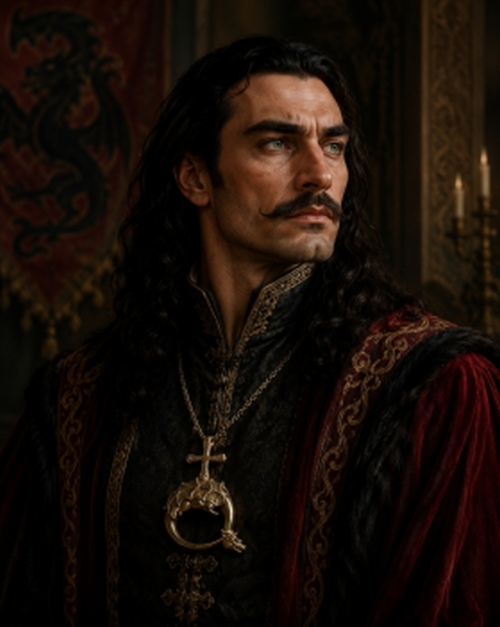
So, Who Was Vlad Dracula, Really?
Once we strip away the vampire’s cloak, the historical Vlad III becomes a more complicated and, in many ways, more fascinating figure.
He was born into a ruling dynasty whose fortunes depended upon fragile alliances. He spent formative years in the Ottoman world, experienced the violent consequences of political rivalry, and learned to navigate a region in which military strength could determine whether a ruler survived.
His father, Vlad II, had been associated with the Order of the Dragon. His older brother, Mircea, and his father were killed in the political struggles surrounding their rule. Vlad himself experienced repeated changes of fortune, including exile, imprisonment, and the loss and recovery of his throne. His campaigns against the Ottomans made him a formidable adversary. His punishments made him infamous. His enemies had reasons to condemn him, while those who regarded him as a defender of Wallachia had reasons to celebrate him.
The evidence does not give us a simple hero or a simple monster. It gives us a medieval ruler whose actions must be examined in the context of his time, while recognising that some of those actions were undeniably brutal.
And, unlike his fictional counterpart, Vlad III did not live forever. His final years remain clouded by uncertainty, including questions surrounding his death in the late fifteenth century. Contemporary and later accounts differ over the circumstances, and his burial place has never been established with certainty.
His historical trail ends in uncertainty, not immortality.
Yet his name survived. Letters bearing his signature, documents concerning his political affairs, contemporary descriptions, and accounts written by his contemporaries offer glimpses of the man behind the legend. Even a document as practical as a receipt for money can remind us that the figure we associate with bloodshed also dealt with taxation, correspondence, and the ordinary machinery of government.
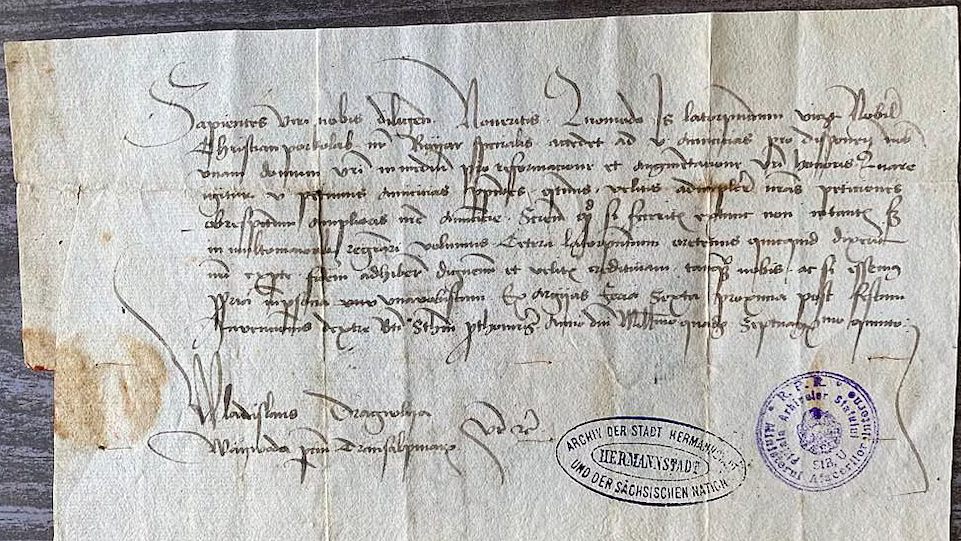
History is often preserved in such fragments. They do not tell us everything, but they bring us closer to a human life than any number of fangs or supernatural powers ever could.
Vlad the Impaler Was Not Count Dracula the Vampire
There is a reason Dracula continues to fascinate us: the name carries the weight of centuries: medieval warfare, dark forests, ancient castles, whispered legends, and the enduring appeal of the supernatural. It is an extraordinary literary achievement that Bram Stoker’s novel has remained so influential.
But the fictional Count and the historical prince should not be confused.
Vlad III was a real man who ruled Wallachia during a turbulent period of European history. Bram Stoker created a fictional vampire whose name was connected to a historical source. The extent to which Vlad himself inspired the character remains uncertain.
The historical prince was not immortal. There is no evidence that he drank human blood. He did not invent impalement, and he did not rule Transylvania. He was a ruler shaped by dynastic conflict, military necessity, political ambition, and the brutal realities of fifteenth-century Eastern Europe. His actions and reputation deserve scrutiny, not the automatic acceptance of every sensational story told about him.
Perhaps the greatest myth of all is that we already know everything worth knowing about Vlad the Impaler.
We do not.
The documents still require careful reading. The gaps in his biography invite investigation. His letters preserve traces of a life that existed long before the vampire became famous. And somewhere between the surviving evidence and the silences of history lies the space where historical fiction can begin.
That is where I find Vlad most compelling: not as an immortal monster, but as a man whose life was extraordinary enough without the need for supernatural embellishment.
History gave us Vlad Dracula. Literature gave us Count Dracula. The legend belongs to both, but the men are not the same.
What Do You Think?
Did you know that Vlad III ruled Wallachia rather than Transylvania? Or that the historical evidence linking him directly to Bram Stoker’s vampire is far less conclusive than popular culture suggests?
Which of these myths surprised you most?
I would love to hear your thoughts in the comments. And if you enjoy exploring the people behind the legends, join me as we continue uncovering the history, folklore, and forgotten stories of Transylvania and the wider Carpathian world.
Very interesting. Perfect for tomorrow.
Thank you so much, Martie. Thank you 🙂 my thought exactly 😉
Oh no you ruined some of my most cherished myths. But seriously, I knew some of it already, that he was not a real vampire (vampires are not real) and that he did not invent impaling (but used it quite a bit). However, I did not know that Bram Stoker did not entirely base his character on Vlad III. So some things I knew and somethings I didn’t and this post made me realize that some of things I believed about Vlad III were indeed myths. I am happy to learn new things and have my misconceptions corrected, so thank you so much Patricia.
Thomas, I’m afraid this myth has travelled a little too far and grown rather too comfortable in its own legend. But the truth is worth uncovering, even when it means disturbing a few cherished beliefs. Vlad III was a fascinating man in his own right, without needing the vampire cloak Bram Stoker’s Dracula eventually gave him. I’m delighted you enjoyed the journey through history, myths and misconceptions. Thank you for reading with such an open mind.
I have to admire your historical research and writing, Patricia; you make a wonderfully-convincing case for documented truth over myth. I must confess that I’d never conflated the factual figure with the fictional one, maybe because I’ve read and studied the latter, along with many critical essays on the book, but none of which mention him in connection with the real Vlad. You do well to paint a picture of a man who was violent in a violent age, but whose violence has been over-exaggerated through the propaganda of those in whose interest it was to do so. Thank you. 🙂
Thank you, Laura :). I think that distinction between the historical man and the fictional character is important, particularly because the two have become so entangled in popular imagination. Vlad was certainly no gentle ruler, but understanding the violence of his time, and the political motives behind the accounts that survived, gives us a much more interesting and nuanced picture… I am delighted you enjoyed the article and thank you for taking the time to read and share your thoughts. 🙂
Thanks for dispelling the myths here Patricia. Sadly, I’ll admit, I was very confused about your historic Vlad Prince and Dracula. Good old mythology! I do remember watching Alexander the Great on Netflix and was just sick when I saw what ‘impaling’ really was! Hugs
I can understand that 🙂 Learning about the real Vlad Dracula in school came in handy later in life. In Romania, the myth of Dracula outgrew its shadow after 1989. Sadly.
Great explanation! I think your Vlad series was extremely informative. I guess some fiction writers take interesting historical facts and turn them into fiction to make them appealing to a general audience. I’m not a big fiction reader, although I’ve been trying to add more fiction to my reading list to mix things up. But I’m still a nonfiction reader at heart.
Thank you, Edward. I am glad your enjoyed my research on the many places where Vlad Dracula lived.
You’re very welcome!
I enjoyed this comparison between the fictional Dracula and the genuine Vlad III. Bram Stoker has a lot to answer for! I can see how the limited research he did could result in a crossover that involved mythical elements of the supernatural, whereas Vlad III’s reputation as The Impaler has to be taken in historical context. Many thanks for the clarification, Patricia.
Thank you so much for reading and for such a thoughtful comment! I’m delighted you enjoyed the comparison. Vlad III was a fascinating, complex historical figure long before he became entangled in vampire lore. I think understanding the man within the harsh realities of his time makes his story all the more compelling. History, after all, can be just as dark and intriguing as fiction.
I can comment again so I’m reposting the previous comment: this information about Vlad and the link to Dracula is interesting. I knew some of this but not all. I also read about the believed link between Elizabeth Bathory, whose is said to have murdered hundreds of young girls and bathed in their blood, and Bram Stoker’s Dracula. It’s a great book. A personal favourite of mine.
Thank you, Robbie. The connection between Vlad, Elizabeth Báthory and Bram Stoker’s Dracula is fascinating, particularly where historical figures and folklore begin to intertwine. The Báthory legends have certainly added another layer to Transylvania’s dark literary imagination. It’s a subject where history, myth and fiction make for endlessly intriguing reading.