
During his youth, Vladul lived between Wallachia and the Ottoman world; from Ottoman captivity Vlad III traveled to take the throne of his Transalpine land, at Târgoviște; next Vlad, son of Dracul lived exiled in Moldavia and Transylvania; finally he returned to Wallachia, across the Carpathian mountains, for his second and longest reign as Vlad Dracula – but not his last.
Yet, for Vlad Dracula, a first journey ended in exile; this odyssey to the throne will end in chains. As for his last fight – that will make him immortal. But was it what he would have wanted?
Vlad’s Capture, 26 November 1462
After Vlad Dracula’s long and ultimately victorious campaign against the Ottomans in 1462, waged largely without external support, his position became increasingly difficult. His younger brother, Radu the Handsome, had gained local supporters. So Vlad left Wallachia and withdrew towards Transylvania, counting on his ally, Hungarian King Matthias Corvinus.
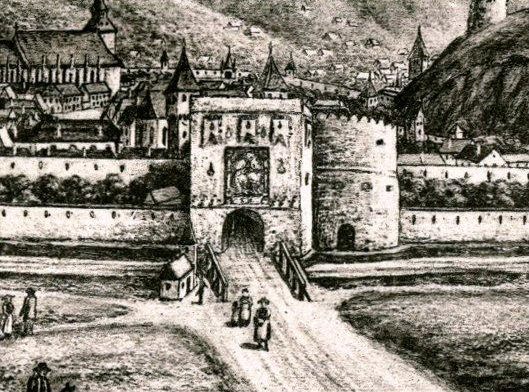
After all, Pope Pius II himself had provided substantial funds for this anti-Ottoman fight, although the money went and remained with Matthias Corvinus, who claimed to be acting on Vlad’s behalf.
Matthias, however, was occupied elsewhere in his kingdom, fighting Frederick III of Habsburg over the Holy Crown of Hungary, the Crown of Saint Stephen… while also planning his wedding to Catherine of Poděbrady (May 1, 1463) – so he didn’t had time to support Vlad. Not right away, when he was needed…
By the time Corvinus finally started his march from Buda, in July 1462, the Ottoman army was already deep inside Wallachia… By the time the Hungarian support reached Brașov, Vlad had been forced to withdraw into Transylvania.
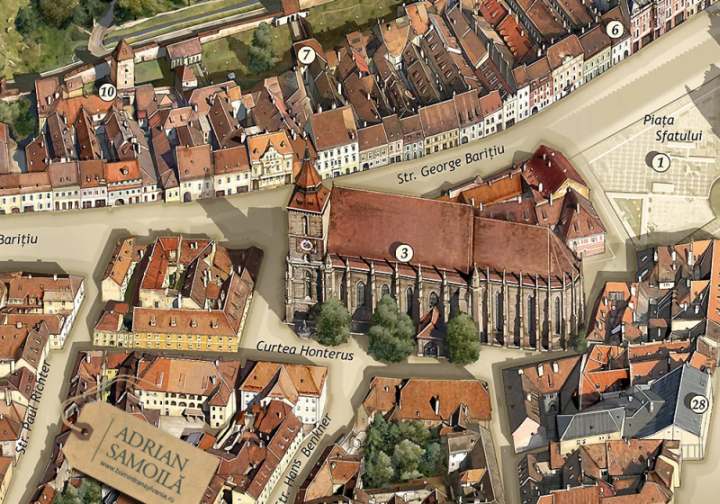
At last, the two men met, Vlad expecting Hungarian assistance to continue his fight to retake Wallachia, this time from his little brother, Radu the Handsome.
Instead, King Matthias Corvinus decided against renewing the anti-Ottoman war.
Enjoying one of the few periods of peace with the Ottomans and aware of the strength of Mehmed II’s army, Corvinus had little appetite for another costly campaign. After all, he grew up during the life-long war his father, John Hunyadi, pursued against them.
All of a sudden, Vlad Dracula had become politically inconvenient.
But wasn’t there more to it?
Vlad Dracula was celebrated throughout Christian Europe as a formidable opponent of the Ottomans, truth be told, yet is his war continued it threatened to draw Hungary back into conflict. Something had to be done. But what? What could a King do? The question is, What couldn’t he do?
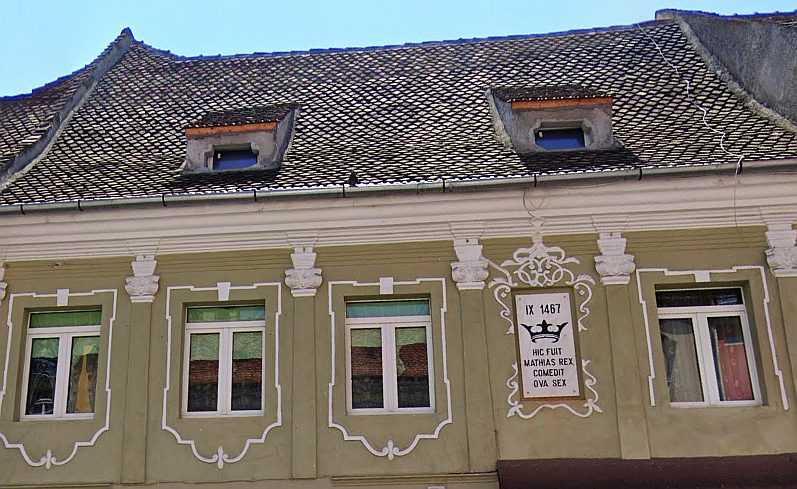
How was Vlad Dracula captured?
The most widely accepted reconstruction is that Vlad was led to believe some Hungarian troops were provided to help him reclaim his throne. As he travelled in their company from Brasov south, towards Wallachia, the men turned against him. Their leader, János (Jan) Jiskra, arrested Vlad Dracula.
The Jiskras make a cameo appearance in Beneath the Snow, the second book in my historical fiction saga Blood of Kings, Heart of Shadows.
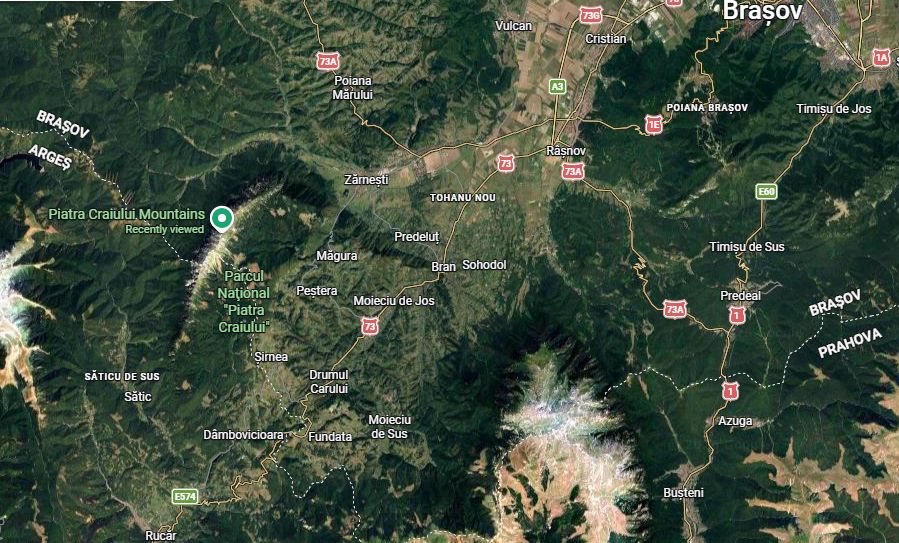
November 1462, Vlad is at Rucár fortress, known as Piatra Craiului
According to later accounts, Vlad Dracula’s capture took place near Piatra Craiului (Rucár, nicknamed like that), “after a fight on Romanian soil” by forces commanded by János (Jan) Jiskra, a former Hussite mercenary who had recently re-entered Matthias’s service. Jiskra was initially sent to support Vlad.
Vlad may have lowered his guard as he approached the land of his ancestors, the principality he expected to enter with Hungarian support.
The truth and the untruth behind Vlad Dracula’s arrest
The justification for Vlad’s arrest came in the form of forged documents.
A letter (one of three) dated 7 November 1462 at Rothel (could be Cisnădie or Turnu Rosu) was presented to Pope Pius II. The letter was presumably written by Vlad Dracula to Mehmed II. In it, Vlad addressed the sultan with a humility that did not characterized him, “my merciful lord, master of all kings of the earth,” offering submission in exchange for Ottoman support. Vlad also promised the Ottoman troops easy passage through Transylvania into the heart of Hungary:
“Mihi nota est ominis transylvana regio et omnis Hungaria et conditiones I ocorum rerum que calleo. Si placuerit Imperii fui Magnitudini, possum pro redemptione delicti mei totam regionem transylvanam tuis mani bus tradere. Ciciis posessionem adeptus, poteris omnem Hungariam time potes late subiicere.” – *I am well acquainted with the entire region of Transylvania and all of Hungary, as well as the local conditions and circumstances. If it pleases Your Imperial Majesty, I can deliver the whole of Transylvania into your hands as atonement for my offense. Once you have secured possession of it, you will be able to bring all of Hungary under your dominion.* (Passage from the 1462 fake letter of Vlad Dracula – from “The Commentaries” of Pope Pius II)
The historians have contradicting theories regarding the authenticity of this letter (perhaps written by Transylvanian Saxons or someone close to Matthias) and, if indeed was written by Vlad, to his true political intentions.
Matthias sent the document to Pope Pius II and Venice as evidence that Vlad had betrayed the Christian cause. The forgery gave the king the political justification he needed to remove the troublesome Wallachian prince from the struggle.
We don’t know if János (Jan) Jiskra presented any reasons when he arrested Vlad Dracula or if he mentioned the letter at all.
What is certain is that after Vlad’s arrest Matthis Corvinus recognized Radu the Handsome as Voivode of Wallachia.
Vlad Dracula’s imprisonment caused bewilderment beyond Hungary. Vlad had spent the summer of 1462 fighting Mehmed II, the conqueror of Constantinople, and had become celebrated in Christian Europe as a formidable opponent of the Ottomans. Yet instead of supporting him, Matthias Corvinus had removed him from the anti-Ottoman struggle.
Interesting to know is that in April 1463 the Venetian Senate requested extra documentation on the arrest of Vlad Dracula.
1462–early 1475: Vlad Dracula’s captivity under Matthias Corvinus.
Vlad Dracula’s confinement would last for 12 years, 1462 to 1474, roughly a quarter of his life.
The prince who had spent years crossing borders, escaping enemies and fighting for Wallachia was now a prisoner once again—this time not of the Ottomans, but of the king whose help he had sought.
Vlad at Oratea/Orația Fortress near Podu Dâmboviței, then at Visegrád
Although further south and into Wallachian territory, Vlad could have been taken to the nearby Oratia Fortress.
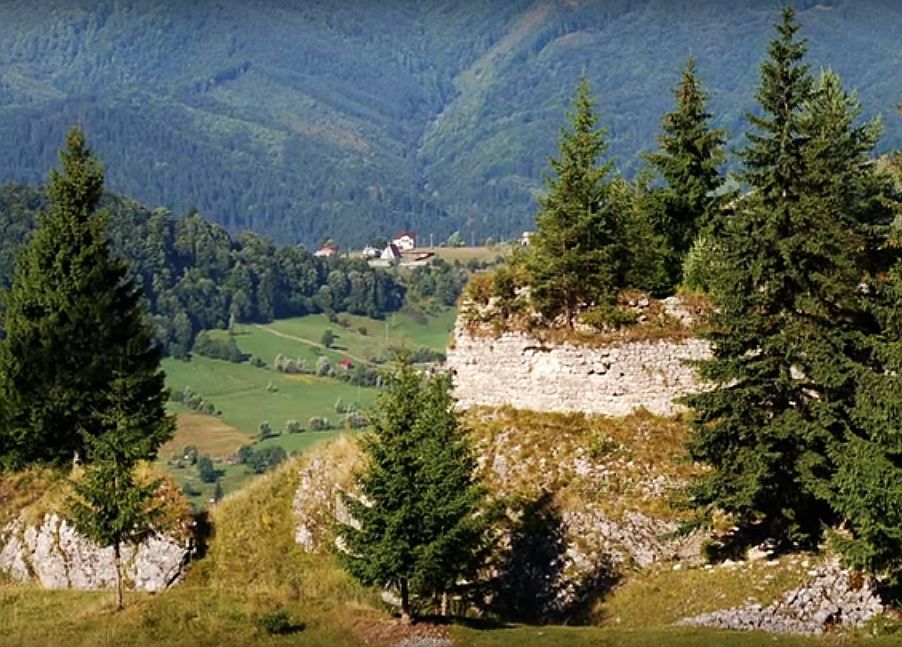
Vlad was now in Hungarian custody and he was not alone.
He had recently married a relative of Corvinus – at the beginning on 1462. We know this because Vlad mentions it in his letter to Corvinus dated 11 Feb. 1462, calling the marriage “the union between yourselves and us” (“unirea facuta intre serenitatea voastra si noi“). No Wallachian voivode has ever married a member of the Hungarian royal family before.
Later traditions associate his imprisonment first with the fortress of Oratea, near Podu Dâmboviței, and subsequently with Visegrád and Buda, although the precise chronology and locations remain disputed.
For a man who had spent much of his life moving between courts, battlefields and places of exile, the change was stark. He was no longer travelling because he was pursuing a throne. He was being kept from it.
Visegrád, the beginning of Vlad’s Years in Captivity
After his arrest in 1462, Vlad was taken into the Hungarian kingdom and eventually held at Visegrád (meaning upper castle in Slavonic), the former royal centre on the Danube.
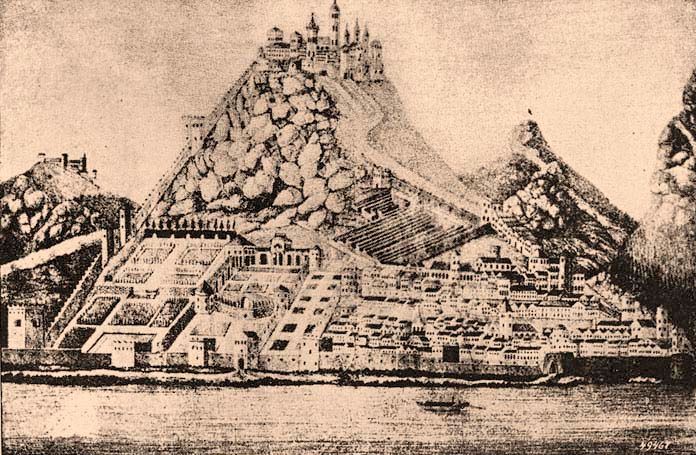
Visegrád, royal seat of Hungary for 80 years, was well suited for such a purpose.
Perched above the bent of Danube, with commanding views of the surrounding land and relatively protected from the military threats that usually approached Hungary from the east and south, Visegrád fortress offered a secure place to confine important prisoners. And not only…
Hungarian Kings kept their most prized possessions at Visegrád
The Holy Crown of St. Stephen, required by tradition to lawfully crown any King of Hungary, had been kept at Visegrád, under lock, in the guarded treasury chamber, for centuries.
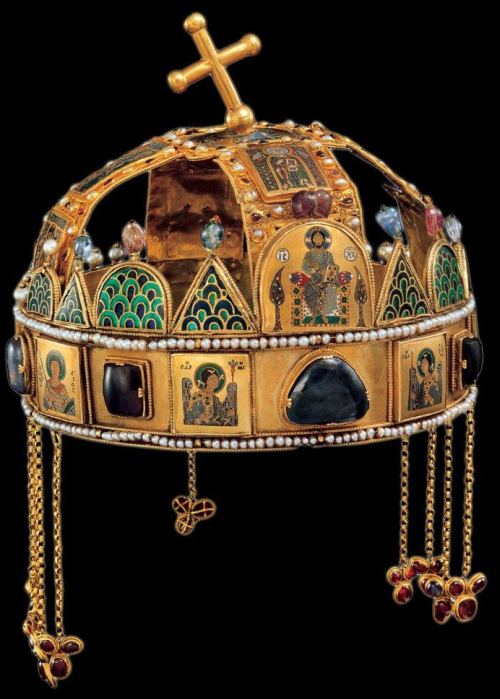
Except for that one time when Queen Elizabeth of Luxembourg had her loyal lady-in-waiting, Helene Kottanner, steal the Holy Crown of Hungary from Visegrád fortress on the night of February 20, 1440, to secure the crown for her expected child, László V, known as Ladislaus the Posthumous. It is a beautiful story, having hid the sacred crown inside a baby’s pillow and rushing it away on a sled, surviving a dangerous crossing over the frozen Danube River.
Vlad Dracula‘s detention was therefore unlike that of an ordinary captive. As a twice-crowned prince, he was treated more as a political prisoner under restricted freedom – enforced residence – than as a common criminal.
He was permitted some movement around the fortress and its surroundings, partake in hunting, while remaining under the supervision of the castellan responsible for the security of the royal stronghold. Later tradition even claims that, during the long years of confinement, Vlad took up sewing to occupy the hours of an unusually prolonged captivity.
Whether that detail is true or not, it hints at the strange suspension of his life: a warrior accustomed to horses, weapons and planning his life and that of an entire land, reduced to waiting.
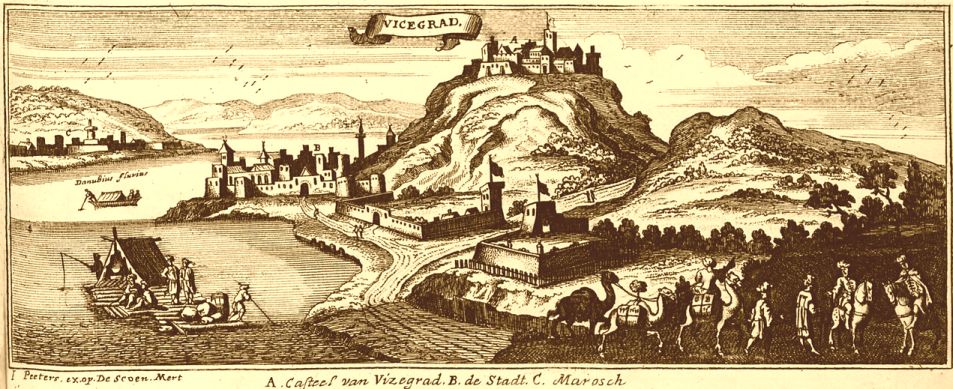
Visegrád also placed Vlad within the heart of the Hungarian royal world. The fortress that had served as the seat of the Hungarian court for much of the fourteenth century remained an important royal residence.
Vlad Dracula at Matthias Corvinus’ Buda Castle, 1463-1464
At some point during his long detention, Vlad was also associated with Buda, the centre of Matthias Corvinus’s royal power. His captivity was certainly not a simple period of confinement in one dungeon. He moved within the orbit of the Hungarian court, his status shaped by the Hungarian king’s changing political calculations.
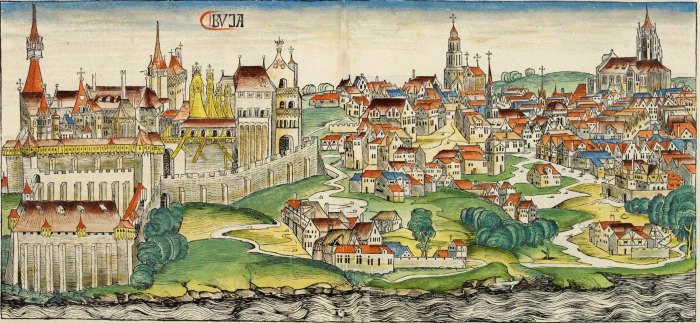
Here Vlad Dracula would have met Nicholas of Modruš, bishop and the Pope’s representative at the courts of King Stephen Tomašević of Bosnia and King Matthias Corvinus of Hungary during 1463-1464.
In his historical paper De Bellis Gothorum written in 1472 Nicholas of Modruš describes Vlad the Impaler (of whom he was not a fan, history tells us):
“He wasn’t particularly tall, but sturdy and muscular, with a harsh and fierce appearance. His nose aquiline, his nostrils flaring, his skin fine but ruddy, and he had very long eyelashes that framed large, green eyes. But his eyebrows, dark and thick, gave him a menacing look. His face was clean shaven, expect for his mustache. His prominent temporal ridges increased his head’s appearance and his neck, as thick as a bull’s, ended in broad, strong shoulders on which his dark, curly locks rested.”
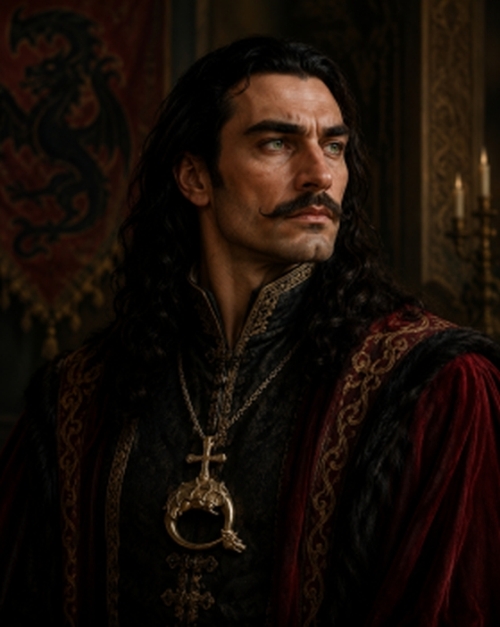
There are a few portraits of Vlad Dracula we can find today online, none created during his lifetime. One of the most reliable ones is the 16th cent. portrait of Count Vlad III Dracul Tzepesch found at at Ambras Castle, Innsbruck, part of the Kunsthistorisches Museum Vienna: minute 00:31
The portrait collection and historic exhibits at Ambras Castle in Innsbruck were assembled by Archduke Ferdinand II of Austria during the 16th century. Vlad Dracula’s portrait (believed to be created for Ferdinand’s collection, after an original that doesn’t exist anymore) is in the Chamber of Art and Curiosities.
I will return to the know or less known portraits of Vlad Dracula in the near future. Meanwhile, if you ever wondered of any physical resemblance between Vlad the Impaler and Bram Stoker’s Dracula.
1470s, Pécs (~200km SW from Buda and Visegrád: a house and a new home for Vlad.
After the death of his first Hungarian wife and his release from Visegrád in the early 1470s, initial negotiations between Vlad and Matthias took place in the Buda royal palace. Subsequently, Vlad married Justina Szilágyi, Matthias Corvinus’ cousin, and the couple received a residence in the city of Pécs.
Modern visitors see an attractive Baroque city, but fifteenth-century Pécs looked very different. A university existed there since 1 September 1367.
Pécs enjoyed considerable autonomy and was one of the Kingdom of Hungary’s most vibrant commercial, cultural, and religious centres throughout the fifteenth century.
Much of medieval Pécs still lies beneath the modern city. For example Church of Saint Bartholomew, the town’s parish church, now lies beneath the Gazi Kasim Mosque now stands, by Széchenyi Square.
The square, important by its vicinity to a church, was surrounded by houses with arcaded façades while extensive cellar systems survive below street level. Wealthy merchants lived here, selling goods brought from across Europe. Noble families also owned property in this prosperous episcopal city.
These underground passages continue to inspire stories and speculation, encouraging visitors to imagine that Vlad himself may once have walked through them.
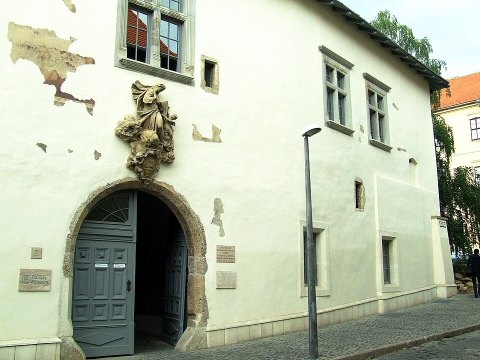
Dracula’s House in Pécs
On 10 September 1489, the chapter of Pécs recorded the sale of a stone house known as Drakwlyahaza—literally, Drakwlya’s House. The charter describes its neighbours in detail: plots to the east, public roads to the south and west (a corner house then) and, to the north, a house belonging to the St Catherine altar of St Bartholomew’s Church, the city’s principal parish church. It would have been close to the area of today’s Király Street and Széchenyi Square – a hypothesis, not a proven location.
More remarkably, the document records the house’s earlier ownership.
Jusztina, once widow of the late Dragwlya, voivode of Wallachia, had given it to one of her servants, Dénes, as a reward for his service. Jusztina married twice more afterwards.
After Dénes was condemned for robbery and his property confiscated, the house passed to Rozsályi Kun Jakab, castellan of Pécs. In 1489 he sold it to Gyulai György and his sons for 200 gold florins, together with an adjoining vacant plot.
The identity of Dragwlya is not left to speculation. Dr Tamás Fedeles, the historian who studied the charter identifies him as Vlad III, Vlad Țepeș—Dracula.
Excavations from 2009 revealed a two-branched medieval cellar beneath the square. These cellars originally served practical purposes. Before refrigeration, food was preserved through salting, drying, or storage underground. Vegetables, wine, and other provisions could remain fresh for extended periods in the cool conditions. Vlad, if that was his house in Pecs, would have descended there himself, perhaps to fetch some wine – maybe even brought to him from the Wallachian vineyards near Govora and Târgoviște… Today access is only possible through modern utility tunnels.
The source connects this with the story reported by Kuriczyn in which Vlad punished a commander whose soldiers had entered the house of a great prince without permission.
And it was during these years, according to the prevailing historical interpretation, that another transformation began.
Vlad’s imprisonment had removed from the battlefield a commander who knew the Ottoman world from within and had already demonstrated his ability to fight it. By the time Matthias Corvinus finally released him, the political situation in SE Europe had changed, particularly under Ottoman pressure.
While the stories that had emerged began to give Vlad Dracula another kind of fame.
The prisoner was becoming a legend.
While Vlad Dracula, the man, had only two years left to live.
Meanwhile, “To Scodra! To Rome!” called the Sultan’s Janissaries
In 1474 the Ottoman troops were taking large bites from the Venetian Republic having just reached Scodra (today Shkodër, Albania) – half a day’s ride from the Adriatic Sea and just at the heel of the Italian boot. The Venetians went as far as allying with the Persians to detract the Ottoman troops from the Latin world.
Between 29 Nov. 1474 and 10 Jan. 1475 Moldavian Voivode Stephen the Great showed his desire to fight the Ottomans through a letter to Pope Sixtus IV (who commissioned the Sistine Chapel) and the victory from Vaslui. He urged the Pope to commence another anti-ottoman christian offensive, “on the sea and on the land.” At the Pope’s silence Stephen the Great struck an agreement with Matthias Corvinus to reinstate Vlad Dracula, so that at least this Wallachian voivode will back him in his lonely wars against the Ottomans.
Vlad Dracula is eagerly expected to return to the throne of Wallachia and fight the Ottomans as he previously did.
The Italian envoy Fl. Roverella expressed everyone’s hopes pinned on the former ruler’s reinstatement: “It is hoped that the said Dracula would perform great feats against the Turks, just as he had done in the past, when he dealt them a crushing defeat on the plains of Wallachia.”
By the summer of 1475, Vlad Țepeș had been released from his long captivity and was once again moving through the political landscape of Hungary and Transylvania, no longer merely a prisoner, but a claimant being quietly prepared for a return to power.
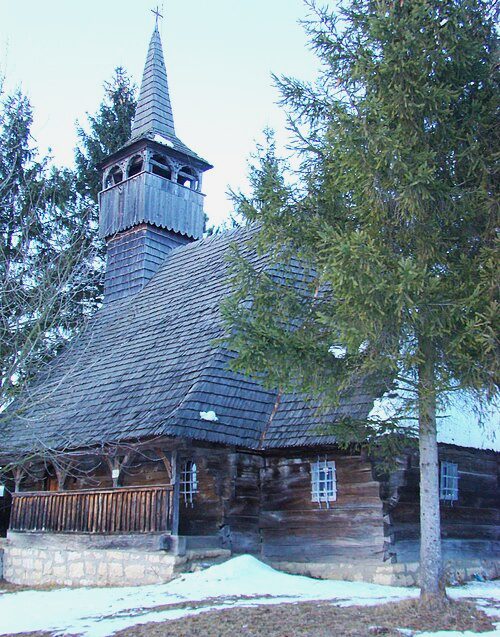
Vlad Țepeș: the Long Road Back to Wallachia, 1475–1476
The Summer of ’75… August 1475 Vlad Dracula is in Argyas , Transylvania (today Aghireșu commune of Cluj County, NW of Romania)
We have a letter written there, dated August 4/8, 1475, signed Wladislaus Dragulya, vaivoda partium Transalpinarum – Vlad Dracula, Voivode of the Transalpine regions. In it, Vlad requested the Saxons of Sibiu to allow Cristian Pârcălab, “noster boyar specialis”, to build a house in their town, where he [Vlad Dracula] likely intended to settle.
*Transalpine = over the Eastern Europe Alps, meaning the Carpathian Mountains.
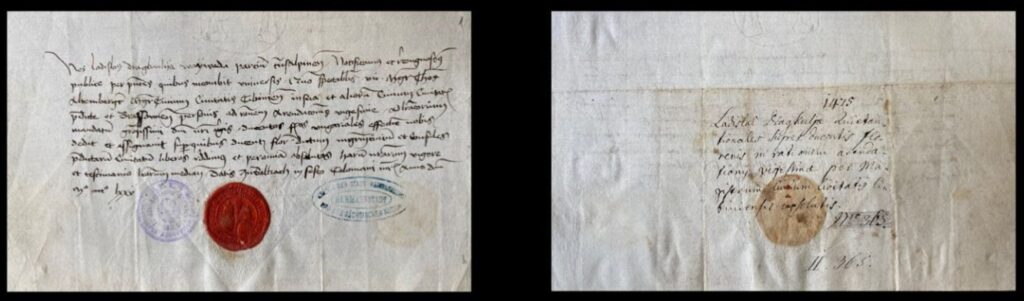
Things were not moving very fast for Vlad. Someone (Radu the Handsome alternating with Laiotă Basarab / Basarab the Old) else still rules Wallachia.
September 21, 1475: King Matthias Corvinus writes to Thomas Altemberger, magister civium civitatis Cibiniensis (mayor of Cibin = Sibiu) asking him to hand over to his loyal subject Dracula (our Drakwlye) 200 florins from the revenues of the Arieș mines.
October 13, 1475, Vlad Dracula is in Bălcaciu, on Little Tarnava River
On 13 October 1475 Vlad Dracula also wrote to Mayor of Sibiu, Thomas Altemberger, acknowledging receipt of 200 florins. Vlad was in Bălcaciu, over 300 km from Bucharest.
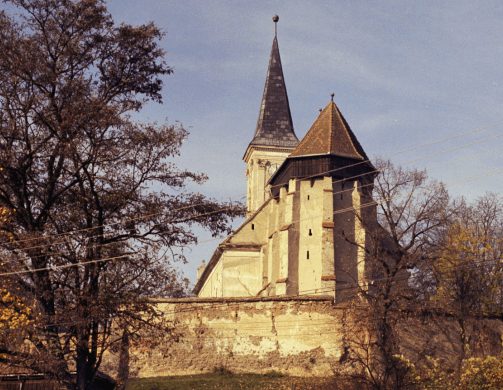
January – February 1476, Vlad Dracula participates in Corvinus’ anti-Ottoman campaign in Šabac, Serbia
By now Matthias Corvinus once again needed commanders capable of fighting the Ottomans, and Vlad—who had spent his youth among the Ottomans and knew their language, customs and methods—was too valuable a military asset to leave idle.
After years in which the Wallachian prince had been confined and removed from the struggle, he was once again fighting the Ottomans—this time in Bosnia, and under the banner of the king who had once imprisoned him.
Vlad Țepeș used a familiar tactic: surprise followed by terror. According to the account, his allied troops secretly crossed the Saya River and attacked the fortress before dawn. Some soldiers, dressed as Turks, were slipped inside the town. At a signal, the rest stormed in from outside, catching the defenders between two attacks. The Turks were defeated, and a rich haul of booty was taken.
But Vlad had not forgotten the power of fear. The bodies of the fallen were impaled, creating another gruesome “forest of stakes” to greet the approaching Turks—the same psychological weapon he had used against Mehmed II near Târgoviște in 1462. The message was simple: come closer, and see what awaits you. No wonder the chronicler says the Turks were terrified of Țepeș.
The man once held prisoner by the Ottomans had returned to their frontier as a commander using the knowledge of the empire against itself.
“The Wallachian country, which has always been—and still is—at the Turks’ borders, and for a hundred years now the Turks have been fighting with that land, yet they have not been able to destroy (conquer) it, and only the Danube separates them.” (Matthias Corvinus, 1476)
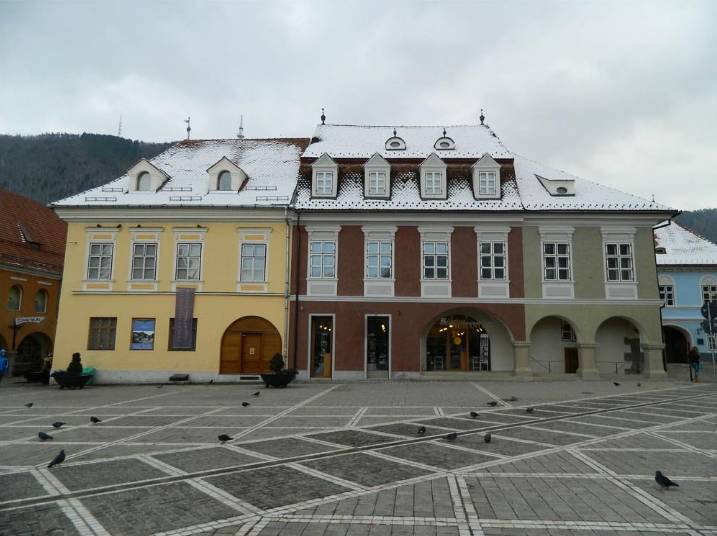
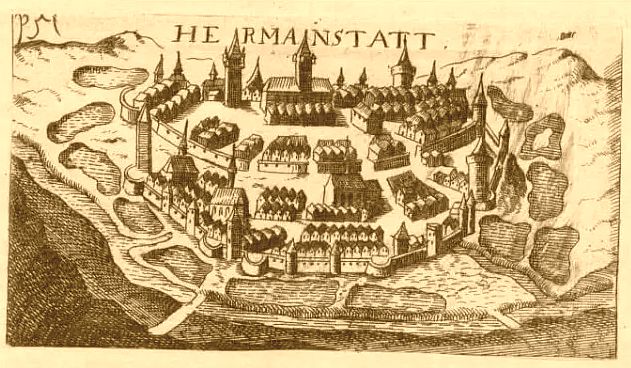
15 March 1476 Vlad would have been in Kronstadt (Brasov) and Hermannstadt (Sibiu)
We know that Vlad had a house in Sibiu. At the same time, the Wallachian boyars who supported Vlad and took refuge in Transylvania (some of whom fought under his banner just recently, in Serbia) lived in Brasov and sibiu.
July 1476 Vlad Dracula in Torda (Turda) and then in Mediaș heading for Moldavia
By the end of July 1476, Vlad Țepeș had joined Stephen Báthory and the royal Transylvanian army probably at Torda (Turda) on 25 July, where the great army assembled. The great force moved toward Mediaș, where Vlad and Báthory were together on 31 July, before turning toward Moldavia to aid Stephen the Great.
But they never made it there. On 10 August, Sultan Mehmed II ordered the Ottoman army to withdraw from Moldavia, apparently because he had learned that the Transylvanian force was approaching.
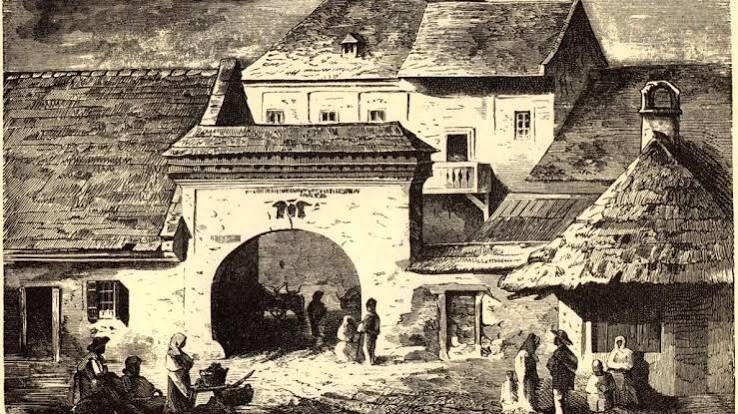
Preparations for Vlad Dracula’s 3rd return to the throne of Wallachia
6 September 1476: From Buda, Matthias Corvinus instructed the Saxons serving in the Transylvanian army to be prepared for an incursion into Wallachia. Preparations to restore Vlad Dracula to the Wallachian throne had already begun in July.
7 Oct. 1476 Vlad Dracul in in Kronstadt/ Brasov
He grants commercial privileges to the Saxon merchants.
End of October 1476: Vlad rides past Rucar, from Transylvania into Wallachia
It seems that the actual fight between the troops of Laiota who ruled Wallachia with Ottoman support (18 000 soldiers) and Vlad backed by Hungarian support (25 000 men) took place in the north of Wallachia – Vlad Dracula would have entered via Rucar.
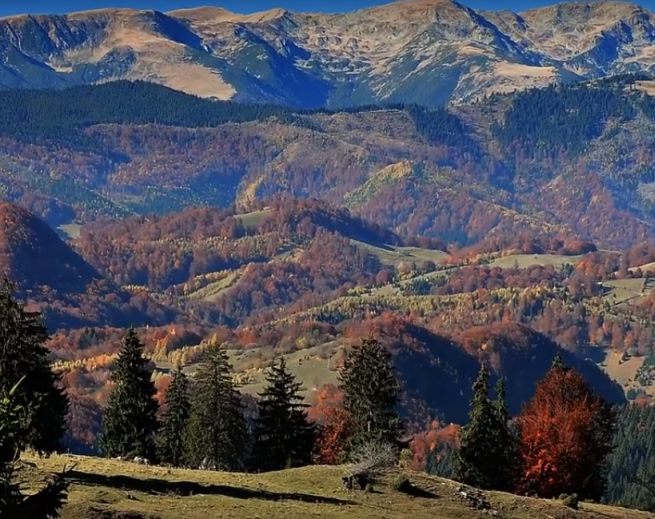
8 November 1476: Vlad Dracula was in Târgoviște
After a siege of 15 days “We have overthrown our enemy Laiotă, and he has fled to the Turks,” Vlad writes to the magistrate of Brasov.
After 8 November 1476 Vlad asked the magistrate of Brasov to send those who wished to enter the service of the Wallachian voivode. At the same time he invited the merchants of Brașov to come with their full loads, for, as God had ordained, “we are now one country” [meaning his alliance with Corvinus].
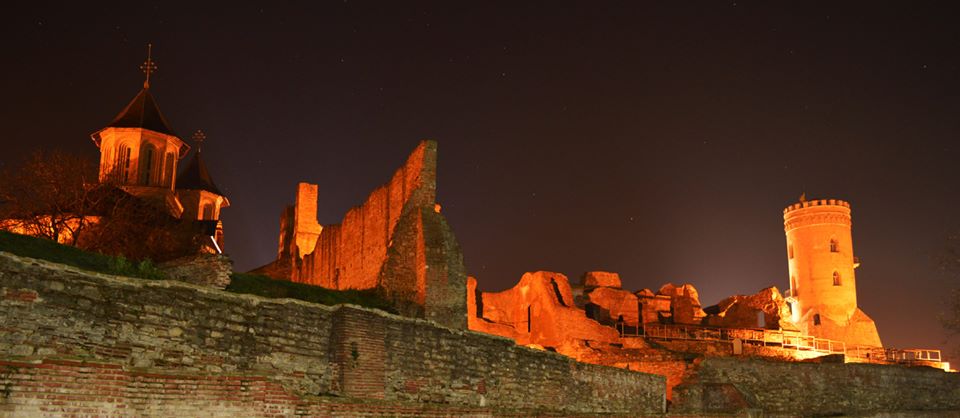
16 / 17 November 1476 Vlad Dracula is in Bucharest
In only one day and, again, with the help of Stefan Bathory, the commander of the Hungarian troops in Wallachia, Vlad retakes Bucharest and all the boyars recognized Vlad as their ruler.
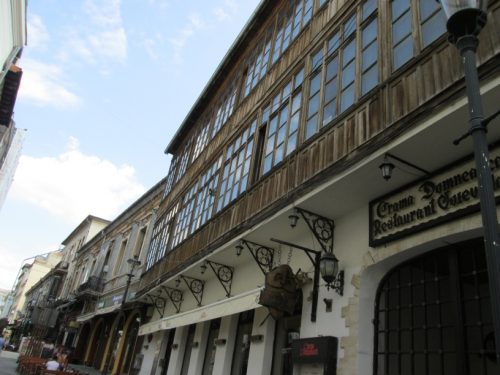
26 November 1476: Vlad is officially chosen Voivode of Wallachia
In a great assembly, unanimously, Vlad Dracula was installed as the new ruler who was to replace Laiotă Basarab, who had fled to the Turks.
Why did Vlad the Impaler wait for this particular day to convene the Assembly of the Estates? The answer is not difficult to find if we remember that on 26 November, fourteen years earlier, his second reign had unexpectedly come to an end. It therefore seems particularly plausible that, by choosing this date, Vlad intended to mark his triumph over the adversity of fate.
Stephen the Great, too, arrived with 15 000 men to seal his alliance with Vlad.
King Matthias Corvinus writes to the Due of Milan and to the Pope naming Vlad Dracula “a man of war, and a bitter enemy of the Turks.”
The King’s Convenient Truth About Vlad Dracula: from Traitor to Warrior
Back in 1462, when Corvinus had Vlad Dracula arrested, if the king had genuinely believed the treacherous letters to be authentic and regarded Vlad as a traitor, it is difficult to imagine that he would have spared his life at all. Yet Vlad was not executed after his arrest.
More tellingly, in 1476, Corvinus himself presented Vlad Dracula as a determined and courageous fighter against the Turks. If the king had truly regarded Vlad as a traitor in 1462, such praise is difficult to explain.
Corvinus’s later actions therefore suggest that the 1462 letters may not have been a genuine revelation of Vlad’s treachery, but rather a convenient piece of propaganda, used alongside other material to justify Vlad’s imprisonment at the time. And, tellingly, the king himself appears to have moved away from that earlier portrayal. By 1476, the man once presented as a traitor was being described instead as a formidable enemy of the Turks.
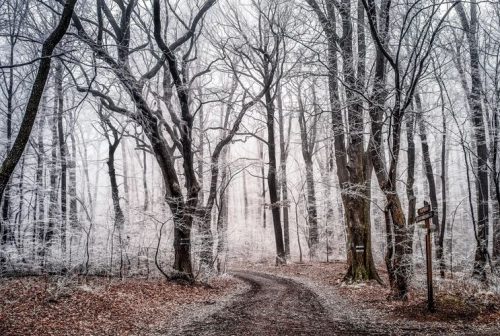
The End of the Road Is Near…
In November, through his man Cristian, Vlad asked the people of Brașov to send two master carpenters, each with three assistants, to build him a new residence at Târgoviște, presumably because the old one had been damaged during the fighting. The request is poignant: after years of exile, imprisonment and campaigning, Vlad was preparing a house in the capital for himself and, perhaps, for his new wife. Whether Justina crossed the Carpathians and joined him in Wallachia remains uncertain. It is tempting to think that she did. Yet the evidence does not allow us to say so with certainty.
From Visegrád to Buda and Pécs; from the royal heart of Hungary to Sibiu and Brașov; across the Carpathians and back to Târgoviște, The journey was not merely geographical. Each move marked another stage in Vlad’s transformation—from released prisoner, to royal protégé, to claimant, to captain, and finally, once again, Prince of Wallachia.
Vlad’s final journey was brutally short
Knowing the boyars all too well, Vlad the Impaler placed little faith in their oaths of loyalty. He therefore asked Stephen the Great to provide him with a personal guard, and the ruler of Moldavia left him two hundred of his own courtiers.
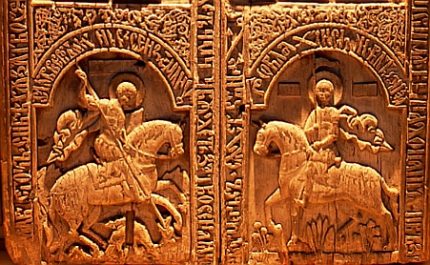
Between end December 1476 – early January 1477, Vlad Dracula was killed
His final journey took him towards Bucharest and the Vlăsia forests, where the last battle was fought. The precise location remains uncertain, but one tradition places the encounter near present-day Voluntari and Ștefănești, in the vicinity of the forests surrounding Snagov.
Several accounts survive concerning the death of Vlad Țepeș, but they broadly agree that he was killed shortly after becoming voivode of Wallachia in 1476. Stephen the Great’s account, based on the testimony of ten survivors, states that the Turks found Vlad, killed him, and massacred his men, sparing only the ten who escaped.
A Milanese report of February 1477 likewise records that, after the Turks had retaken Wallachia, they killed Dracula, the Hungarian king’s captain, together with about 4,000 men. Other traditions, however, attribute his death to treachery. A later account claims that Vlad was accidentally mistaken for a Turk by his own men and killed, while another, recorded by Mihail Bocignoli in the early sixteenth century, says that Wallachian boyars murdered him because of his refusal to negotiate with the Turks.
The Austrian chronicler Thomas Unrest speaks of a different version: a Turk infiltrated Vlad’s household and, after gaining his confidence, murdered him from behind while they were riding together. Despite their differences, these accounts point to a violent and treacherous end, with the strongest contemporary evidence placing responsibility for Vlad’s death with the Turks.
What is sure about the date of Vlad’s death is that it happened before 5 Jan. 1477, a date when Stephen the Great still had no knowledge of Vlad’s fate.
Vlad was killed and decapitated.
According to some sources, the severed head was sent as a gift to the Sultan.
The body was reportedly buried at Snagov Monastery, his foundation, near which the fatal encounter is thought to have taken place. During excavations, the archaeologist Dinu Rosetti discovered weathered human bones beneath fragments of a silk shroud, some retaining a purple colour and decorated with strips of gold. The remains were accompanied by fragments of a thick yellow-brown velvet garment, its sleeves fastened with large silver buttons and silk cord loops. The clothing was further decorated with flowers whose petals were made from garnet sheets. A small crown or circlet was also found, formed from horizontally pierced faience beads threaded onto gold wire, with the floral elements alternating with turquoise stones set in gilt-metal claws.
But the fate of Vlad’s remains is still uncertain. The historian Constantin Rezachevici argued for Comana Church.
The prince who had spent so much of his life travelling between thrones, courts, prisons and battlefields disappeared almost as abruptly as he had returned.
Vlad’s last road disappears into the same darkness that surrounds his final resting place: somewhere beyond the forests, somewhere near the battlefield, the man who had spent a lifetime travelling towards a throne finally stopped moving.
He certainly lived up to the expectation set on him.
Vlad III, Young Vlad, Vlad the Impaler (Țepeș), Vlad Dracula, or Kazıklı Voyvoda (Impaler Prince)? Do you know?
We know from letters that his father, Vlad II, called him Vladul (Vlad-ul meaning The Vlad).
Vlad did not originally call himself Dracula. The name came from his father, Vlad Dracul, whose title was associated with the Order of the Dragon. Vlad later adopted the patronymic Drăculea—“son of Dracul”—and by 1475 was signing documents as Wladislaus Dragwlya.
Impaler, Țepeș, was a name given to him later, because of his supposed preference for impaling. In contemporary sources, both foreign and domestic, he is never called by this name. It was not until 1508 that we find him referred to as Țepeș in an external document and again in 1550 as “Vlad voevod Țepeș.”
The Ottoman form Kazıklı Voyvoda (Impaling Voivode / Impaler Prince) appears in Ottoman sources at the beginning of the 16th century.
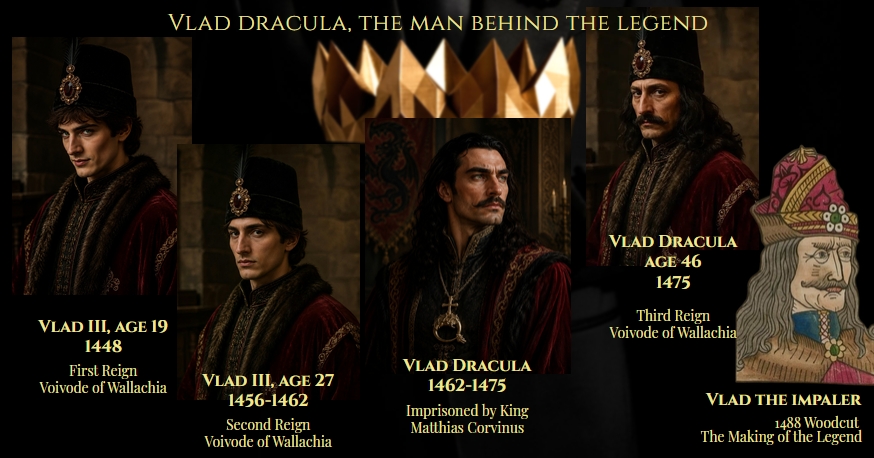
Here is where we’ve traveled so far alongside Vlad Dracula:
Where Did Vlad the Impaler Live? Sighișoara, Târgoviște, Gallipoli, and Eğrigöz, Part 1
Young Vlad III: Captive in the Ottoman World – Where He Lived, Part 2
The Lonely Return of Vlad III to Târgoviște, Reclaiming the Wanted Throne 1448, Part 3
Following Vlad III in Moldavia and Transylvania: Exile and New Alliances, 1449–1456, Part 4
Where Did Vlad Dracula Live as Voivode of Wallachia, 1456-1462, Part 5
Where Vlad Dracula Lived During His Last Years, 1462-1476: Captive. Crowned. Killed. Part 6 (this one)
About the research:
Patricia Furstenberg is a Romanian-born historical fiction author whose Blood of Kings, Heart of Shadows series explores medieval Transylvania, Wallachia and Moldavia. Her research takes her into the history, folklore, landscapes and forgotten stories behind the fiction.