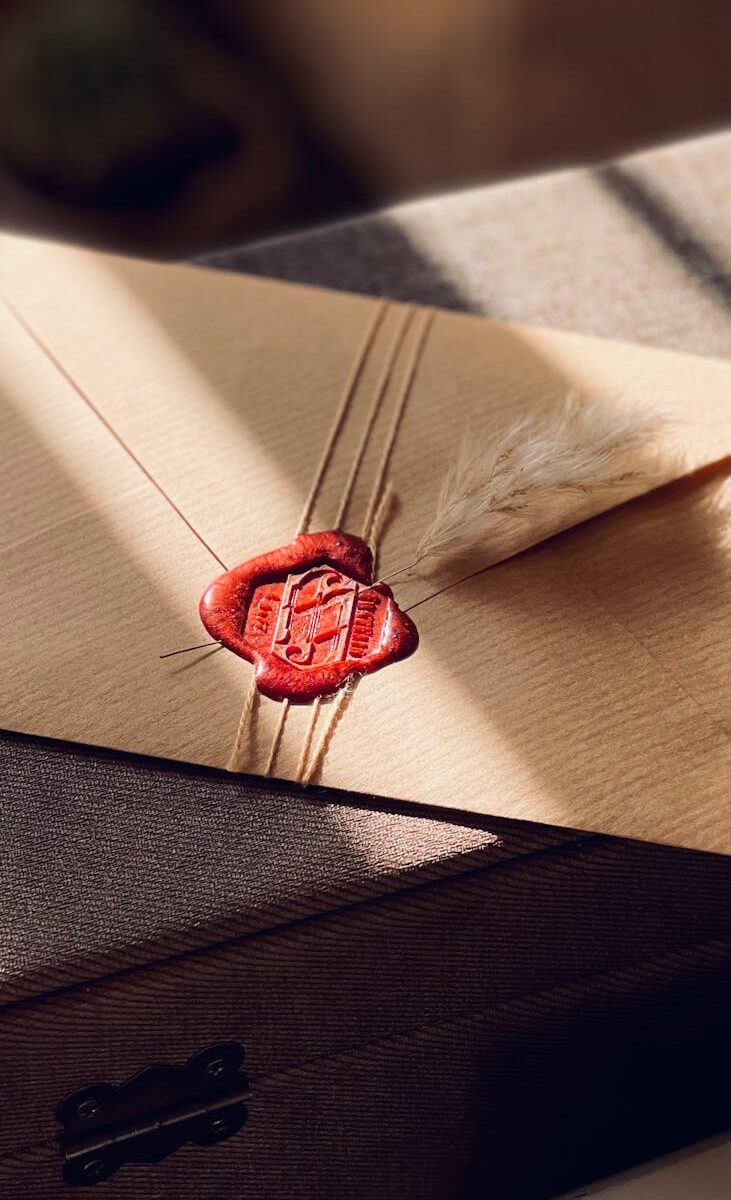
There is something haunting about an old letter.
While writing Kate’s Letter for the anthology Courage: Tales of History, Mystery and Hope (OUT JUNE 17), I found myself drawn not only to the emotions within the letter, but to the physical reality of medieval correspondence itself. How did people protect private messages before envelopes existed? What did secrecy look like in an age of spies, kingdoms, and fragile loyalties?
Letters… are more than the words on paper; are the object: folded by hand, sealed with wax, carried across forests and borders by riders who might never arrive.
A letter once passed through weather, through war, through the hands of strangers. It could be hidden beneath clothing, sewn into saddles, locked inside monastery chests, or burned before another soul could read it.
The answers are stranger — and more ingenious — than many readers imagine.
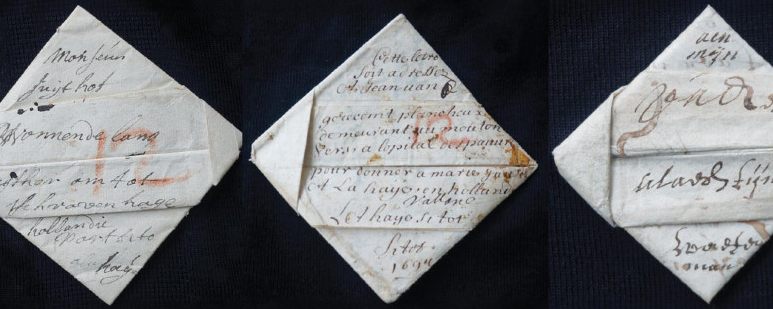
Medieval Letters Were Folded, Not Enveloped
Envelopes, as we know them today, did not yet exist in fifteenth-century Europe. If Babylonians used clay wrappers for their papyrus letters, in late medieval years the letter itself became its own container.
Sheets of parchment or paper were folded inward through intricate techniques often called “letterlocking” — a practice that turned a flat page into a sealed object designed to resist tampering. Letterlocking was the historical process of folding, tucking, threading, and sealing a sheet so that it became its own envelope.
As paper gradually replaced stiff parchment, correspondence became easier to manipulate into complex secured forms. Some folds were simple tucked closures. Others were astonishingly intricate, designed so that any attempt to open the letter would leave visible damage.
Long before modern envelopes existed, letters were transformed into secured objects that protected their contents and exposed any interference. Today, historians study not only the words inside these documents, but also the folds, slits, creases, and locking patterns themselves — physical traces of secrecy, trust, and vulnerability preserved across centuries.
A private message was never simply written. It was constructed.
Across late medieval and early modern Europe, merchants, lovers, diplomats, spies, and refugees all relied on variations of these folded systems. Even when paper became more widely available, it remained expensive, and early postal systems often charged by weight. Folding a letter into itself avoided the cost of an additional sheet.
Some closures were simple folds secured with wax. Others involved hidden slits, threaded strips of paper, or triangular tucks engineered to reveal any intrusion immediately. Privacy depended not only on secrecy, but on visible proof of violation.
A broken seal carried meaning. So did disturbed folds. A recipient could often tell whether a message had been opened before it reached them.
Seals, Authority, and Vulnerability
In fifteenth-century Wallachia, seals carried strict political and symbolic weight. The princely chancery used several types: a small seal pressed directly into wax on everyday documents such as letters, mandates, and safe-conducts, and a far larger ceremonial seal reserved for formal charters written on costly parchment. These grand seals were suspended on red and green silk cords and guarded by the voivode’s chief chancellor. Both were impressed into red beeswax — a colour reserved exclusively for the ruler under severe penalty.
Even today, historians often work with fragments of these impressions: broken wax surviving long after the original documents have been lost.
That physical vulnerability is what stayed with me while writing Kate’s discovery of Vlad’s hidden personal letter. The paper itself becomes charged with memory: folded away for years inside a coat lining, surviving winter, silence, grief, and time itself.
In the medieval world, a letter was never only communication. It was evidence.
Wax Seals Were Identity, Authority, and Warning
Wax seals carried immense symbolic power.
Kings, nobles, merchants, monasteries, and military orders used them to authenticate documents, impressing designs from engraved rings or carved matrices into warm wax. In a world where literacy was uneven, the seal often mattered as much as the written word itself. Many people recognised symbols more readily than handwriting.
A dragon, a crest, a saint, or a family emblem could announce authority before a letter was ever opened.
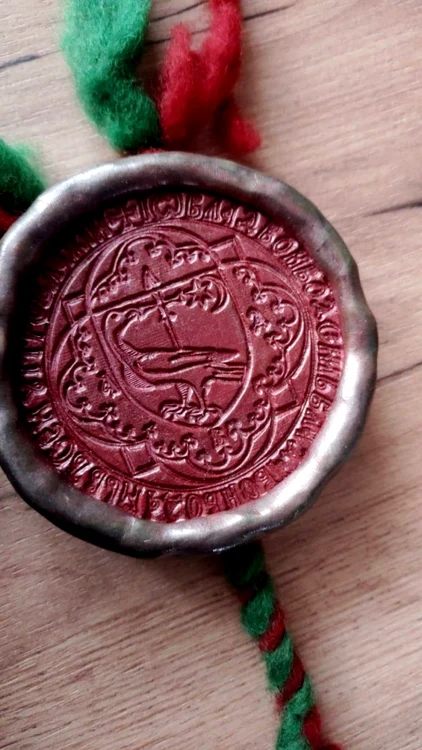
For rulers such as Vlad III Dracula, the seal functioned as an extension of princely identity — a physical imprint of legitimacy and control pressed directly into wax.
For centuries, seals acted not only as signatures, but as assurances. An unbroken impression suggested that a message had not been touched since it left its sender’s hands. Some seal rings even bore warnings carved into metal: “Break, read, conceal what is read.”
Privacy was never assumed. It had to be enforced.
In Kate’s Letter the wax seal bears “a dragon chasing its tail, the circle unbroken.” The image quietly echoes historical associations surrounding Vlad III Dracula and the Order of the Dragon without turning the narrative into explanation. In that world, symbols carried layered meaning — allegiance, fear, memory, and political weight, all at once.
A seal did not only secure a message. It announced danger.
To possess sealed correspondence could itself be incriminating. In times of political tension, the wrong letter in the wrong hands might lead to interrogation, imprisonment, or confiscation of property. The object was never neutral. It was evidence.
Yet wax seals alone were not fully secure. A practiced hand with a heated blade could sometimes lift wax, read a letter, and reseal it with minimal trace. Because of this, folded security systems became increasingly complex across the late medieval and early modern world.
Seals could be imitated. Paper could not lie.
Even so, sealing and folding together did not guarantee safety — only delay.
And beneath it all remained a harsher truth:
To write something down in the medieval world was to create risk as well as record.
Below you can watch the spirral-lock technique used by Catherine de’ Medici in the 1500s:
Literacy Was Power — and Risk
Letters in the fifteenth century were never neutral objects. Literacy itself could be dangerous.
A healer with knowledge of herbs, a Jewish printer capable of reproducing texts, a monk copying manuscripts, a noble exchanging political correspondence — all participated in networks of knowledge that authorities frequently sought to control.
Letters carried what could not safely remain spoken:
- · military plans
- · alliances between shifting powers
- · trade agreements bound by fragile trust
- · forbidden religious ideas
- · accusations that could unravel reputations
- · confessions never meant for public eyes (as in Kate’s Letter)
- · betrayals written in ink before they became history.
And once written, words could outlive their author.
On the night before her execution in 1587, Mary, Queen of Scots wrote what is often described as her final letter. But historians note something more precise: her last recorded act was not writing it, but securing it.
She folded the paper into itself and cut thin strips from its edge, threading them through slits to form a tight spiral lock. There was no envelope. No external protection. The letter became its own sealed mechanism.
If anyone tried to open it, the paper would tear. And that tear would speak louder than the words inside.
Every fold carried intention. Every seal carried risk. Even the geometry of a letter became part of its message.
Some correspondents developed private folding patterns known only to trusted recipients, turning the letter itself into a form of identification.
That material permanence sits at the heart of Kate’s Letter.
The message survives because it was hidden physically—folded into fabric, into memory, into concealment itself.
Long after kingdoms shift and reputations decay, the written voice remains waiting for discovery.
A stolen letter did not merely expose information. It could expose allegiance.
Languages, Power, and Political Survival and What Language Vlad III Dracula Spoke?
Language itself could become political.
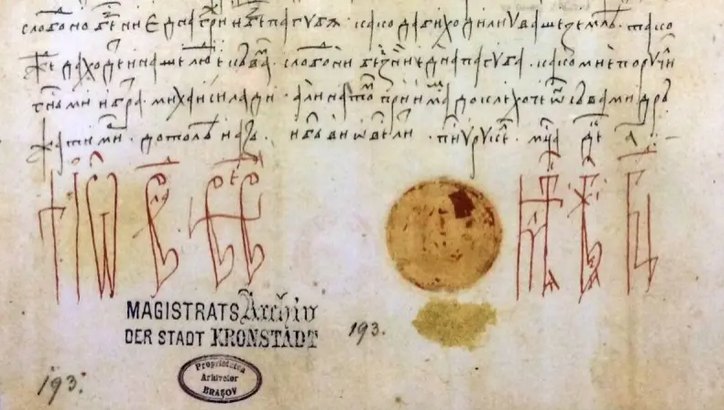
In Vlad III Dracula’s world, the language a ruler spoke was not always the language used in official correspondence. Wallachian chancelleries commonly issued documents in Slavonic, the formal administrative language of the region, even though Romanian was likely the dominant spoken language of the ruling dynasty and wider population.
Vlad’s own life moved across cultures and borders: Wallachia, Transylvania, the Ottoman court, and Hungary. Modern historians believe he likely spoke several languages to varying degrees, including Romanian, Hungarian, and Turkish, while encountering Latin, Greek, German, and chancery Slavonic through diplomacy, religion, and political negotiation.
Medieval letters therefore carried more than information. They crossed linguistic frontiers as well as physical ones. A document’s language could signal allegiance, education, authority, or political ambition long before its contents were even read.
History survives in the same way.
Not whole. Not orderly. But in fragments that refuse to disappear:
- · letters never meant to survive
- · chronicles interrupted mid-thought
- · rumours that outlived the voices that spoke them
- · prayers folded into margins of manuscripts
- · marginal notes written in haste
- · sealed confessions broken open by time
- · documents half-burned, half-remembered, rescued from dust and silence
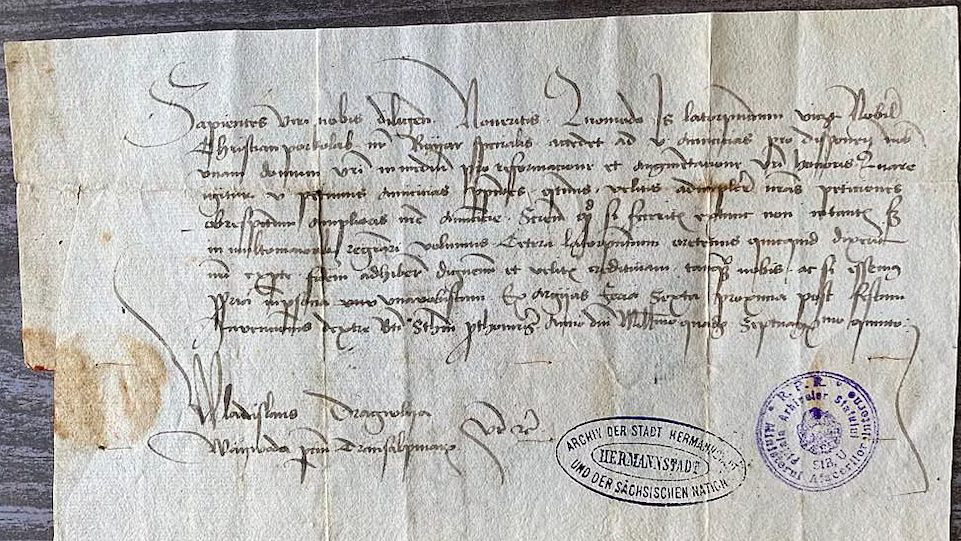
A letter signed by Vlad Dracula found in the Sibiu (Hermannstadt) State Archives:
History Through Objects
One of the greatest pleasures of writing historical fiction lies in discovering how small objects can contain entire worlds.
- A coat seam.
- A wax seal.
- The smell of smoke trapped in wool.
- Garlic hanging beside a barn door.
- A folded page hidden for decades.
Such details often reveal more about the medieval world than pages of explanation ever could. They make history tactile—immediate, human, and uncomfortably close.
This was especially true while writing Kate’s story. The emotional truth of the narrative depends upon objects that endure just long enough to carry memory forward when everything else has been lost.
The letter matters because it survived.
And perhaps this is why medieval correspondence still unsettles us centuries later. These are not monuments built for spectacle, but private voices preserved against the odds—words that waited in silence, folded into themselves, until someone finally came to open them.
Today, privacy feels digital, invisible, abstract. Yet long before encryption and screens, people already understood the danger of written words. A letter could accuse, expose, betray, or save a life. It was never just ink on paper. It was risk made material.
~~~
Further reading: Unlocking history through automated virtual unfolding of sealed documents imaged by X-ray microtomography
That’s something I hadn’t considered before, Patricia. We read of letters being sent, and sometimes being tampered with, but I’d always thought sealing wax was always there. I suppose the closest we’ve been to the folding letters was the ‘bluey’ airmail letters which I used to send my husband when he was working abroad without me, back in the day. I don’t think they still exist, since the advent of email etc. Thanks for sharing this.
Laura, it’s interesting how we assumed sealing wax was the whole story, when in fact so much ingenuity went into the folding and locking itself to carry both message and secrecy. I’m not familiar with ” bluey” airmail letters. Email may have replaced them in speed, but not quite in texture or ritual—the pause of writing, sealing, sending, and wondering. There’s something quietly powerful in how every era finds its own method of keeping absence alive on the page.
As long as we keep communicating, Patricia, that’s what’s important. As you say, each age finds its own way.
Hi again, Patricia. Somebody has very kindly posted on Facebook a picture of one of the foldable ‘bluey’ airletters I mentioned in the context of this post. Here’s a link where you’ll find picture at the top of the feed; I don’t have an email address for you, or any way to post an image here. Whatever, I hope you can access this and see the picture. 🙂 https://www.facebook.com/groups/1694781584300388/user/100010232072963
Thank you very much for posting the link to the bluey 🙂 I’ve seen something like this before. Don’t think I ever sent one though.
What a wonderful post Pat and I do miss the excitement of a letter coming through the letterbox and sitting and reading with a cup of coffee. Emails are still a wonderful way to communicate and considering the cost of postage these days even locally it is a more economical… ♥♥
Happy to welcome you here again, Sally 🙂 There is a particular solemnity to it, isn’t there? The moment before the letter is opened, when the world feels briefly paused and the paper still holds the sender’s hand in its folds. Emails are efficient, yes, but they rarely remain with us in the same way in memory or on a desk.
Fascinating essay, Patricia! I greatly enjoyed reading it.
I am so glad to hear that, Liz. Thank.you you! Happy you came over and enjoyed yourself.
You’re welcome, Patricia.
Hi Patricia. This was fascinating. I especially loved the part where there were no envelopes and if caught looking, the paper tears, I love it!
I am so glad you did 🙂
I had not realised just how complicated letter sending could be and I think we would all be keen to lock our letters well and hope they got safely to their destination. So much history is discovered from reading old letters, our glimpse into our ancestors’ minds.
Yes, safety of communication was always a problem, even 500 years ago. Thank you for sharing your thoughts.