Chasing Dracula at Tihuța Pass, one Saint Andrew’s Eve when the wolves are said to speak and the living seal their doors with garlic, I strode that winding road. Between Fiction and the Carpathians was born there, where the veil thins and the line between myth and memory fades.
Between Fiction and the Carpathians: Chasing Dracula at Tihuța Pass
I watch the mist rise, summoned. The path tightens under my feet. Gravel becomes bone. The forest holds its feral breath as I step in. Branches snap like ribs. Morning’s bitter coffee haunts my tongue while a thought rings, an old Romanian verse: the forest is vast and void of light; you enter once—then vanish from sight.
“At the Borgo Pass my carriage will await you and will bring you to me. Your friend, Dracula.” (Bram Stoker – Dracula)
This is the place where fiction and memory blur. Where legend presses against skin, as real as breath. It’s a passage not just from Transylvania to Moldavia, but from certainty into myth.
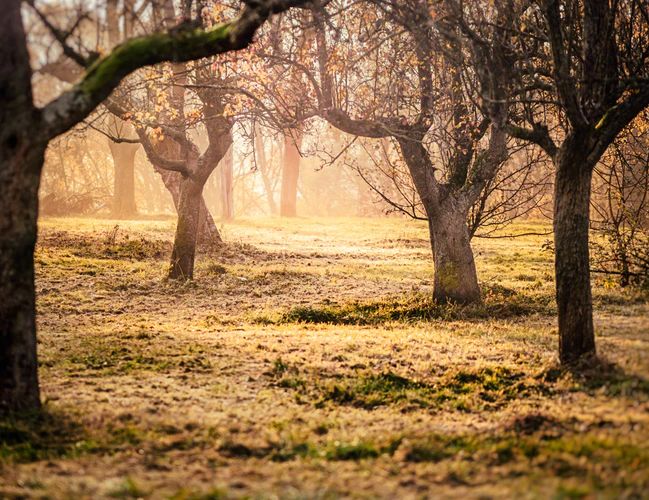
Here, bears trundle through dusk, wolves still slip along hidden trails, and deer freeze mid-step. Only wild boars root where few dare tread. Sharp pine, storm-wet earth, and the copper tang of nearby life coats the air. Nature does not flee. It watches you. The Transylvanian forest never sleeps.
The wind brushes the nape of my neck with fingers too ancient, too knowing. I reel. Movement stirs in the brush.
Twigs shriek. Blueberry bushes still cling to the ledge like afterthoughts when the underbrush parts for velvety flanks. A furry shape emerges. A bear cub? It ambles toward me, unafraid. Pulse stalling, my hand hovers. Do I fight with fear or run from fear? Then I spot the familiar tilt of ears, the grin in its gait. Not a bear. A mangy sheepdog.
But eyes still bore through trees, steady fireflies. Their owner wends forth. A shepherd. His bearing holds more than mountain-hewn grace, more than solitude etched in skin; a glamour that owns the world.
He nods. I nod back and in that moment time hesitates, like breath held before a plunge. The slope behind us might as well vanish—I feel as if I’ve stepped onto a stage and forgotten the script, waiting only for his cue. Wordless, his gaze settles. It weighs, rather than watches. No challenge, yet I cannot look away. In his silence I sense something deeper than words: this is a man who knows more than he’ll ever say and has perhaps seen through me already. There’s no judgment in him, only presence. Not cruelty, but certainty. I would follow him. And do.
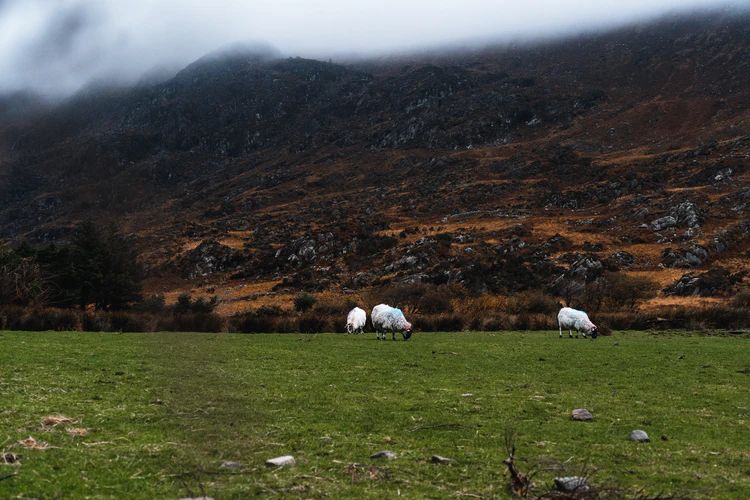
The stâna, his sheepfold, is a planked-hut summer palace tucked where the ridge softens. Bells chime like ghostly lullabies. The dog vanishes among them, poured back into the flock.
Hospitability here is God-given. We sit by a wood slab propped on stone. We feast on bread, butter, milk, cheese. The butter, golden, lingers on my tongue. “Spring’s butter,” he whispers, “is medicine; the sheep feed on first blooms, steeped in spells.” The milk smells of wildflowers.
I glance over old records, their creases worn soft by time. My live location blinks undecided on Google Maps, a lost digital pulse layered atop parchments of dreams. We sleep under the stars. My dreams are wooly, tangled like a book where I lost my place.
At daybreak I move on, the earth breathing faint beneath lichen.
It was Count Dracula who led me here. The elegant parasite stitched from folklore and exile, with a voice like velvet and fingernails like knives, who first whispered this name into my dreams. Not Vlad the Impaler.
I was more transfixed by the dread-filled journey than the castle, the destination—Harker’s eerie coach ride lingered long after the bats and blood faded.
“We appeared to fly along. The mountains seemed to come nearer and to frown down upon us; we were entering on the Borgo Pass.” (Bram Stoker, Dracula)
Tihuța Pass does not announce itself. It emerges in hairpin bends and pine-clad silence. In the blur of vanishing signal bars and the realization that time here forgot how to move forward. It rises to our right, crowned with a metal cross.
They say Bram Stoker chose Tihuța Pass, Borgo Pass in his Dracula novel, by pointing to a winding road that sliced through a map of Carpathian Mountains. His research notes, in looping handwriting, mark Dracula’s route: “Between Strasha and Isvorul, 47 E Long, 25¾ N Lat.” inverting the actual coordinates of the Tihuța Pass.
Harker reached it by train, from Munich via Klausenburg (today Cluj-Napoca), before heading east to Bistritz (Bistriţa). A diligence carried him further, racing the last light to Borgo Prund.
Even Bram Stoker, squinting through legend and cartography, recognized the strange precision this place demands.
Tihuța Pass in Romanian, Borgói-hago in Hungarian, bends its names with the folds of maps and history. Today it’s marked on the DN17 (E58) highway.
I abandoned my car near Borgo Prund, at Valea Străjii. Unlike Harker, I approached the pass on foot, the trail paved with millennial stone slabs. It’s a Roman Road carved around 260 AD, after their conquest of Dacia. In places I glimpse at how it was forged; its bones lay bare.
Between clearings hemmed by fir trees where legionnaires’ shadows once hid it’s easy to be deceived by the damp terrain. Only a blood-red dot, our trail marker, leads us. Immortal guide? Edging a ravine, I take in the mountains. Then the path slithers between knots of firs, resin-sweet, echoing with the rhythm of command. In the muck: a wolf’s print. Not the first. Sabatoned feet once marked this soil too.
Because, here, nothing hurries. Even our ascent is patient. Reverent. The air changes, the mountain exhales, cold beneath our soles.
I pass pure springs. A gurgle rises, sharp and cold, and I dip my fingers in. My boots sink slightly in damp moss. Somewhere, above, a raven clicks its beak. The scent of pine sap sharpens with each breath, tinged now with wood-smoke—distant, human. I hear the faint clang of a cowbell, too slow and deliberate for a herd. I look into the twisted road below. Time pauses. For a breath, it forgot us.
Tihuța Pass is the ribbon binding the past.
“We made a complete turn. It seemed to me that we were simply going over and over the same ground again.” (Bram Stoker)
The pass doesn’t slice through the land; it remembers it, old wound covered in moss, winding between the dark-shouldered Bârgău Mountains and the ash-born Călimani, once fire-lipped, now calm and watchful.
Roman armies, Mongols, Hungarian, Ottoman, Habsburg, came and vanished. Thundering from ridge to ridge; slipping like breath among trees. Clashes flared. Banners rose. Fell. Worn smooth by centuries of boots, hooves, cartwheels.
But the Pass wound with resolve. It endured.
The mountains, wordless, watched; their flanks draped in forests so deep they drink the light.
There’s no signage, no careless scatter of plastics. Only the hush of earthy, moss-cushioned paths. The kind that stir when backs are turned—as if memory moves differently here, cautious not to wake what sleeps beneath the roots. I could stare into another century not yet claimed by present.
Here, sound and shadow were Harker’s sole constants. What was real? What imagined? The road splintered from certainty. Harker, whether he knew it or not, passed from the known world into another one. Where the land tilted into mist, silence, and fiction began. No map revealed Dracula’s castle. Only legends, blank spaces where truth hesitated.
Altitude lends more than beauty: at 1,201 meters, Tihuța was never just a road, but a threshold. In ages when crowns shifted faster than wind and borders bled like ink across storm-soaked parchment, the pass held its ground.
And in the bruised parchments of history Tihuța Pass appeared, not for who haunted it, but for what crossed it: salt, iron, silk; a lifeline threading the spine of Carpathians, pulsing between east and west. But its heaviest freight was immeasurable: accounts, superstitions, myths. Travelling with the wagons, whispered, lingering long after the wheels moved on.
Some say Transylvania pulses atop one of Earth’s oldest, most restless veins. That its soil hums with subterranean breath and its people are born with their ears turned toward the unseen. The veil between worlds thins on the night before St. Andrew’s feast and again on St. George’s. Shadows lengthen before the sun has time to notice. The dead stir. The not-quite-dead walk.
Harker’s coach surged over terrain swallowed by dark, halting only when the driver vaulted to probe faint blue flames flickering over buried treasure. Legends Stoker culled from Transylvanian lore.
They must have veered there, into the deep hush of Călimani Mountains, eternal witnesses grazing the invisible divide between Transylvania and Moldavia. A road not traveled, but summoned. As one might step into a tale too old to end.
That’s why here, amid wolf paths and pine-thick silence, Bram Stoker rooted his Dracula—not merely a monster, but a memory sharpened to a fang.
The Dracula of story, omnipotent, haunts these northern ridges far from the man who bore the name, Vlad the Impaler. Vlad lived, ruled and bled in the sun-struck plains and siege-hardened fortresses of southern Wallachia.
And yet the myth took root here. Not by sword, but by pen.
Today Tihuța Pass is praised for sweeping vistas, for serpentine roads that twist like old tales through the Carpathians. It tests the patience of drivers especially come winter, when snow arrives not in flakes but in folds, cloaking the slopes like a shroud. When each journey becomes more than a crossing; it becomes a pilgrimage through fog and frost, between what is mapped and what is merely felt.
Recently it claimed Via Transilvanica too, the long-distance trail for seekers drawn not only to solitude and landscape, but to the hush of something older. Like me.
I brush soil from my coat and catch the rumble of a car far below, swallowed quickly by the folds of forest. Somewhere, my walking stick taps against rock. It grounds me in my own pilgrimage—barely. The trail trembles with echoes of hooves, wheels, footsteps.
And, still, I feel him watching.
The shepherd. The one from last night—or was it another life? His figure rises behind my eyes like mist. He lingers at the edge of vision: neither threat nor guide, a question shaped like a man. In his highland hush he moved like a secret, one too old to name. Cloaked not in velvet, but in ash and wool, he could be kin to the old prince himself. Lone guardians of ridges and silence.
If Dracula walks today, he herds sheep above the clouds and says nothing at all.
I never meant to chase shadows. I only wanted to stand where his story first tangled with truth, where myth breathed warm against history’s nape. To see how a place, spun from ink and absence, feels like something I always knew. And maybe learn what every story-bound wanderer does: that the line between real and imagined isn’t a border. But mist. And some of us are born to step into it.
Tihuța Pass needs no lightning to confirm its power, no ruined tower to echo the myth. It needs only the quiet. The patience of stone. The weight of what’s seen. And unseen.
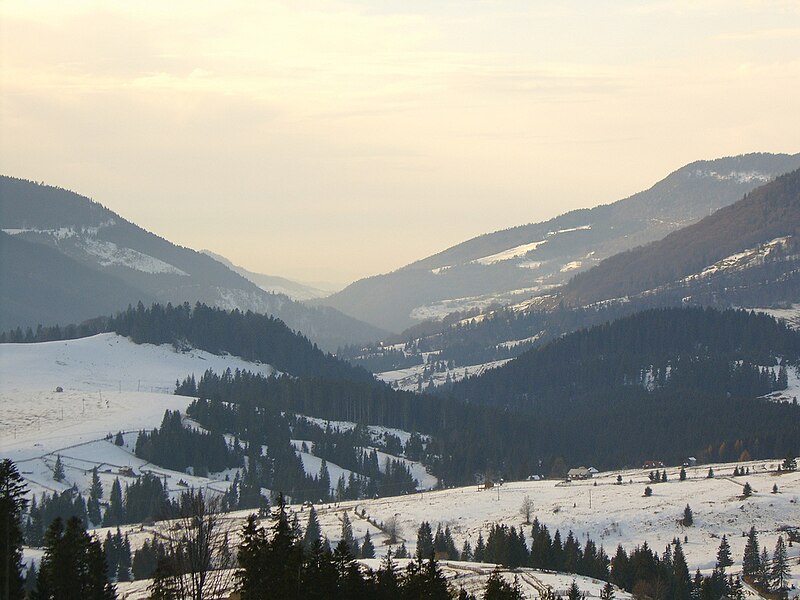
What I found wasn’t proof, but presence. Not something to be feared, but something that refuses to be forgotten. A shadow that lives not on the path, but in the mind. A cold that lingers long after the mist cleared.
Here, Dracula loses his fangs and becomes something else: not horror, but hunger. Not predator, but presence. A whisper of exile. An ache for home. A name you say aloud only to break the silence.
Stoker never set foot here. Never breathed this air. Yet, somehow, he caught the marrow of it. His Dracula is a creature of the north. Vlad, the man, was shaped by Turkish chains, Saxon betrayals, Wallachian bloodlines. The distance between them lies not only in miles, but in meaning.
But what is distance to a ghost? Once a man becomes a story, he walks wherever we let him.
About the research:
Patricia Furstenberg is a Romanian-born historical fiction author whose Blood of Kings, Heart of Shadows series explores medieval Transylvania, Wallachia and Moldavia. Her research takes her into the history, folklore, landscapes and forgotten stories behind the fiction.
A very atmospheric piece of writing, Patricia; I got chills reading it! The site wouldn’t let me Lke or comment, a not-uncommon happening, so I’m doing it here. But thanks for sharing, much appreciated. 🙂
Lynda, I greatly appreciate your input. I am thrilled you loved it! I got the chills as well, writing it 😉
This message was in the spam folder, so I replied as soon as I found it. Comment stay open for only one day due to the upcoming holidays 🙂 Sorry about that. Hugs.
Your prose is so beautiful, so evocative!
Ah, thank you, Anna! 🙂 Very happy to hear this from you.
Very beautiful prose. Interesting information about the Tihuța Pass. I have to read Bram Stokers Dracula. I have not done that yet.
Thank you, Thomas. I research many Carpathian passes recently. Tihuţa Pass, being so far north, only because of its association with Bram Stoker’s novel. All mountain passes are fascinating , with beautiful stores and legends. Just the knowledge alone, the use of a narrow mountain road, unmarked, is mind-blowing.
“Dracula” is a short novel and a great read actually if you put aside everything you (unwilling) learned about it. Enjoy it!