Slow Gun Poetry, as Romanian Words That Endure, is inspired by this year’s theme of the Bucharest International Poetry Festival Slow Gun Poetry — Poezie cu bătaie lungă (Long-Range Poetry) inspired by poet Cezar Ivanescu’s reflection on the force of a single mark on a sheet of paper: how a single word can spark ideas, shape consciousness and even ignite revolutions.
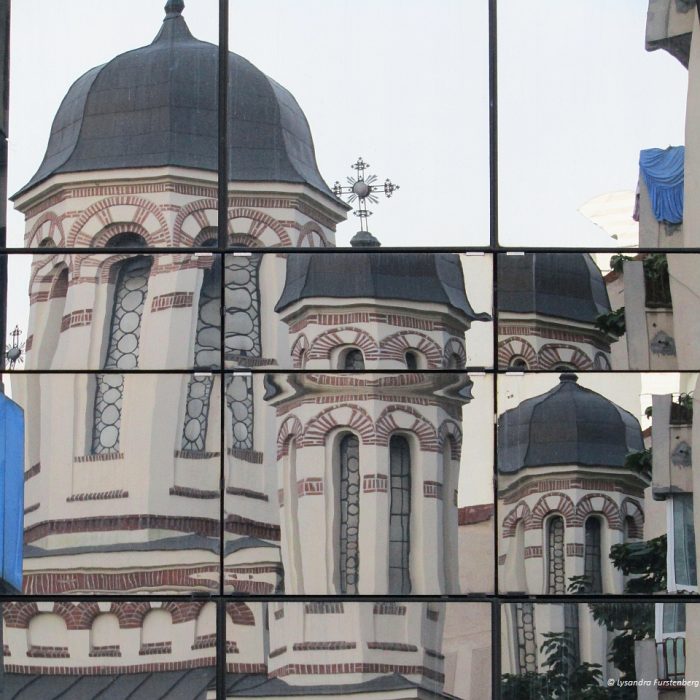
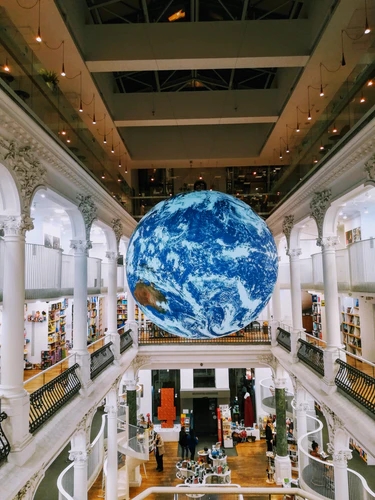
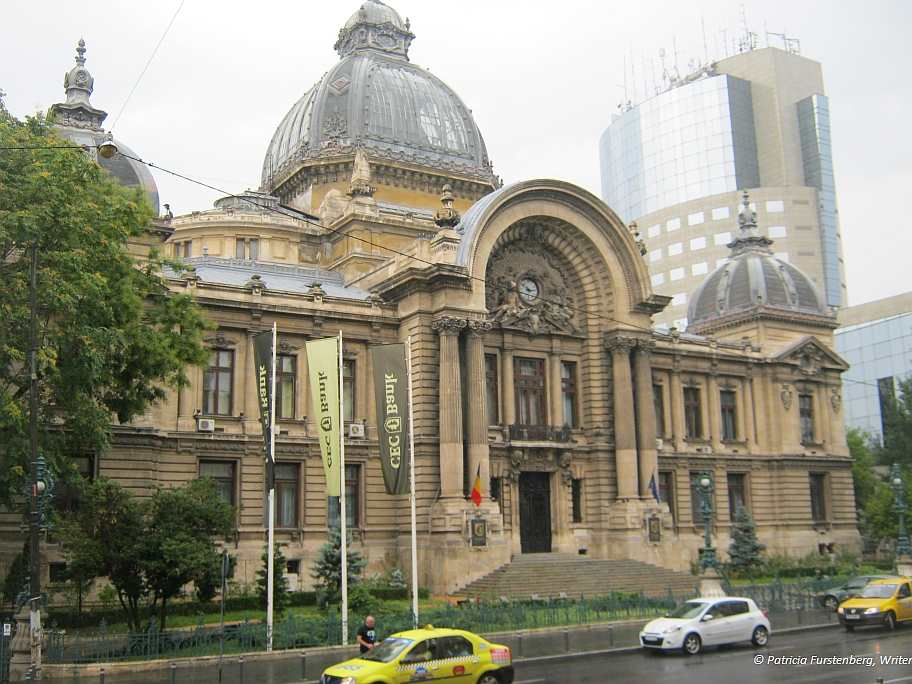
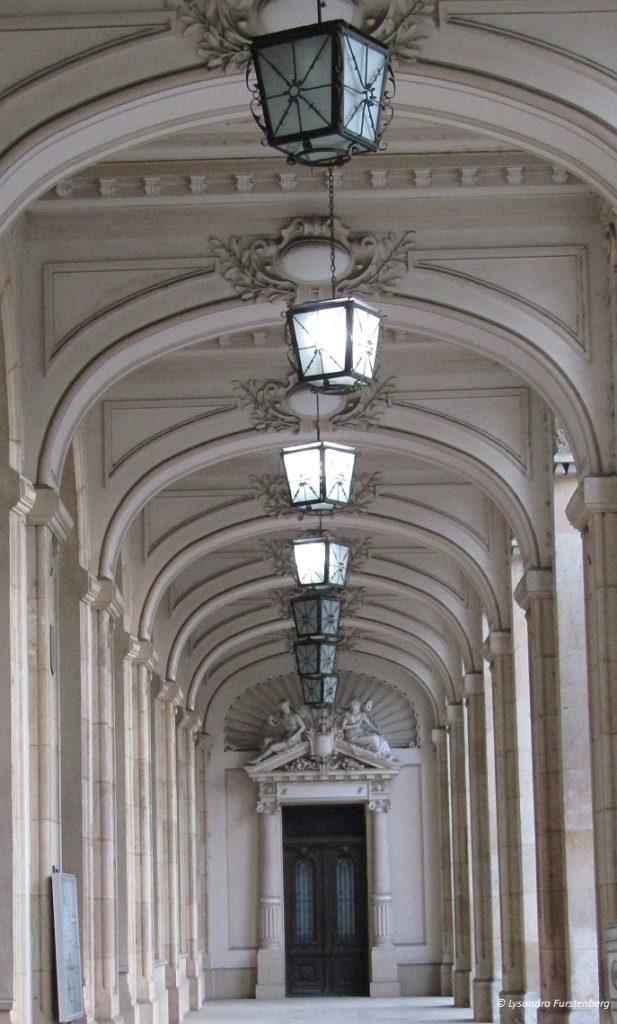
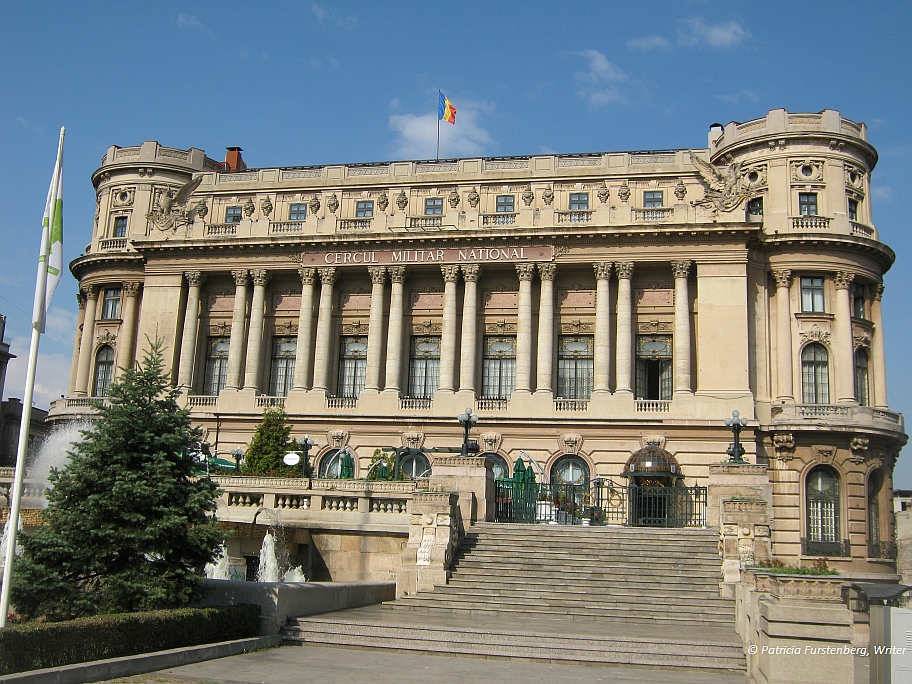
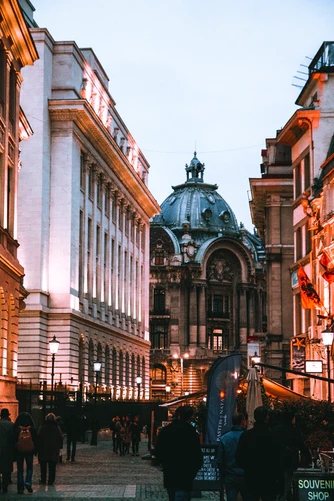
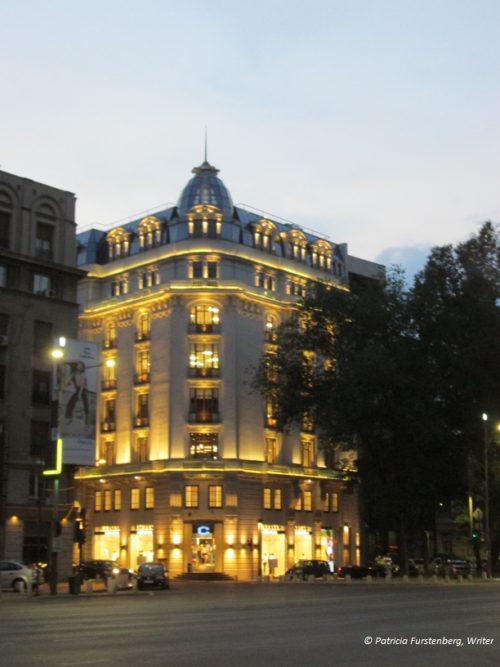
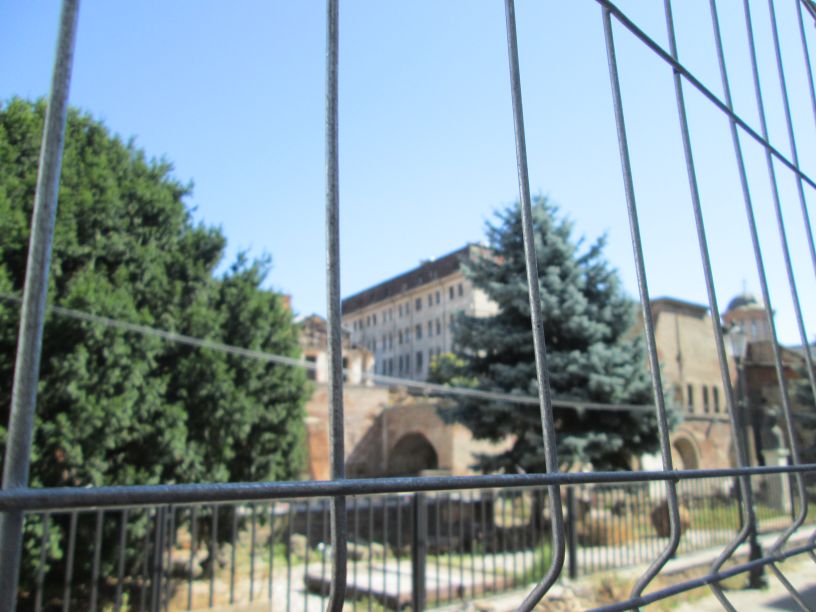
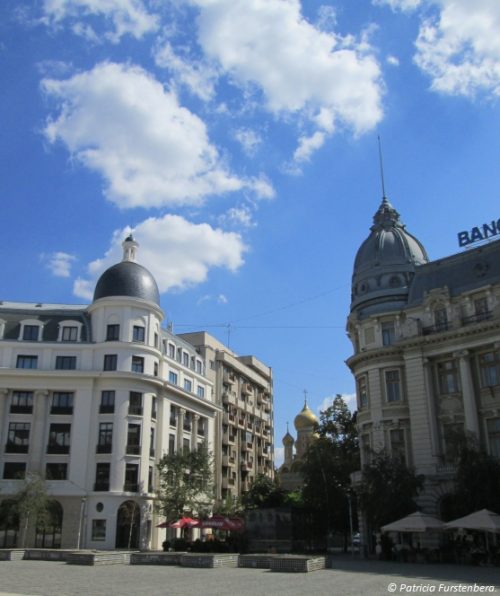
This International Poetry Festival is at its 16th edition and takes place in Bucharest, 14-20 September 2026. All images in this blog post depict Bucharest.
A simple sign on a sheet of paper may seem fragile—ink, paper, a few marks made by a human hand. Yet words have never needed weapons to leave their mark.
The idea feels particularly fitting when thinking about Romanian poetry and the Bucharest International Poetry Festival, an event founded and organised by the National Museum of Romanian Literature (MNLR). Its 2026 theme, “Slow Gun Poetry / Poezie cu bătaie lungă,” suggests poetry whose impact does not necessarily arrive with a bang.
Romanian Words That Endure
A few words can carry enormous power. Here’s to the poets, places and words that have travelled through time and continue to speak to us. Some words travel slowly. They settle somewhere inside us, wait, and perhaps years—or centuries—later, strike their mark. Like a falling star.
Romania has never been short of such words.
Consider Mihai Eminescu, Romania’s great Romantic poet, and a few lines from his poem “Glossă” (“Gloss”):
“Time passes, time returns,
All things are old and all things new…”
There is something wonderfully timeless about these lines. Time moves forward, yet somehow it circles back. The world changes, generations disappear, empires rise and fall, but certain words remain waiting for us.
Perhaps that is one of poetry’s mysterious powers.
A poem does not have to shout to endure. It may be no more than a handful of lines written on a page, yet those lines can carry memory across generations, preserve a way of seeing the world, or give language to something people have felt but could not name.
Because some words are fired into the world only once. Others keep travelling.
Verse by Mihai Eminescu
Mihai Eminescu is Romania’s national poet because his poetry fused love, nature, longing, history, philosophy and the Romanian spirit into language of extraordinary musicality and emotional depth, giving voice to both the intimate human soul and the enduring identity of a nation.
Eminescu may belong profoundly to Romania, but his poetry does not stop at its borders; the very qualities that made him a national voice also give his work the power to reach a wider world.
Evening Star, Luceafărul by Mihai Eminescu , 1883, fragment
translated in English by Adrian George Sahlean
“A canopy of stars, below;
Above, a starry dome:
An endless lightning seemed to flow
And through the heavens roam.
And in the dark that streamed around,
As on the first day’s morn,
He glimpsed the chaos vales unbound
From where the light is born.
He flies aswim through seas of light
With love on wings of thought…
Until all perishes from sight,
Until all turns to naught;
He goes where there’s no bound or bourn,
Nor is there eye to know,
And time itself from voids uptorn
Struggles in vain to grow;
For there is naught, yet it is there
A thirst that draws him on,
A depth that lingers, like the snare
Of blind oblivion….”
Eminescu’s poetry grew from a remarkable tension: deeply influenced by the great voices of world literature, especially Shakespeare, he nevertheless transformed those influences into a distinctly Romanian poetic vision—one powerful enough to make him Romania’s national poet.
Eminescu’s poetry often reaches beyond its immediate subject. Nature, love, time and solitude become ways of asking larger questions about being human.
George Coșbuc, The Poet
With George Coșbuc, the poetic landscape changes. His work brings us closer to rural Romania—the village, its people, celebrations, hardships and intimate connection with the land. Coșbuc had a gift for transforming ordinary life into poetry, reminding us that history is not made only in palaces and battlefields, but also in kitchens, fields and village lanes. His major collections are now in the public domain.
“A soul in the soul of my people am I
And sing of its sorrows and joys,
For mine are your wounds and I cry
Whenever you do, drinking dry
That chalice of poison that’s meant for Fate’s toys.
Whatever your pathway, together we’ll ail,
We’ll bear the same cross and we’ll feel the same nail;
Your banner and creed will be mine… (George Coșbuc, The Poet, 1894 – a fragment)
Coșbuc knew the language of village life—the fields, the seasons, the people whose joys and sorrows he so often carried into verse. But in The Poet, the familiar landscape falls away. Description becomes declaration: The poet steps out from behind the page and into the struggle, not as a distant observer, but as one of the people.
Here, suffering belongs to no single man. It is shared, carried from one heart to another, until private pain becomes the pain of an entire people. They drink the same bitterness. They bear the same wounds. And the poet does not claim a separate voice for himself; he becomes part of the chorus.
Perhaps this is where Coșbuc‘s slow gun begins to fire—not with a shot, but with a word, gathering force until one voice becomes many.
Lucian Blaga, Silence
Then comes Lucian Blaga, whose poetry seems to look through the visible world towards something hidden behind it. In Blaga, silence can speak, darkness can conceal knowledge, and the landscape becomes almost metaphysical. He is a poet of mystery—of the things we sense but cannot entirely explain.
“Such a deep silence surrounds me, that I think I hear
moonbeams striking on the windows.
In my chest,
a strange voice is awakens
and a song plays inside me
a longing that is not mine.
They say that ancestors, dead before their time,
with young blood still in their veins,
with great passion in their blood,
with the sun still burning in their blood
come,
come to continue to live
within us
their unfinished lives.Such a deep silence surrounds me, that I think I hear
moonbeams striking on the windows.O, who knows, soul of mine, in which chest you will sing
you also, after centuries,
in soft ropes of silence,
on harps of obscurity – the drowned longing
and the pleasure of living torn? Who knows?
Who knows?” (Lucian Blaga, Silence, 1919)
Nichita Stanescu, Winter Song, 1960
And finally, Nichita Stănescu, one of Romania’s most inventive twentieth-century poets. With him, words themselves become alive.
A translation by Thomas Carlson and Vasile Poenaru.
“You are so beautiful, in winter!
The field stretched on its back, near the horizon,
and the trees stopped running from the winter wind…
My nostrils tremble
and no scent
and no breeze
only the distant, icy smell
of the suns.
How transparent your hands are in winter!
And no one passes –
only the white suns revolve in quiet worship.
and the thought spreads in circles
ringing the trees
in twos
in fours.” (Nichita Stanescu, Winter Song, 1960)
With Cântec de iarnă, Winter Song, Nichita Stănescu pares his cosmic mysticism to something almost startlingly bare: a winter world stripped of ornament until poetry becomes philosophy reduced to a skeleton. Yet beneath that starkness lies an intensely intimate gaze. The “you” is watched with an unsettling clarity, as though love itself has been frozen and held perfectly still beneath the poet’s eye. Even the form seems to shiver in short, fractured lines that interrupt the flow of thought, echoing the breath, the hesitation of a mind caught in the cold. It is a poem in which winter is not only a season, but a state of perception an distance become its language.

This is what poetry does at its best. It takes something as small and apparently harmless as a word and gives it wings.
A word crosses the distance between two people. It carries memory from one generation to another. It can comfort, disturb, awaken or challenge us.
A word may be small. Its journey need not be.
A single sentence can plant an idea, stir a sleeping conscience, even spread courage from one heart to another, travel through a crowd like a spark through dry grass. Empires may build walls and rulers may command armies, but sometimes history changes with a hand reaching for a pen and a word refusing to remain silent.
A word can preserve a memory that would otherwise disappear.
A word can divide people—or bring them together.
A word can wound. A word can comfort.
And sometimes, a word can give someone the courage to stand.
That is what I find so compelling about this year’s festival theme, “Slow Gun Poetry/Long-Range Poetry.” It suggests that poetry does not need to move quickly to be powerful. Its reach may be slow, but its distance can be enormous. A poem written today may be read tomorrow. A line written in one language may find a new life in another. A thought written centuries ago may suddenly describe exactly what we are feeling now.
That is poetry’s long range.
For me, Romanian poetry has always carried something of home: the landscape, the melancholy, the humour, the old stories, the voices of those who came before us. But poetry is never confined to the place where it was written.
It belongs to anyone who recognises something of themselves in it.
What is one poem—or even one line of poetry—that has stayed with you?
Tell me in the comments.
That is how poetry travels. One word. One reader. One heart at a time
Beautiful poems by all the poets you mention. I certainly remember tributes and a statue of Mihai Eminescu that we saw when visited Romania.
Thank you so much, Thomas. Indeed, Eminescu’s presence seems to follow you around Romania, his poems, statues, and memorials can be encountered in many places. I’m glad you had the chance to experience that connection firsthand. 🙂
Many thanks for sharing this poetry festival and your Romanian national poets with us, Patricia, along with your own musings on the subject of poetry and the power of language. There’s so much poetry to chose from that I find it difficult to quote just one line to you! If one comes to me today I’ll certainly share it.
Hugs, Laura 🙂 Thank you for that thought.
Poetry certainly speaks to us on a different voice now, than it did when we simply had to study it or analyze it for an exam. 🙂
There’s a line in The Love Song of J Alfred Prufrock by T S Eliot: “I have measured out my life with coffee spoons”. It seems such an apt comment on today’s society and priorities. I really like the idea of Slow Gun/ Long Range poetry and your examples here are new to me and powerful.
Thank you, Trish 🙂 I wasn’t familiar with this beautiful line about measuring life with coffee spoons, but I can see why it has stayed with you. It’s such a simple yet powerful image. And it expresses how we get caught in routine, loosing the importance of life (no matter how wonderful coffee is 🙂 ) I’m so pleased the idea of Slow Gun/Long Range poetry resonated with you too.
Thanks for sharing these beautiful poems, Pat!! xx
Such a great pleasure, Cindy. I know how fond of poetry you are, I’m glad you found my post 😉
❤️❤️
Hi Patricia, the poem that I have never forgotten is Wespark by Elizabeth Eybers. I believe you do speak Afrikaans and I know the Afrikaans version. This is my favourite stanza: hier voel die eensames nooit alleen
In die wit broederskap van been,
Hier kan die digter sonder skroomhom blywend toespin in sy droom.
Thanks for a wonderful commentary.
Thank you for sharing this, and what a beautiful stanza to remember. I confess I hadn’t encountered this poem before. I love the imagery:
“Here the lonely never feel alone
in the white brotherhood of bone;
here the poet, without shame or fear,
can forever weave himself into his dream.”
There is something haunting and strangely comforting in those lines. Thank you for introducing me to Elizabeth Eybers and “Wespark”.