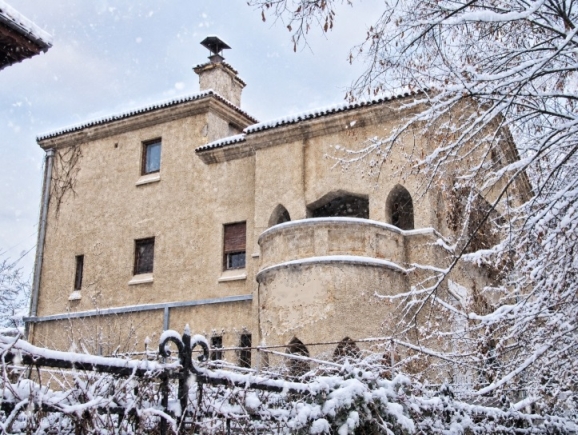
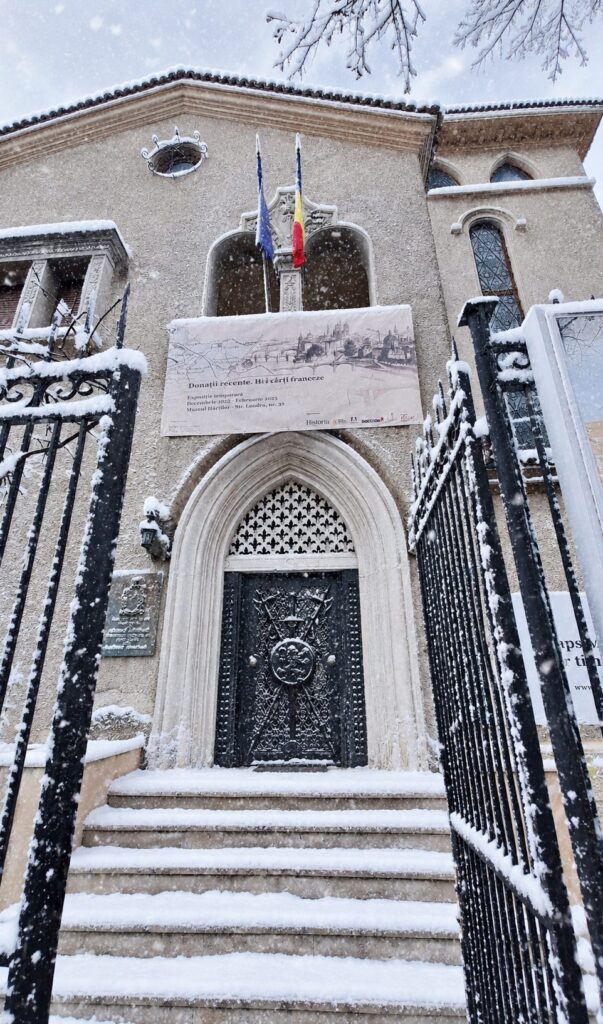
Any visit at the National Museum of Maps and Old Books in Bucharest is a memorable adventure.
As a traveller and historical fiction writer I have always trusted maps and had a thing for ancient books. I know I’m not alone.
Maps tell us where we are, where we have been, and—when we are hopelessly lost—how to find our way home. I have followed them along winding roads, across unfamiliar cities and into places I had never imagined I would see.
Imagine my delight at discovering a museum filled with them.
For someone who grew up in Romania drawing maps, the National Museum of Maps and Old Books in Bucharest felt almost like stepping into a childhood dream.
But this is no ordinary collection of maps. Here, history travels across paper.
Maps dating back to 1525 invite you into worlds that no longer exist. Continents and oceans appear beside fantastical sea monsters. Cartography books reveal how earlier generations attempted to make sense of an ever-expanding world. And among the treasures are augmented-reality works, including a sixteenth-century engraving of Cluj that can, quite wonderfully, come alive AND a map of Decebal’s Dacian treasure (blog posts coming soon).
It is magical standing before an old map.
A map gives us access to the world. It invites us to travel, explore and, sometimes, conquer. Yet the longer I look at one, the more I think of maps as something more intimate. We all need one. Not necessarily to tell us which road to take, but to remind us where we are going—and not to lose sight of the destination.
A Museum Unlike Any Other
The National Museum of Maps and Old Books is unique in Romania and unusual even by European standards. Its collection contains more than 1,000 items, most of them donated, and the museum has the fourth-highest number of exhibits among map museums in the world.
Yet there is nothing overwhelming about the place. It is relatively small, and perhaps that is part of its charm. You are not swallowed by endless galleries. Instead, the museum reveals itself gradually, room by room, detail by detail.
And there is another reason to return.
Because of the limited exhibition space, many of the museum’s treasures cannot remain permanently on display. A return visit may therefore bring an entirely different collection of maps, engravings or books. The museum changes. Or perhaps it is we who change, and therefore notice different things.
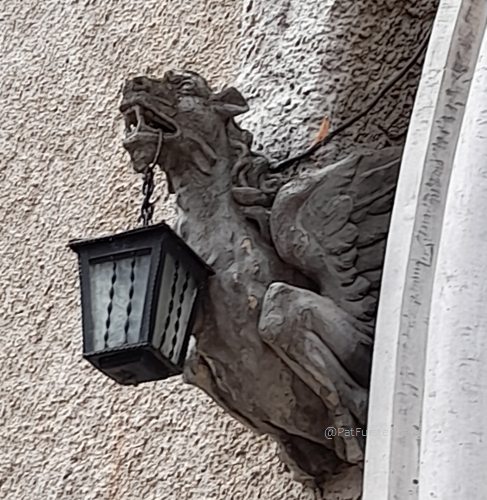
The Building: an Architectural Jewel
The museum itself feels as though it belongs among its collections.
It stands in a charming part of Bucharest, inside a mysterious building that once belonged to a wealthy Armenian merchant. Since opening in 2003, the house has become an architectural treasure in its own right.
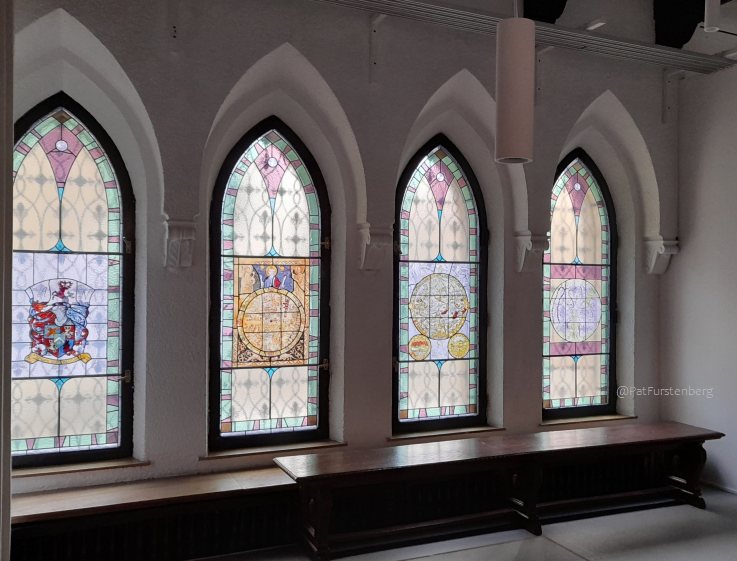
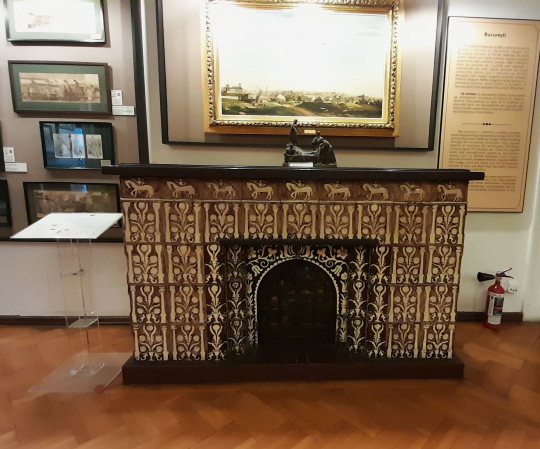
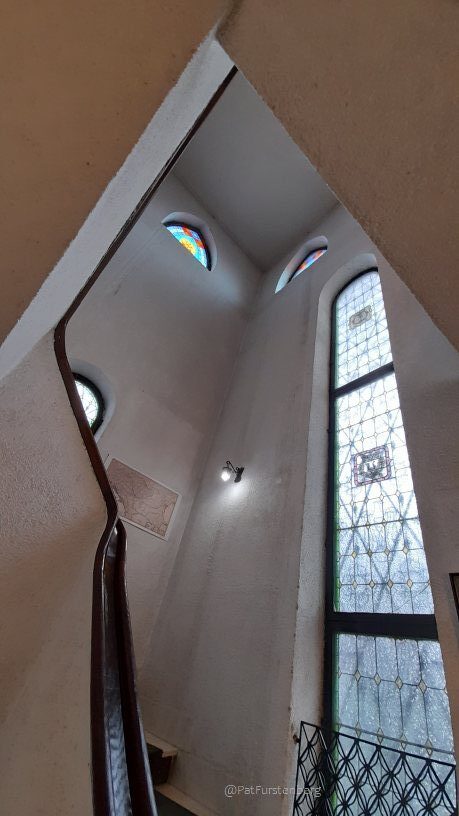
Designed by architect Emil Călinescu, who had a particular interest in the Art Déco style, the 1920s building possesses an unusual elegance. Venetian-style loggias give it a graceful character. Inside, painted ceilings rise above rooms filled with maps, while stained-glass windows custom-created cast cartographical patterns into the light.
Stained glass window reproduction of 13the century T-O Psalter World map:
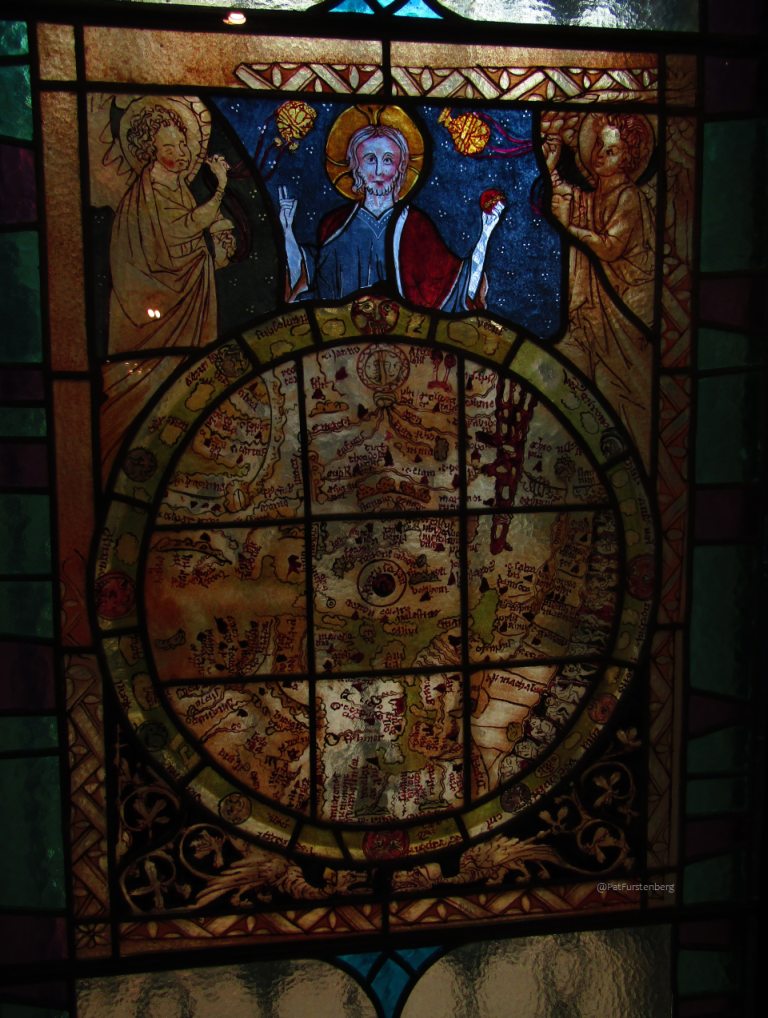
What is the classic T-O map configuration of the Middle Ages maps (such as above)?
The image above depicts an incredible stained glass window of the 13th century Psalter World Map created in the classic T-O map configuration of the Middle Ages. The world map is overlooked by Jesus Christ flanked by angels.
How to spot the T-O map configuration: if you let your eyes unfocus while looking at the stained window above you will spot the green T at the bottom and the green circle, an O, surrounding the earth map.
The T represents the major bodies of water (Rivers Don, Nile and Mediterranean Sea) that were known during the Middle Ages to divide the dry land into three continents (Asia top, Europe bottom left, Africa bottom right).
The O was Oceanus that surrounded the land of the known world.
Stained glass window reproduction of a 1531 Renaissance double-cordiform (heart-shaped) world map by Oronce Fine
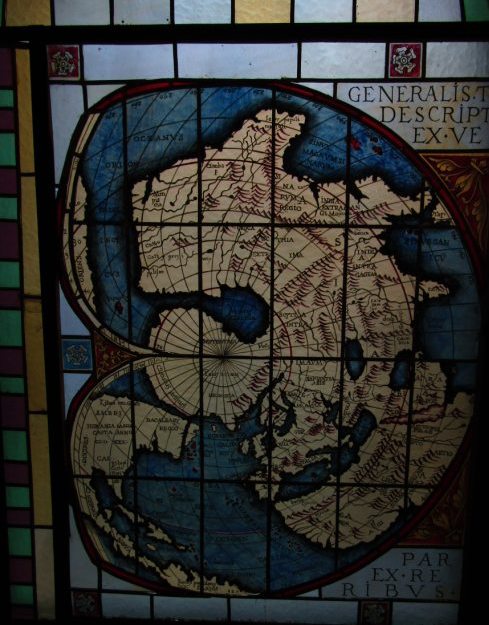
All the windows and murals of the National Museum of Maps and Old Books in Bucharest were created especially for this exhibition space by dedicated artists artists including Benone Șuvăilă (stained glass), Marcel Aciocoiței, Gheorghe Butnariu, and Neculai Mirodoni, making the building itself part of the museum’s story.
Look closely and you may find maps of the sky painted on the ceiling, constellations and zodiac signs; representations of the geocentric universe, with Earth at its centre; the heliocentric model; phases of the moon; and dreamy maps of oceans.
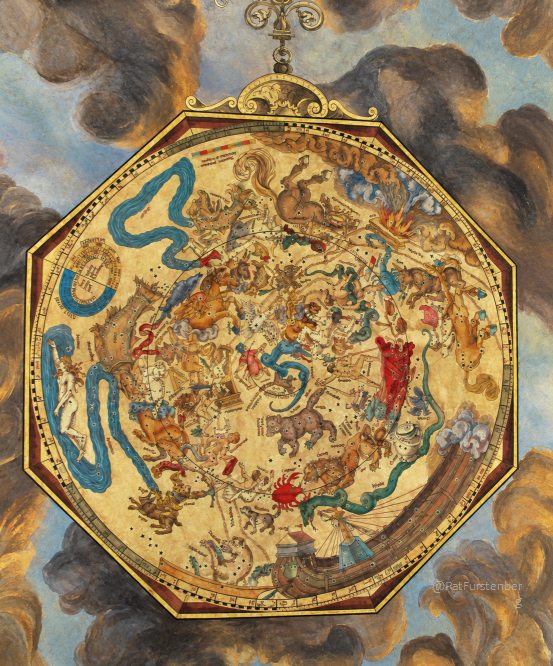
The boundaries between art, science and history begin to disappear. You are no longer simply looking at maps. You are looking at humanity’s attempts to understand where it stands.
The National Museum of Maps and Old Books, a Museum That Feels Like Home
The first thing that surprised me was how little the museum felt like a museum. There are no cold, echoing corridors or endless glass cases demanding that you move along. Instead, the space feels warm and intimate.
Patterned wooden floors creak softly beneath your feet. There is a gentle, comforting scent in the air. Light filters through stained glass, scattering coloured shapes across the rooms, while the painted ceilings seem to quieten the world outside.
It is easy to linger.
The staff are friendly, the layout simple, and nothing seems designed to hurry you towards the exit. You can stop. Look. Wonder. For a museum devoted to maps, it feels remarkably personal.
But maps are personal things. We fold them into pockets, mark them with our fingers, trace routes across them and carry them with us when we do not know the way. This museum gives those old maps room to breathe.
Entering the Renaissance Cartography Room
A massive earth globe stands before you, flanked by the busts of Claudius Ptolemy and Gerardus Mercator—two names inseparable from the history of cartography.
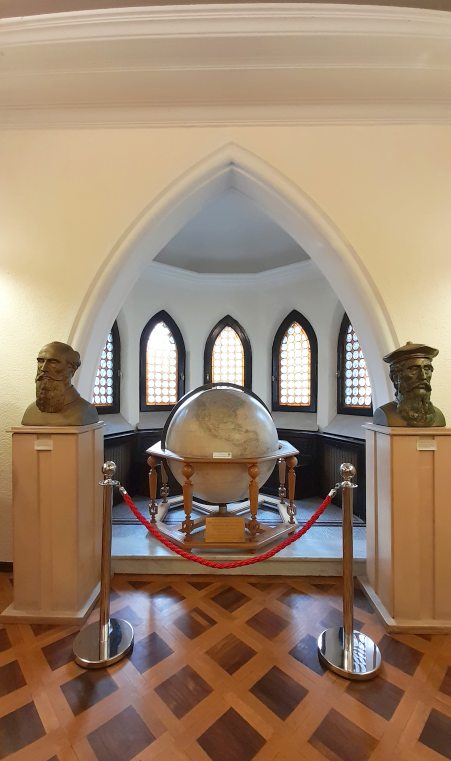
Here, some of the museum’s oldest maps can be found, including a sixteenth-century map of Transylvania.
That one stopped me.
Its depiction of the landscape is more artistic than scientific. Mountains, rivers and settlements are represented not according to the precise measurements we expect from modern maps, but according to the understanding of the cartographer. The symbols representing settlements vary in size, reflecting the importance attributed to the cities.
I found myself staring at Transylvania differently.
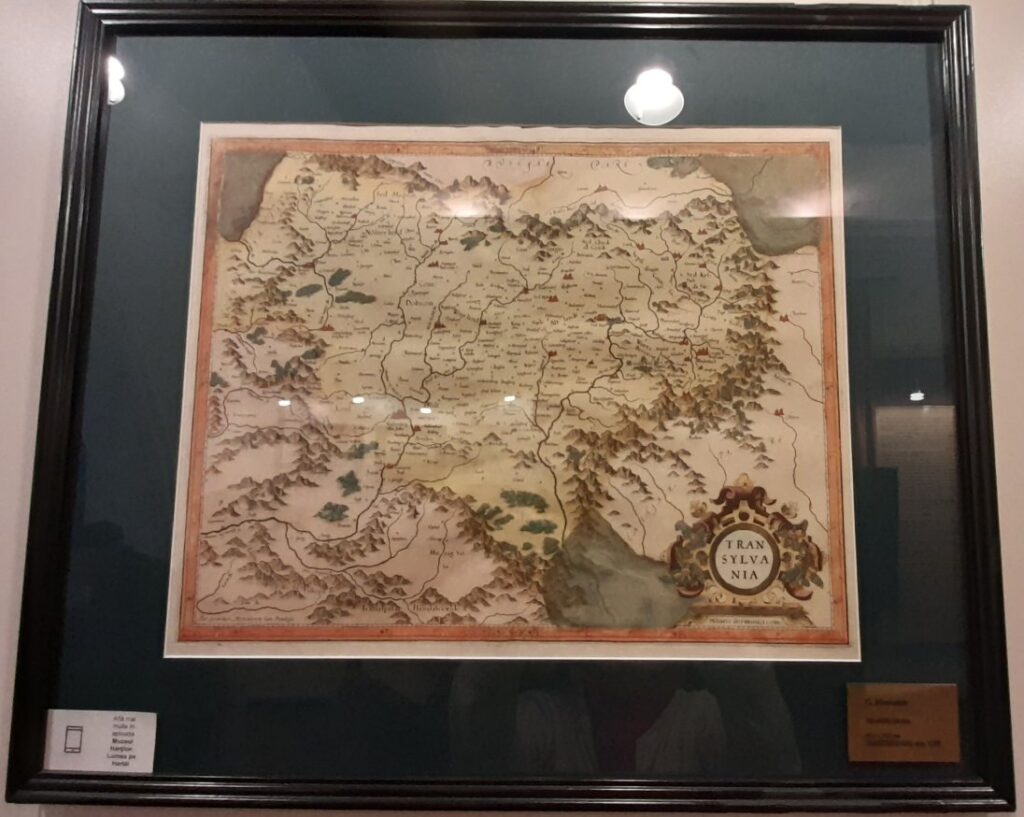
Perhaps that is because my mother was born there.
Places I know suddenly appeared strange. Familiar names belonged to another age. The land I think of as home had once been measured, drawn and interpreted by people who lived centuries before me.
The mountains were still there. The rivers still ran. But the world around them had changed. And on that sheet of paper, I could see the traces of an earlier one.
Through the Floors of History
The journey continues upwards.
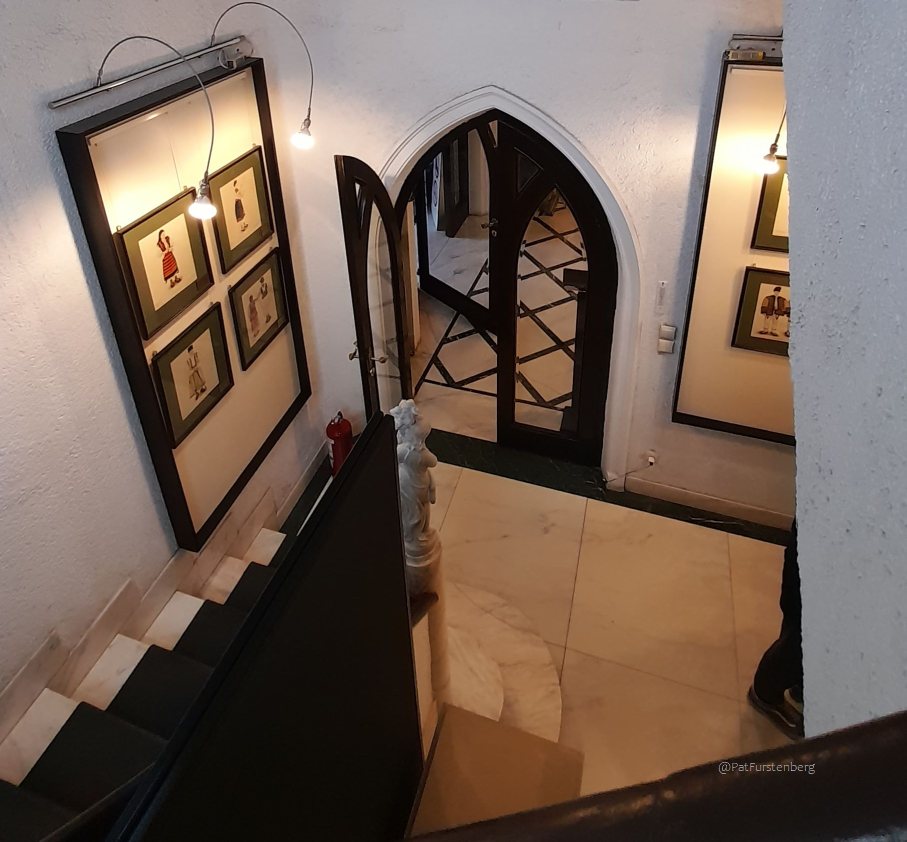
Antique engravings and illustrations line the stairway, accompanying visitors towards the first floor. Here, Romania’s historical provinces—Wallachia, Transylvania and Moldova—take centre stage. Another room leads towards maps of the Black Sea, Bucharest and Romania.
Then comes the second floor. Another world opens. There are maps of the moon, maps of wars and maps of treasure. Geographical maps sit beside European maps and representations of places that, to earlier generations, must have seemed extraordinarily distant.
Each floor offers another way of looking at the world and perhaps that is the museum’s greatest fascination. You do not simply look at maps, you look at how people once understood the world.
What they knew. What they imagined. What they feared. And what lay beyond the edge of the parchment.
Why I Keep Thinking About This Museum
Long after I left, I found myself thinking about borders, the lost ones. The ancient place names. Forgotten routes.
The maps had stirred something that went beyond geography. They made me think about historical journeys, vanished civilisations and the way humanity’s understanding of the world has changed over time.
Walking through the museum had felt like entering a historical dreamscape. Every artefact seemed to carry a story of exploration and discovery.
The collection reaches across centuries and cultures, from maps of the ancient Ottoman Empire to eighteenth-century Japanese cartography. Together, they reveal that mapmaking has always been both science and art.
There are rich textures, elaborate cartouches and details painstakingly placed by hands long gone. And then there is the history behind them.
The people who drew the maps. The people who commissioned them. The travellers who followed them. The merchants who crossed the routes. The armies that marched across the borders. The empires that expanded—and eventually disappeared.
For me, this is what makes the National Museum of Maps and Old Books so compelling. It is more than a collection of beautiful old maps. It is a place where history becomes tangible.
A map can tell you where a place was.
But look at it long enough, and it may begin to tell you something else: who once believed they owned that land, who travelled through it, who fought for it, who traded across it—and who dreamed of discovering what lay beyond its edges.
Perhaps that is the real magic of maps. They do not merely show us where we are.
Sometimes, they show us who we once were.
And we will return. Follow my blog and be the first to know when.
What a beautiful building! And the stained glass maps are amazing.
Ahz thank you socmuch much! I am thrilled 🙂 It’s my favorite museum in the world ♡
Beautiful photos, Patricia. I’d love e to explore it and see those maps!
It is a little magical place 🙂 Thank you so much for visiting it with me, Denise. ♡
That’s a beautiful building, Patricia, looking – as you rightly note – as though it belongs among its own exhibits. I love stained glass, and the window – reproduction though it may be – of a Renaissance double-cordiform world map is superb. I have a bit of a fascination with maps, albeit modern ones. There’s something about looking at places on maps which I can’t explain, and the National Museum you show here must be a map-lover’s dream. Thanks so much for sharing. 🙂
I think maps take us back to our childhood when we imagined tangible worlds and drew them with chalk on the paving 🙂 So much work went into creating the Museum of Maps and Old Books, everywhere you look there’s something worth noticing. Almost like stepping into an actual map.
I have been to the (regular) National Museum in Bucharest but I have not been to this museum. It seems like a beautiful and very interesting museum. Incidentally, I just finished a novel in which one of the main characters is a 1,000+ years old vampire in Transylvania who collects ancient books in his castle.
I wonder if it’s The Historian by Elisabeth Kostova you’re talking about. But I look forward to reading your impressions in your blog post.
The Museum of Maps and Old Books only opened in early 2000. If it was the National History Museum you visited in Bucharest, that’s also a place I enjoy going to for the gold Dacian warrior helmet of Coţofeneşti (that was last year on loan to a museum in Holland only to be stolen-and then recovered) and for the life reproductions of all the scenes on Trajan’s Column from Rome. It’s wonderful to stay 20cm away from one 🙂
Thank you for visiting here and sharing your interesting thoughts.
What an amazing place! The building is a marvel in its own right and I love the stained glass windows. Those early maps are remarkable representations when you consider how few modern instruments were available to the map makers then. I learned a lot from this. Thanks, Patricia.
Thank you so much for stopping by, Trish. It is an enchanting place, even for grownups and it doesn’t feel as cold as a museum usually feels. Rather like the welcoming house of an eccentric collector 🙂
Thanks for visiting my site. I would be thrilled if you’d write a guest blog post for my site. If you think it might be fun or helpful to have my followers (who total about 10k across my various social media) meet you, here’s the link for general guidelines:
https://wp.me/p6OZAy-1SOc