
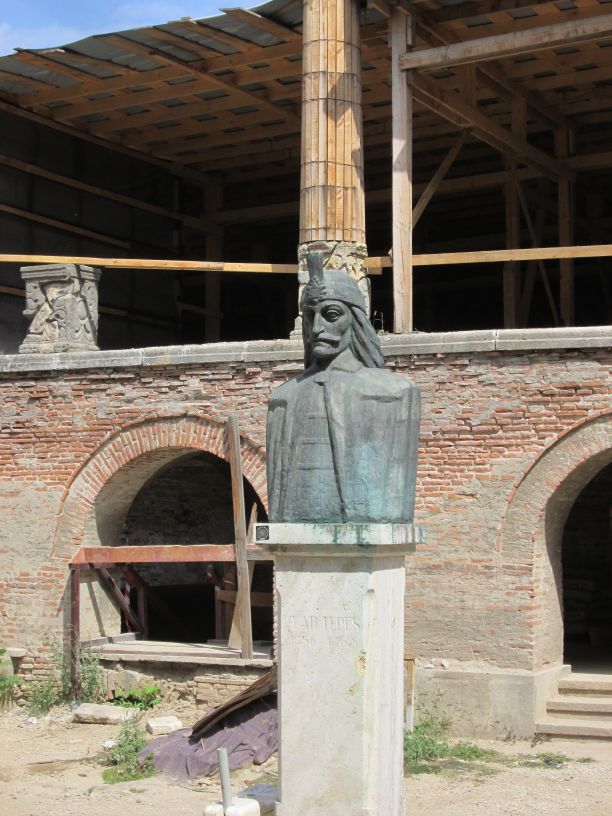
Curious where did Vlad Dracula live during his second and longest reign of Wallachia, besides Targoviste? Then join my travels today.
Vlad had spent years traveling through the Ottoman lands, Moldavia, and Transylvania—but where did Vlad Dracula live during those years, and which courts, fortresses and roads shaped the man he would become?
We’re in the last months of 1455. Relations between John Hunyadi and Vladislav II who ruled Wallachia had deteriorated again. Wallachian forces, supported by the Ottomans, attacked a Hungarian fortress – most probably the border point Bran Castle – and raided southern Transylvania. Saxon communities suffered losses, and estates belonging to Hunyadi himself were plundered.
The political ground had finally shifted in Vlad Dracula’s favour.
In spring of 1456, John Hunyadi faced unrest in Făgăraș, supported by the Wallachian claimant.
The man who had once ordered Vlad III expelled from Transylvania now had great and pressing reasons to invite him back: the Ottomans were preparing to attack Semendria and Belgrade and the Christian anti-Ottoman crusade was finally going to happen.
In the first 25 years of his life Vlad Dracula had been prisoner, prince, exiled, soldier and political pawn. Now Hunyadi helped him cross the mountains once more—this time not as a fugitive, but as a claimant backed by military power.

May – June 1456: Vlad travels from Transylvania into Wallachia, near Târgșor
With the support of Hunyadi and part of the Wallachian boyars, Vlad entered Wallachia and attacked his rival Vladislav II probably near Old Târgșor (near today’s Ploiești.)
The military strategy later attributed to Vlad Dracula was one of speed, surprise attacks, and a small, mobile force rather than a slow-moving army.
After years of wandering, Vlad had finally returned to the land he had been trying to reach since his first exile.
The exact date remains uncertain, but the change of power occurred sometime between 15 April and 3 July 1456, but definitely before August 1456.
We know for a fact that Vladislav II last letter is dated 15 April 1456, Targoviste and sometime after 26 June was was killed by boyars.
At the same time in July 1456 Hunyadi, on his way to Belgrade, wrote to the Saxons of Brasov asking them to “support Vlad Voivode with troops” as he “entrusted Voivode Vlad with the task of looking after their defense.” By supporting Vlad Dracula to the Wallachian throne John Hunyadi was reinforcing the Christian defense ahead of the Ottoman attack of Belgrade:
“I have entrusted Voivode Vlad with the task of seeing to the defense of the southern [border] of Transylvania,” (John Hunyadi, 3 July 1456).

Medieval mountain passes between Brasov and Wallachia
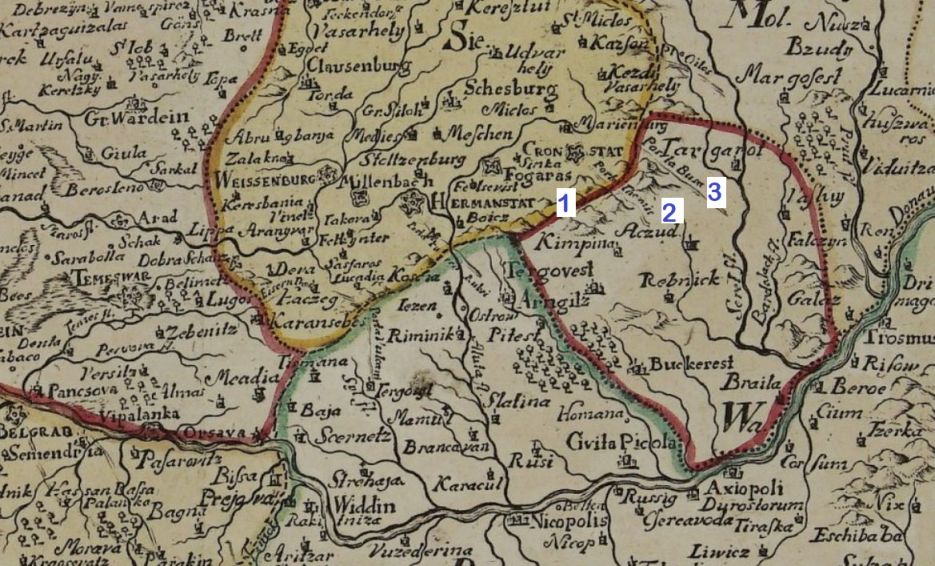
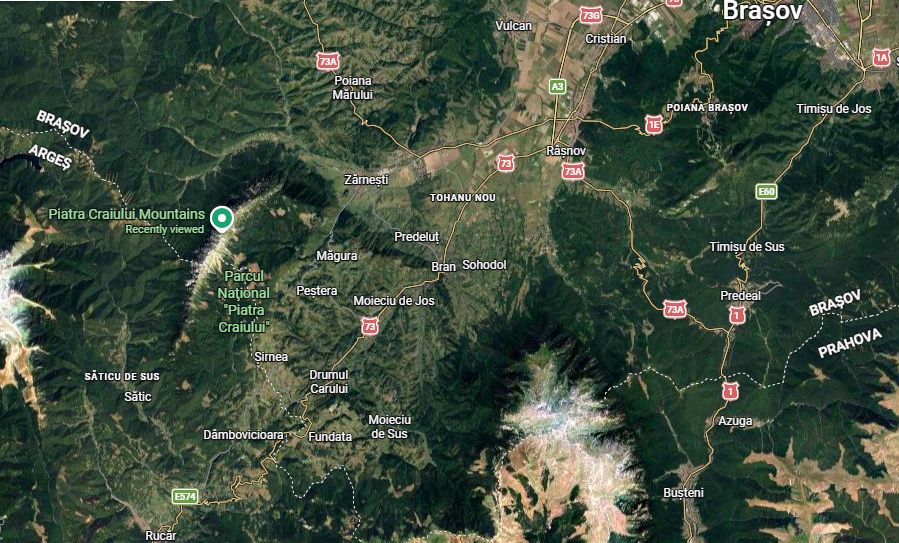
In a letter Vlad Dracula wrote in 1476 to the merchants of Brasov he informes them that “We opened all the roads, and along Rucăr, and along Prahova, and on Teleajin and on Buzău.” – this means the three big customs roads connecting Brasov to Wallachia:
- 1. Rucăr road: SV from Brasov – Bran Castle – past Piatra Craiului – via Rucăr – to Targoviste and Bucharest.
- 2. Prahova road: SE from Brasov, along Timisu valley, Predeal, Azuga (probably non-existing then), Busteni, past Peles Castle (non-existing), Sinaia (non-existing) – where it split to Targoviste and to Bucharest.
- 3. Teleajin and Buzău roads: E from Brasov there were two old roads leaving and then joining, one was Ardelean – Teleajen – by the mountain pass Tabla Buţii – then both roads joined on Buzău Valley leading to the mouth of Danube, the Delta. Teleajen comes from “a valley with carts”(telegi = old word for carts).
I marked the three passes on the map below. Vlad was heading towards Targoviste. I think he would have followed #1, past Bran Castle, Piatra Craiului and Rucar:
11 August 1456 – The Siege of Belgrade. The death of John Hunyadi
Ottoman Sultan Mehmed II laid siege to Belgrade, but the city was successfully defended by the Hungarian forces led by John Hunyadi. The victory halted Mehmed’s advance into Hungarian territory – for now. Hunyadi, however, did not live long to celebrate it: he died of the plague at Zemun on 11 August 1456, only a few weeks after the victory.
6 September 1456, Târgoviște: Vlad’s 2nd ruling of Wallachia is confirmed through a document
6 September 1456 is the date of the earliest known document issued by Vlad Dracula during his second reign. It is signed at Târgoviște, the seat of his Wallachian rule In it, Vlad confirmed his renewed oath of loyalty to the King of Hungary. In solemn language, Vlad declared that he “bowed his head, and the heads of all his people, into the bosom and under the protection of the king.”
It also reveals the delicate political balance he had to maintain: ruler of Wallachia, yet acknowledging the protection and authority of the Hungarian crown.
A letter to the people of Brașov, dated 10 September 1456, provides a contemporary evidence of Vlad’s whereabouts. It begins: “Written in Târgoviște, 10 September 1456.”
The same letter reveals how Vlad understood the political world he had spent his youth navigating:
“A man or a ruler is powerful and strong he can make peace in any way he wants; but when he is powerless, another one will come and rule him as he pleases.”
We can understand why, after seeing his father and older brother murdered, losing the throne once and spending years in exile, Vlad had little intention of allowing history to repeat itself.
This time, he came to stay.
Vlad Țepeș was one of the Wallachian rulers who placed considerable emphasis on strengthening the country’s fortifications, many of which had been severely damaged by Ottoman incursions along the Danube. During his reign, both Târgoviște and Bucharest (where he later moved his court) were fortified, determined to defend Wallachia against further Ottoman attacks.
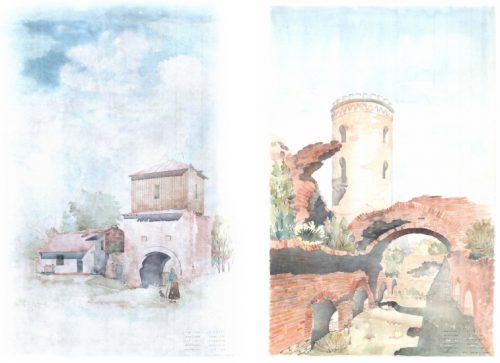
Turnul Chindiei, Chindia Tower is built
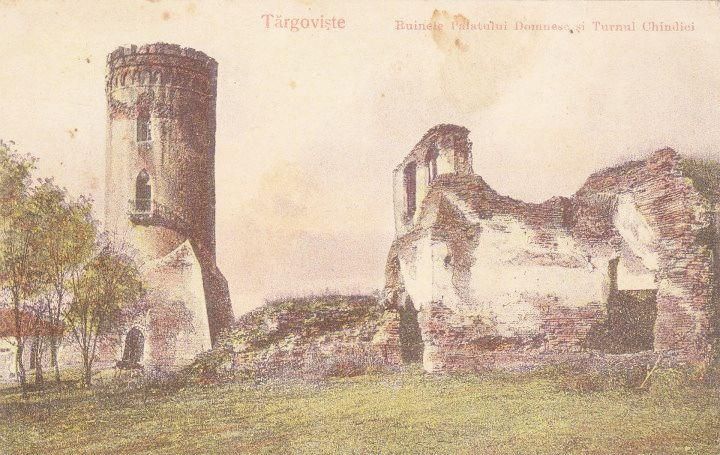
Although no surviving written documents definitively records the construction of Chindia Tower, most archaeologists believe that the tower was erected during Vlad Țepeș’s reign, becoming one of the most enduring remnants of the princely court at Târgoviște.
“In the center of this courtyard stands a large, towering stone tower that amazed us with its height; it houses the city clock and serves as a post for many guards. At dinnertime, they beat a drum—much like our khaliliya [kalimba]—to halt movement for the night; afterwards, they light a great beacon, and as long as it remains lit, no one dares to walk the streets. At daybreak, they beat the drum again, extinguish the lights, and fire cannon shots to signal to all the city’s inhabitants that they may walk the streets; such is their custom. If they find anyone walking about at night—God forbid!—the guards kill him.” (Paul of Aleppo, 17th cent. clergyman and chronicler, in Calatori Straini despre Tarile Romana, vol VI – Foreign Traavelers about the Romanian Countries)
Vlad at Dealu Monastery
A wooden church at Dealu Monastery (first documented 17 Nov. 1431) would have existed during Vlad’s life.
It was at Dealu Monastery, near Târgoviște that, only fifty years later, on 10 November 1508, Serbian hieromonk Macarie printed the first book in Wallachia – making Târgoviște an important printing center in southeastern Europe. It was Vlad Dracula’s nephew, Radu IV the Great, who brought Macarie here.
From Târgoviște, Vlad Dracula began strengthening his authority, his military forces and his personal guard.

He was also reorganising his military forces. Alongside the larger host that could be summoned in times of great danger, Vlad developed a smaller force that could be called upon immediately. Sources describe a personal guard that never left his side, together with carefully selected soldiers who served him directly, his Vitejii, the Brave Ones.
Not yet the legendary figure of later chronicles, but a young ruler who had learned from years of displacement that power was the difference between occupying a throne and keeping it.
Vlad at Bălteni and Govora
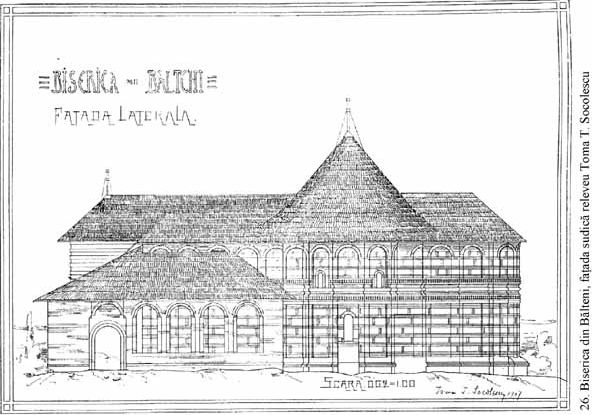
Vlad would have known where his father was killed. He would have went to visit the place, maybe even pray by his father’s grave – today we have no records left to tell us where it was – maybe inside the church:
Yet a document dated 3 April 1534, from the reign of Prince Vlad Vintilă, son of Radu IV the Great (who brought Father Macarie to Wallachia), mentions that in the village of Bălteni, “death overtook Vlad Voivode the Elder.”
Although the original church at Bălteni was altered over the centuries, a church built around the same period, some 150 kilometres to the east at Curtea de Argeș, offers a glimpse of the architectural world of Vlad’s Wallachia: the Princely Church of Saint Nicholas (Biserica Domnească „Sf. Nicolae”).
The earliest churches of Wallachia, dating from the fourteenth to the sixteenth centuries, bear the distinctive imprint of Byzantine architecture from Constantinople, combined with Serbian-Bulgarian influences. Their characteristic features include a tower and dome rising above the naos, supported by four large arches, together with attached supporting pilasters.
1457, Vlad Dracula visits Govora Monastery, probably on his way back to Targoviste. Raised during the reign of his father, we know that Vlad donates a bell dedicate to Saint Nicholas . The bell’s inscription reads: “This bell was cast in the name of God and Saint Nicholas, 6965” – Anno Mundi, so 1457 AD, during the rulingg of Vlad III.
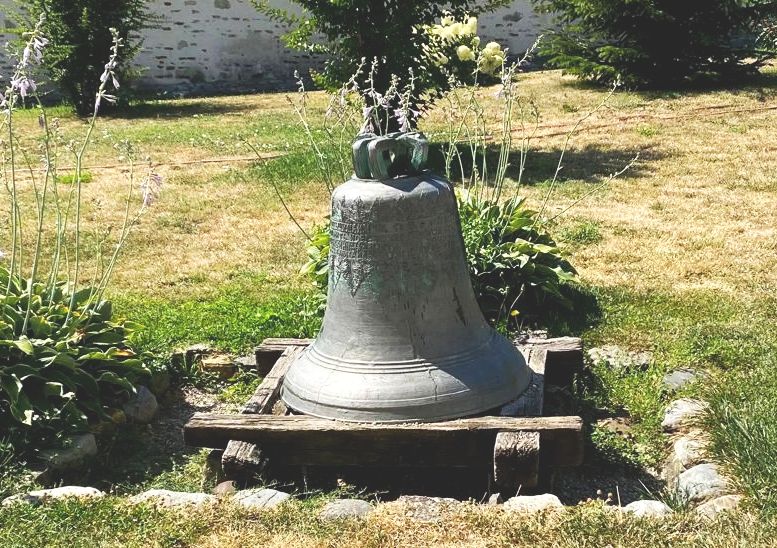
The church bell donated by Vlad Dracula to Govora Monastery, Vâlcea County, Romania, photo Wikipedia by Tetcu RM
You might notice grave leaves on the bell. There was a vineyard at Govora, bought by and gifted to the monastery by Vlad Dracul.
Vlad Dracula sent troops to help young Stephen the Great return to power: week before Easter, 1457
“The Wallachians and the people of the Lower Country,” numbering around 6,000 men. Near Dolhești, he defeated and drove out his rival, Petru Aron, who had killed Stephen’s father, Bogdan II. Victorious, Stephen began his long reign on Tuesday, 12 April 1457, during Holy Week before Easter.
Vlad’s intervention helped place upon the Moldavian throne a prince who would become one of the most formidable rulers of the region—and, in time, a powerful ally and adversary in Vlad’s own turbulent world.
16 April 1457 Vlad is in Targoviste, signing documents.
Soon, Târgoviște was not enough. Vlad knew he had to reinforce the entire Wallachia, from the inside. For Vlad, strength was not simply a personal virtue. It was the foundation of political survival.
Easter Sunday, 17 April 1457 – Vlad Dracula at Poenari Fortress
This was the beginning of the Vlad remembered by history.
After reclaiming the Wallachian throne, Vlad turned his attention to the boyars whose rivalries had repeatedly weakened the principality. Through plotings and double-crossings, these boyars and their families had enjoyed rich lifestyles while eight voivodes came to the throne of Wallachia and left, in the span of only thirty years – between the ruling of Vlad’s grand-sire, Mircea the Elder, and his.
For Vlad, this was more than revenge. He needed to make certain that the throne he had fought so long to recover could not be taken from him again.
Vlad did systematically reduce the power of such double-faced boyars. Some leading nobles were executed; others were removed from positions of influence and replaced by men whose loyalty belonged to the voivode rather than to an entrenched family faction. Vlad also strengthened his personal guard, recruiting trusted soldiers and mercenaries, and began building a more dependable military force drawn from lesser nobles, knights and free peasants.
Legend says that Vlad took revenge on the boyars from Targoviste implicated in the violent overthrow of his father and the death of his elder brother, Mircea. This notorious punishment happened on Easter day, 1457. The boyars were lured with a feast, captured and marched to Poenari Fortress. Those who had betrayed Vlad’s father were forced to labour on the fortress until many died from exhaustion. Whether the episode occurred exactly as the chronicles and later legends describe it is uncertain, but the story captures something important about Vlad’s rule: he intended the old boyar order to understand that the prince, not their great families, held the final authority.
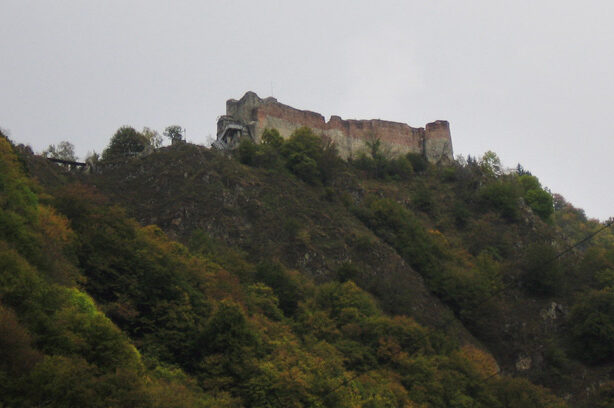
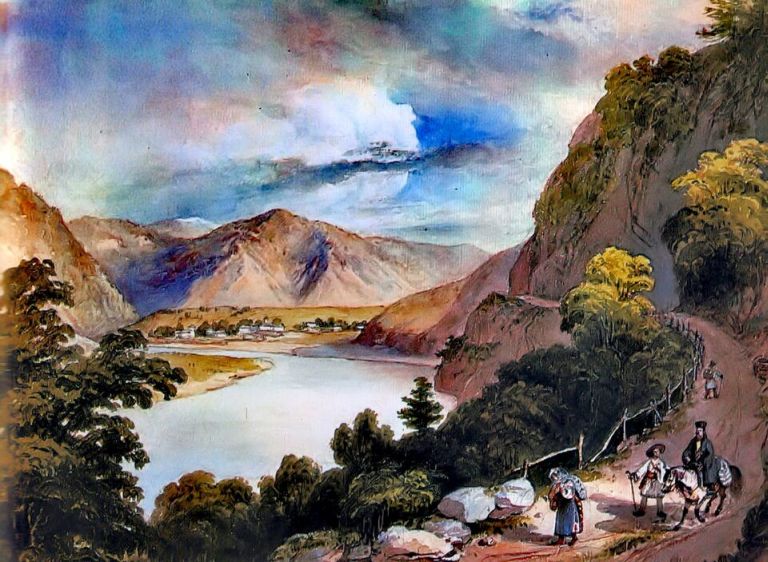
Poenari Fortress became one of the places associated with this consolidation of power. Perched high above the Argeș valley, its principal purpose was to control the Argeș Gorge. Poenari fortress offered what Vlad needed most: a defensible stronghold beyond the reach of the factions surrounding the princely court at Târgoviște.
Although Poenari could hold about one hundred soldiers – it wasn’t a large place – it was a last resort in case of an attack. It was also a good place to keep the treasury safe, and even a few prisoners. Vlad strengthened and expanded it to three times its original size, its shape following the contours of the mountain peak on which it was built.

The young prince who had spent years as hostage, exile and claimant had finally learned the lesson his years of wandering had taught him: a throne could be won with allies, but it could be kept only with power.
Vlad and the pro-Hunyadi Szilágyi: understanding Vlad’s political actions in southern Transylvania, 1457–1459
After the death of John Hunyadi on 11 August 1456, Vlad Dracula’s political interests aligned with those of Mihály Szilágyi, Hunyadi’s brother-in-law, who sought to preserve and reorganise the Hunyadi faction in Transylvania. Together, they stood against the powerful Hungarian magnates led by Ladislaus Garai and Újlaki, Voivode of Transylvania (who co-ruled with Hunyadi), who supported young King Ladislaus V Posthumus (who, of course, opposed the upcoming Mattias Corvinus’ election as King of Hungary).
Szilágyi, whose family controlled extensive estates in Transylvania, worked to rally Hunyadi’s former supporters after the great captain’s death, while Vlad Dracula, whose own position depended upon the balance of power along Wallachia’s northern frontier, had every reason to support him. The situation became increasingly complicated with the intervention of Oswald of Rozgony, Count of the Székelys and captain of the royal forces in Transylvania, who was supported by the inhabitants of Sibiu and Brașov.
Thus, in the years following Hunyadi’s death, Vlad found himself drawn into the factional struggles of the Hungarian kingdom where alliances, rivalries, and military power were inseparable from the security of his own throne… And all this apart from the Ottomans’ increasing pressures.
14 March 1457, 17 April: Vlad is in Targoviste
The first internal document signed by Vlad Dracula that survived is dated 17 April in Targoviste.
On 14 March Vlad was writing to the people of Sibiu (Hermannstadt) chiding them for granting shelter to the Wallachian pretender Vlad the Monk – his half-brother – and demands that they cease hostile actions against him (Wallachia). They don’t. Therefore…
14 April 1457, Easter Eve, Vlad Dracul was in Targoviste
Vlad reinforces to the holy Cozia Monastery the village of Troianeşti, from both banks of River Olt.
Vlad’s Campaign against Sibiu, April – May 1457
By the spring of 1457, Vlad Țepeș was back in Transylvania, with his army, and his target was Sibiu.
Vlad’s army crossed the Carpathians at Turnu Roșu Pass, right into southern Transylvania, near Sibiu, advancing along the lower Hârtibaciu valley, where the estates and residences of the two merchants lay. Vlad’s forces attacked and burned the Saxon villages of Cașolț, Hosman, and Noul Român.
Why? At the beginning of his second reign, Vlad had reached agreements with the Saxons of Sibiu, as he had with Brașov and the Burzenland, but the Sibians broke their agreement by sheltering a rival claimant to the Wallachian throne in Amlaș area, close to the Wallachian border. This pretender went even further, claiming the rights of a voivode and granting two powerful Sibian merchants, Petermann and Petru Gereb of Roșia, permanent rights to the revenues of the important customs stations at Rucăr and Brăila.
This campaign marked the beginning of Vlad’s crisis with Sibiu and Brașov, but it was more than an act of retaliation: by striking these estates Vlad was also challenging their attempt to control the lucrative trade route and customs revenues running from via Rucăr, through Wallachia to Danube.
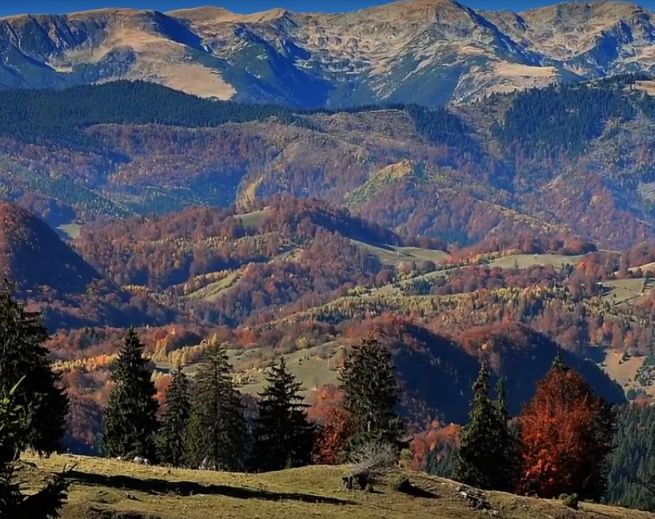
1 December 1457 Vlad Dracula was at Rucar
How Saxon merchants peace with Wallachia was dependent on making peace with Szilágyi
Here, in the north of Wallachia, Vlad was waiting for word from Szilágyi about the results of the negotiations between Brasov and the Wallachians, concerning the payment of border duties. The Saxon merchants of Brasov were dependents of selling their goods in Wallachia, and through it further south, in the Ottoman empire. But Only Vlad Dracula could grant them their privileges back. Yet Vlad’s ally was Szilágyi. Therefore Brasov had to make peace with Szilágyi too.
So on 1st December 1457 Vlad writes to the pwople of Brasov (Corona Kronstadt) that they are free to:
“sa umble oamenii vostri la noi, sá cumpere si sá vindä liberi, färl nici o grijä si fárá paguba, ca si cum ar umbla prin tara voasträ”, aceasta in schimbul reciprocitätii : “Asisderea, si oamenii nostri sä meargä slobozi la voi färä nici o pagubä”.
“your people to walk freely here by us, to buy and sell free, without worry or loss, as they walk in your land” this in exchange for [economical] reciprocity: “Likewise, our people to be free to walk by you without any loss.” (Vlad Dracula to the merchants of Brasov, 1 Dec 1457)
24 January 1458 Mattias Corvinus is elected King of Hungary.
5 March 1458 Vlad Dracula is at Tismana Monastery
Vlad reconfirms the monastery’s lands, villages, lakes, watermills, forests, Roma camps, as they were during the times of his father, Vlad Dracul, exempting it from taxes and duties.
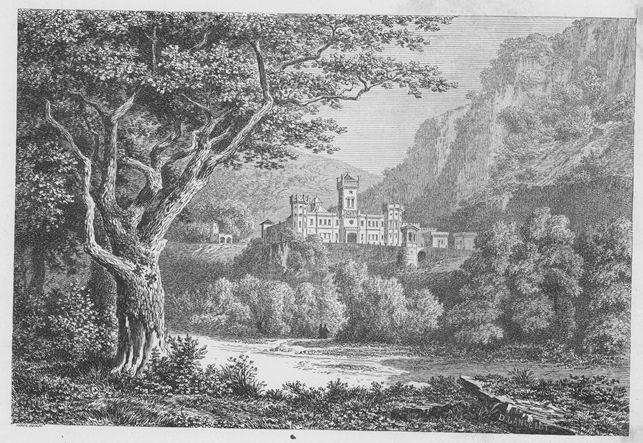
25 May 1458 Vlad Dracula in Gherghita, not far from Bucharest
He writes to the Saxon guilds asking for craftsmen – planning to soon reinforce the princely palace of Bucharest.
Gherghița was an important market fair on the Brasov – Rucar – Targoviste – Brails road, as well as going south from here to Bucharest.
12 June 1458 Vlad is near river Dambovita
“Iuxta fluvium acque Domboviche” – can only mean Bucharest – Vlad writes again to the guilds of Brasov. This might be the time when the reconstruction of the Bucharest princely court would have started.
Vlad’s relations with Sibiu and Brasov cool down, as Szilägyi is no longer Governor of Transylvania and Corvinus’ influence in Transylvania is on the rise.
10 April 1459: King Mattias Corvinus orders the guilds of Brasov to stop selling weapons to Vlad.
April 1459: local boyars headed by Albu the Great rise against Vlad Dracula.
Boyar Albul cel Mare, Albul the Great (the eldest of two brothers, or maybe a relative of his), attacked and burned down Govora Monastery (built by late Vlad Dracul) as well as its adjacent villages.
A monastery represented a center of economic and social power for its founder and his family, playing an important role during political conflicts, serving as a source of legitimacy for princely authority.
The boyars involved are killed, we know this for sure about Albul the Great. Although it is known that Vlad Țepeș killed a large number of boyars, only two villages are recorded to have been confiscated by him for treason (“hiclenie“), from said Albul the Great: Glodul and Hința – and donated to a faithful servant.
Late April-Mai 1459 Vlad refuses to pay the yearly tribute to the sultan.
Bucharest, 20 September 1459: Vlad Dracula at the new Princely Court
On 20 September 1459, Vlad III issued a charter granting privileges to certain merchants, written in Slavonic, the official chancery language of Wallachia. The document was dated “in the citadel of Bucharest” (in cetatea Bucureștilor)—the earliest known written reference to the city by that name.

Bucharest – my birth place 🙂 – itself was certainly older, with evidence suggesting that the settlement and its strategic position predated Vlad, possibly reaching back to the time of Mircea the Elder.
Vlad was the first ruler known to establish his princely residence here and to strengthen the settlement with a fortified enclosure, later known also as the Dâmbovița fortress. Before the river was embanked and reshaped, the Dâmbovița flowed close to the fortification on its eastern side, while a now-vanished stream called Bucureștioara offered additional natural protection. This made the site one of the easiest places to defend in the area.
Smaller than the princely court at Târgoviște but built on a similar model, Vlad’s fortified residence marked a decisive moment in Bucharest’s history. The city would later become the capital of Wallachia, but its emergence as a princely centre began under Vlad Țepeș.

End 1459: Vlad’s relationship with the Saxon towns of southern Transylvania had deteriorated badly. Brașov and Sibiu had previously sheltered or supported rivals for the Wallachian throne, and Vlad increasingly regarded the Saxon merchants not merely as commercial competitors but as potential political enemies.
To support the Wallachian economy, Vlad Dracula interdicts Transylvanian merchants to even cross into Wallachia, forcing them to buy their goods for the Wallachian border markets. This will force them to cross the border where they also had to pay taxes. This policy that clashed with the monopolistic views of Transylvanian merchants, accustomed to dominating the market of Wallachia.
14 January 1460 Pope Pius II declares a new crusade against the Ottomans
The crusade was to last three years. The christian believers were urged to pray each morning for its success. Mattias Corvinus receives 40 000 gold ducats for his war preparations – enough for 12 000 armed men and ten war ships.But from the 40 000 men and personal participation promised by Corvinus, none materialized.
2 March – 22 April 1460 Rucăr: another pretender to the Wallachian throne, Dan III, appears
Dan III (Dan the Pretender, Dan the Younger) crosses into Wallachia with Transylvanian troops. Doesn’t make it far from the border. Fights Vlad. Is killed near Rucăr on 4 June 1460.
It is said that Vlad Dracula forced Dan to “dig his own grave” before beheading him. Dan’s supporters were impaled. SO:
End April 1460, Vlad’s St Bartolomeu Day attack near Brașov and Codlea
Vlad crossed into the Țara Bârsei, the region around Brașov. His forces devastated crops and attacked the settlements and commercial interests of the Saxons. The area of Bartolomeu, immediately outside Brașov, became associated with the execution of captured merchants and townspeople. His actions were not simply random cruelty. Brașov was both an economic rival and a refuge for his political enemies. By striking the communities around it, Vlad was sending a message to the merchants and to the Saxon authorities alike: Wallachian trade would not be dictated from beyond the mountains, and support for rival claimants would carry a price.
After being informed of Dan’s death, his supporters and burghers of Brașov sent an embassy to Vlad, but he imprisoned their envoys and again plundered the settlements near this town. Not Brasov itself, that was a fortress, too well protected by high walls and armies.
Later t was said that this attack of Vlad took place on St Bartolomeu day, 1460 (24 August).
4 June 1460, Vlad Dracula is at the Princely Court of Bucharest:
From “ex castro fluvii Domboviche,” the fortress along Dambovita River, Vlad writes to Brasov requesting that the Wallachians kept there be freed.
1 October 1460 – an agreement between Vlad Dracula and Brasov
Vlad signs a deal with Brasov – the Wallachian boyars who took refuge there will be returned to Vlad and, additionally, Brasov and the rest of Transylvania will send 4 000 men to fight with Vlad Dracula against the Ottomans (or the Moldavians). I return, Vlad promised to defend them from any attacks coming over Wallachian soil.
10 February 1461 Vlad Dracula is in Bucharest. Writes royal levies.
24 June 1461: the Consecration of Vlad Dracula’s Church in Târgșor: Sf. Nicolae, St Nicholas
Saint Nicholas was the spiritual patron and protector of Vlad the Impaler, a figure of importance in the voivode’s religious and military life. In the Middle Ages, great warrior-leaders venerated Saint Nicholas not only as a symbol of generosity but also as a protector of soldiers, archers, and those facing times of crisis or war.
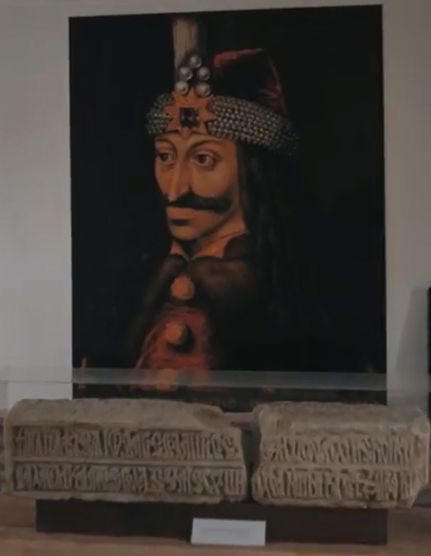
The church’s founding inscription records that Vlad Țepeș ordered its construction (started in 1460), most probably in memory of his father, Vlad Dracul. The inscription, pisania, is in medieval Cyrillic/Church Slavonic:
“Mltje bjije lo Vlad voevoda i gdnŭ vâse[i] [z]emli uggrovlahiiscol, sŭnŭ Vlada velicaago voevoda, sâzda i sâvârši [să]i hram iunia 24, vlet 6969. Ind. 9. “(based on the 1924 publication by the Buletinul Comisiunii Monumentelor Istorice).
„Cu mila lui Dumnezeu, Io Vlad Voievod și Domn a toată Țara Ungrovlahiei, fiul marelui Vlad Voievod, a zidit și a săvârșit această biserică, Iunie 24, in anul 6969 (1461). indictionul 9”.
“By the mercy of God, I Vlad Voivode and Lord of the Land of Ungro-Walachia, son of the great Vlad Voivode, built and completed this church, June 24, year 6969 (1461), indiction 9.”
This inscription shows us a different Vlad Dracula, not the warrior, but the man who thought of God as well.
Vlad’s Church today: Târgșoru Vechi, Old Târgșor, Prahova County
Today, on the site of old Târșor, once a flourishing political and commercial centre with seven monasteries, only the ruins of three churches can still be seen.
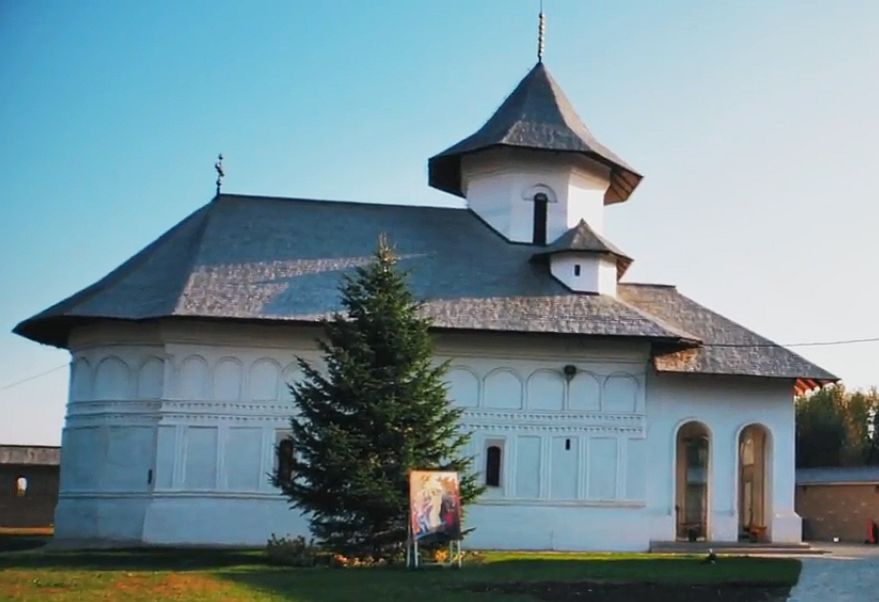
The Church of Saint Noicholas, built by Vlad the Impaler, today no longer represents its original form, but one that has been altered twice: first under Constantin Brâncoveanu, who is named as its founder together with his wife, Doamna Maria, and a second time during the nineteenth century.
Nevertheless, beneath the plaster several architectural features may well belong to Vlad Dracula’s original church:
- the belt bordered by two rows of dentils that encircles the church (dentils are small, repeating rectangular blocks used in a row as a decorative ornament under a building’s cornice or roof line)
- the semicircular arches along the upper part of the building.
Comparing the ruins of Biserica Rosie (Red Church) of Târgșor (built by Mihnea Turcitu, the Turk – Vlad’s 5th generation relative -100 years after Vlad’s), AND Vlad’s twice renovated church one notices a remarkable architectural resemblance, giving us an idea of how Vlad Dracula’s church looked like:

1460-1461, Comana: Vlad starts building a monastery there.
Comana Monastery (only 33 km from Bucharest) was originally founded by Vlad the Impaler in 1461. The archeological findings show a compact, wooden church, 12 m long by 10 m wide. Nevertheless, Comana Monasery was closely linked to the spirituality of the era and the veneration of the army’s patron saint, Saint Nicholas, Sf Nicolae.
The land where the the monastery was built used to be an island.
Winter 1461-1462: A sly Ottoman attempt on Vlad’s life – Vlad takes Giurgiu Fortress
Because Vlad does not break his alliance with Mathias Corvinus, Sultan Mehmed II “the Conqueror” sends Hamza Pasha, a regional official of the Ottoman Empire, and the Greek Katavolinos (a Christian Orthodox whom Vlad would have known and trusted from his years as a hostage at the Ottoman court) to capture Vlad. They pretended to ask Vlad for the tribute overdue for two years: 10 000 gold coins a year.
The sum is attested by two contemporary sources: the account of I. de Promontorio, Governo et Entrate dell Gran Turco, 1550s – the annual tribute paid by “Greater Wallachia towards Nicopolis, above Nicopolis, across the Danube” amounted to 10,000 ducats. The second is the chronicle of Ducas: in 6970 (1461–1462), Mehmed II demanded that Vlad Ţepeş come and submit to him, bringing 500 boys as well as the annual tribute—10,000 gold pieces.”
Vlad refused to send any children as Wallachia never paid such blood levy, devsirme.
How much was 10,000 gold coins in 15th cent. Eastern Europe?
A medium-sized village cost 45 gold coins. At the same time, ahead of the new Christian Crusade, Pope Pius II pledged at the Mantova Concil the sum of 100,000 ducats.
Hamza Pasha was suppose to bring Vlad to the sultan’s court “by some means or other—through deceit, an oath, or some trap—and if that proves impossible, then let them seize us and, once captured, take us to the Emperor,” Vlad wrote to Corvinus.
Having learned of their plan Vlad had Hamza Pasha and Katavolinos captured and killed. Then, once Giurgiu Fortress Vlad used his knowledge of Ottoman language and customs to gain access, fight the Turkish troops inside and then burn it.
Vlad’s anti-Ottoman expedition along Danube
Vlad’s military expedition along Danube followed. Vlad crossed the frozen Danube and conducted a series of raids against Ottoman positions and ports, disrupting Ottoman control of the river, “from where Danube spills into the sea to Rahova,” as Vlas simply summed it up.
West to east, from the end to the beginning of his attack, these places were:
- villages near Old Chilia/Kiliya Fortress, close to Letea Forest, a stone-throw from the Black Sea
- Oblucița (today Isaccea), a strategic Danubian crossing point
- nearby Novo Selo, lower Danube fortification and river-crossing point
- Cartal/Kartal (today Orlivka), meaning eagle in Turkish
- Rasova
- Turtucaia (today Tutrakan), a heavily fortified Turkish stronghold positioned at a narrow stretch of the Danube across from the Argeș river mouth, key crossing point and defensive node – across Danube from Oltenita,
- Sistov (today Svishtov)
- Turnu on Wallachian soil and across from Danube at:
- Nikopol (named in 11th cent., meaning city of victory), a major Danube fortress where, in 1396, Ottoman Sultan Bayezid I won the battle against an allied Crusader army led by King Sigismund of Hungary
- Samovit/Samovid/Samova (today Somovit, Plevna, Bulgaria)
- Ghighiu, at the mouth of Olt River, by Danube
- Rahova (today Oryahovo), Ottoman outpost
I edited the image below, MAP OF THE ROMANIAN PRINCIPALITIES BETWEEN 1457 AND 1504, available via license: Creative Commons Attribution-NonCommercial 4.0 International:
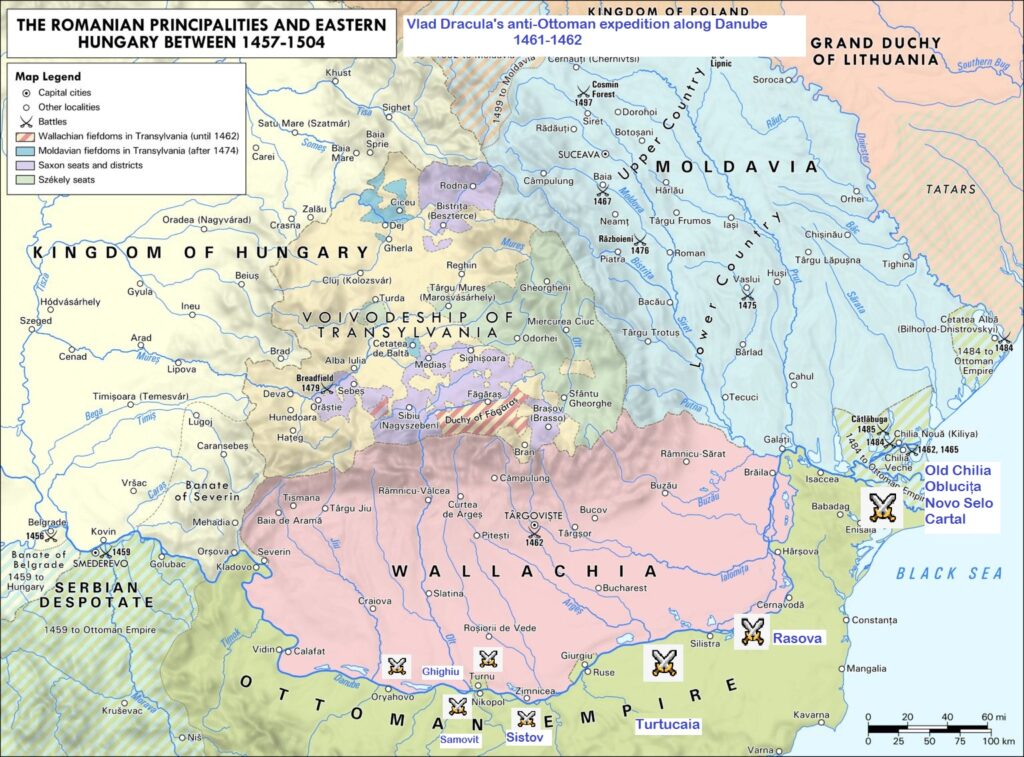
Vlad’s purpose for this extensive destruction of the Danube crossings was to prevent the Turkish armies from launching a punitive expedition, as well as creating a desolate zone south of the Danube where the Turks could neither recruit soldiers and spies nor find supplies in the future.
11 February 1462 – Vlad announced King Mattias Corvinus of his victory against the Ottomans and asks for back-up as he had learned that the Turks will attack come Spring.
Vlad Dracula also wrote to Corvinus “seeing what we had done, set aside the disputes and disagreements he [Mehmed II] had—both with Your Majesty and the peoples subject to you, and with the other nations he had encountered [the Venitians]—and is now poised to vent all his fury and wrath upon us.”
4 March 1462: Corvinus replies, promising his presence in Transylvania and troops. Neither arrives.
“Quod si nobis, quod Deus avertat,male suecesserit regniculum que nostrum interierit, neque eidem serenitati vestrae ex hoc utilitas pervenerit et comodum, quoniam toti ch,ristianitati esset in detrimentum.” (Vlad Dracula, 11 Feb. 1462)
“If this little town of ours perishes, neither will your majesty benefit from it nor will it help you, for it would be to the detriment of all Christians.”
15 May 1462: The Sultan‘s great army approaches Danube. Vlad prepares to face it by himself.
4 June 1462 near Turnu (by Nikopol): Ottoman troops cross Danube and enter Wallachia. Everything Vlad ever learned during his life so far, about Ottoman battle tactics, about attacks, will help him surprise and chase away the Ottomans led my Mehmed II although he led a much smaller army.
How large was Mehmed the Conqueror’s army when he attacked Wallachia in 1462?
Enveri, a 15th-century Turkish poet and historian who chronicled the early Ottoman Empire and participated in military campaigns under Mehmed II wrote that “the Turks were clad in chainmail and iron armor, and their armors gleamed in the sun.”
The Ottoman army led by Sultan Mehmed II against Vlad the Impaler in the Spring of 1462 was said to be second in size only to the army Mehmed II had led in 1453 against the Byzantine Constantinople. That army was 80 000 warrior plus auxiliary troops, about 20 000. From all the different approximations of the time, it is fair to accept an Ottoman army of 60 000 warriors, plus auxiliary troops. And ships coming over the Black Sea, via Braila, up on the Danube.
How large was Vlad Dracula’s army?
Vlad called to the weapons his entire “big army” – everyone over the age of twelve and able to hold a weapon. It is said that 22 000 souls lined up behind Vlad.
June 1461 Vlad Dracula in Teleorman area (“crazy forest”in Turish)
Mehmed’s army crosses Danube at Turnu heading north east towards Targoviste. But Vlad initiated a surprize-attack in Teleorman forest making great use of the terrain to his advantage.
The same Enveri writes that, at this, “outbursts of weeping broke out, and grief gripped the ranks of the Anatolian soldiers.”
16 – 17 June 1462: Vlad the Impaler’s Night Attack near Targoviste
If you will remember only one detail about Vlad Dracula’s night attack at Targoviste, let it be this: Vlad used a fight tactic never encountered before. He attacked the Ottoman army during the night. The night attack let by Vlad the Impaler and 7,000-10,000 of his men against the Ottoman troops caused severe loses. Soon the Sultan ordered retreat.
Chalcocondyles, a Byzantine historian, wrote that “the Voivode [Vlad the Impaler] himself would come very close to the camp during the day, observing the Sultan’s tent, Mehmed’s tent, and the marketplace. The brave ruler [Vlad, who knew Turkish, even entered the Ottoman camp in disguise as a scout and, moving through it, reconnoitered the layout of the encampment.”
22 June 1462, Vlad Dracula is at Chilia Fortress, on Danube
March-April 1462: Stephen the Great tries to take Old Chilia fortress from the Hungarian garrisone before Mehmed II advances north. Vlad takes Chilia, Stephen the Great is injured.
23 June: another Ottoman defeat further down the Danube.
26 July – 8 September – October 1462 Vlad Dracula fights his little brother, Radu the Handsome
Radu, like a Trojan Horse, had been left behind by a retreating Sultan. Radu had Ottoman backup and many promises of peace for the Wallachian boyars. More and more boyars swap sides. Vlad Dracula is left almost by himself.
Radu the Handsome ruled over the south-west of Wallachia. Vlad held some power over north-east.
“Radu—not the Turks—subjugated the land of Dacia.”(Chalkokondyles)
10 August 142: finally and slowly, Corvinus approaches Transylvania.
15 August 1462 Some Transylvanian boyars, especially from Brasov, recognize Radu the Handsome as Voivode of Wallachia
September 1462: Stephen the Great supports Vlad Dracula against Radu
Early October 1462: Vlad retreats in Transylvania
Finally, he can meet with Corvinus at the beginning of November 1462 in Brasov.
Since Transylvania showed little desire to fight for a ruler as difficult as Vlad Țepeș, ing Matthias Corvinus decided rather quick to alter his initial plan of attacking the Ottomans, acknowledge the existing situation (Radu the Handsome as Voivode of Wallachia), and abandon his support for Dracula, the very man he had actually come to assist. In reaching this decision, the king was aided by the Saxon merchants of Brașov, who complained about the cruelty committed by Vlad Țepeș and provided written accounts, especially a forged letter of treason attributed to Vlad Țepeș.
This letter is weaved into the plot of Beneath the Snow, book 2 oy of my Transylvanian saga Blood of Kings, Heart of Shadows.
Cornvinus orders Vlad Dracula’s arrest.
Days before 26 November 1462 Vlad is in at Piatra Craiului / Rucar
He is arrested.
Vlad will stay for 12 years in various jails in the Hungarian Kingdom.
~~~
This was a long journey of a man who had a tumultuous life. We’ve been in many places where Vlad Dracula lived during his second reign of Wallachia, 1456-1462. I haven’t touched on legends and haven’t mentioned his personal life either.
Join me again on 15 October when we’ll reach the end of our travels through the places where Vlad Dracula lived: his captivity in the Hungarian Kingdom and return to the Wallachian throne, ahead of his untimely death.
That was very interesting history about Vlad Tepes / Dracul. I recognized some of the stories but most of it was new to me. When we were in Transylvania we visited a number of places that you mention including the Poenari Fortress. We walked up the hill. It was very interesting to see the digital reconstruction of the fortress / castle. It is amazing how different it looks when it is all intact.
The old roads and mountain passes are still in use, much wider now and even fit for cars. You were lucky to visit Poenari Fortress and, yes, that digitalreconstructionis impressive. They say there are bears in those woods, coming as close as those hundreds of steps.
Very interesting.
Hugs Martie. Thank you so much. 😉
I remember seeing the statue of John Hunyadi in Heroes’ Square in Budapest, so it’s fascinating to learn about the connection to Vlad and the battle against the Ottoman Empire.
Yes! Heroes’ Square has a remarkable lineup of historical figures. And Hunyadi’s connection to Vlad is a fascinating one. What makes it even more interesting is that John Hunyadi (Iancu de Hunedoara) was of Romanian origin, despite his prominent role in the Kingdom of Hungary. His family came from the region of Hunedoara in Transylvania, and his career brought him into the heart of the conflicts with the Ottoman Empire—and, at times, into Vlad Dracula’s story as well. History has a wonderful way of making those connections across borders.
Excellent research! I can see how the small communities with their own noble families led to a multitude of shifting alliances that made ruling a challenge. Vlad Dracul clearly used his knowledge of situations to nip unrest in the bud, and if necessary attack in a way that became a deterrent to future uprisings. His life was truly a remarkable one.
Hugs, Trish. Funny how life is, when in school and have to learn dates and battle locations it all seems so dry. But go back (later in life and, willingly) you forget yourself down a rabbit hole. 🙂 You are right, Vlad was a smart guy who gave his life to look after his people. (I also have to know how life story inside out if I even mention it in my novels).♡